The Catacombes de Paris: Death is constantly watching you in a labyrinth of the deceased.
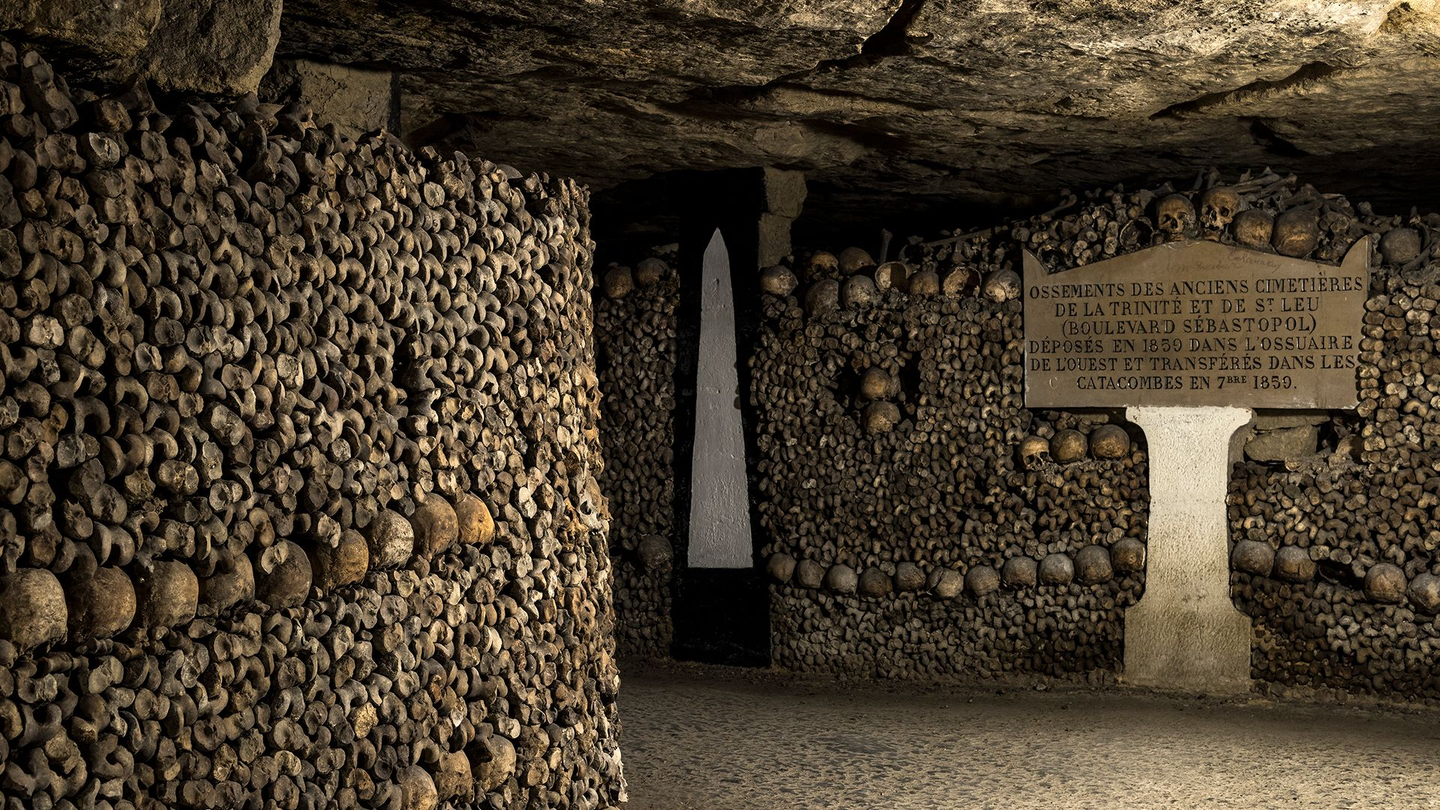
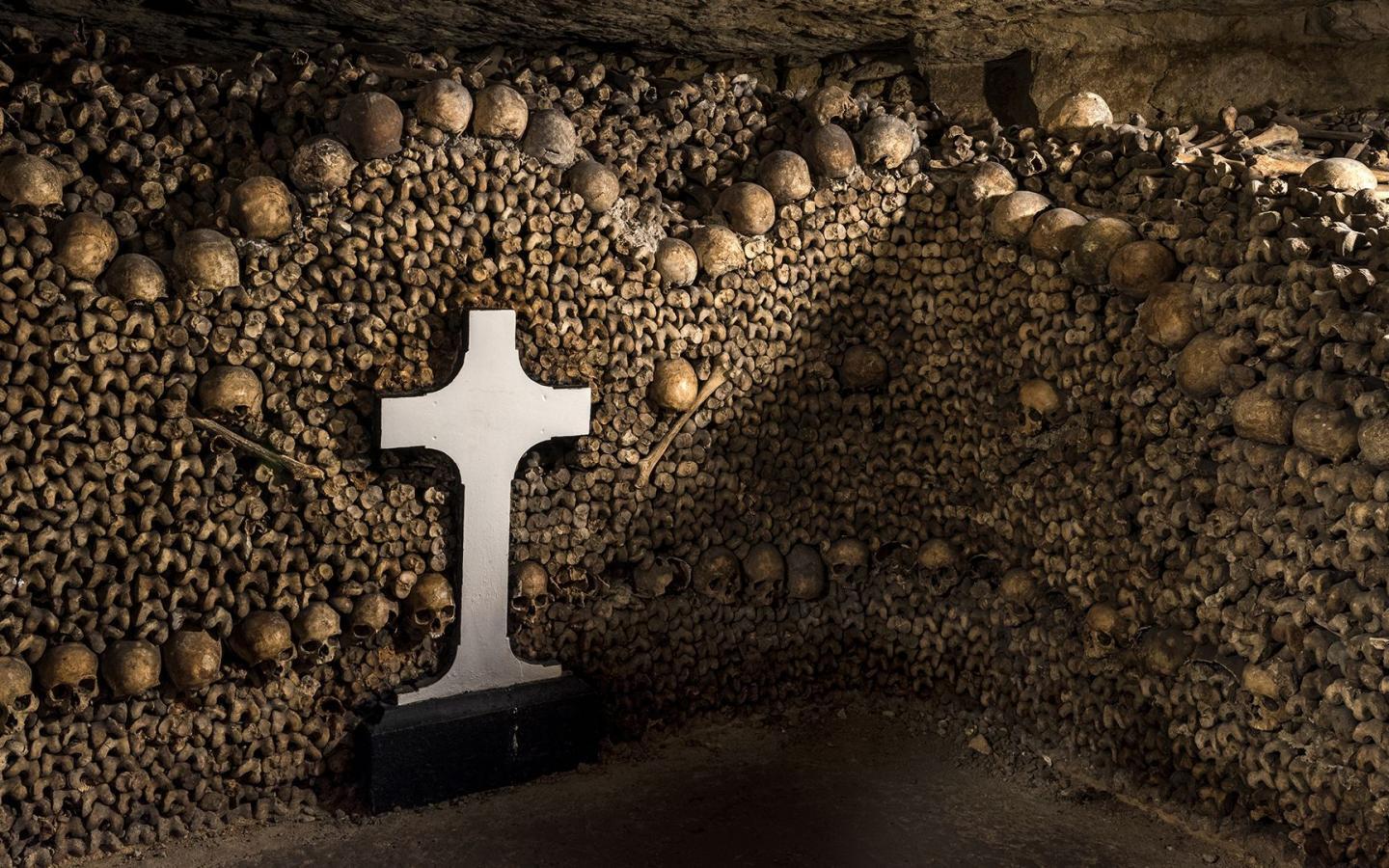
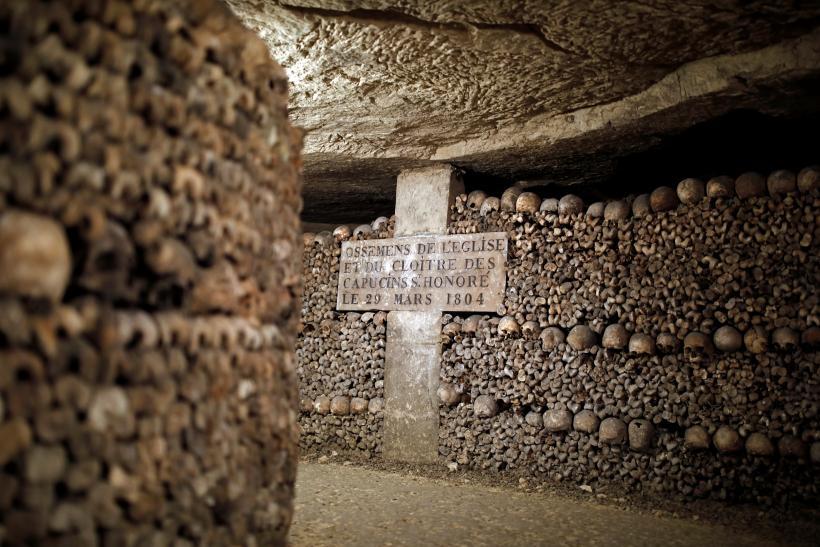
Catacombes de Paris is more than just a cemetery for the Parisian people, it is a labyrinth that contains walls of skulls decorated in a stylistic pattern.
Text
In the late 1700s, Paris suffered a great deal of public health issues because of the 6 million corpses that were overflowing the city's cemeteries, mainly Les Innocents. To remedy this situation, the city arranged to move a majority of the bodies to a different underground location. A good proportion of Paris suffered from the odor of the decaying corpses, which caused an epidemic health risk for the citizens of Paris, and the main food markets. One of the main problems that caused this epidemic was that some of the Parisian dead had not been buried properly, thus spreading diseases and causing people to get sick and die.
King Louis XVI was the ring leader for developing the Catacombes de Paris project, alongside Charles Axel Guillaumot, an inspector at the Department of General Quarry Inspection. The bodies that were transported underground in 1785 to 1787 came mainly from the most important cemetery of Paris called the "Holy-Innocents." The Catacombs de Paris received its name as a fascinating reference to the Roman catacombs from which the people of Paris took inspiration in terms of art and architecture, however it is seen unintentionally as a tomb for Parisians. While the workers were transporting all of the bodies underground, a priest conducted prayersr to "keep the dead at peace," thus inspiring the idea of placing the bones in patterns, such as hearts, crosses, etc. It took two years to transport all of the Parisian corpses underground from the Les Innocents to the Catacombes de Paris after the French Revolution.
The Catacombes de Paris is a underground labyrinth twenty meters below the streets, built to solve the public health issues and to consolidate Paris' ancient stone mines.
Located on 1 Avenue du Colonel Henri Rol-Tanguy, 75014 , Paris, France. In 1859, the final bodies were transported to the catecombes and the renovation process was completed by Georges-Eugène Haussmann, a prefect of the Seine Department of France.
The Catacombes de Paris first open its doors to French citizens and foreigners in 1867. The Catacombes de Paris is situated in the 14th arrondissement of Paris. The cemetery became so popular during this time and that many people wrote their own impressions of the labyrinth. The Catacombes de Paris became so popular and well-known that even political leaders, such as Napoleon III, the Count of Artois, the Austrian Emperor and even Charles X took a tour there to see the magnificent view of the cemetery. However during World War 2, Parisian soldiers used the Catacombes de Paris to hide underground in order to escape the Germans.
In the 1970s and 1980s, Parisian urban explorers, also known as Cataphiles, explored the Catacombes de Paris illegally which led to the cemetery's transformation into something new.
As time passes, the Catacombes de Paris has transformed from an underground cemetery into a popular museum and momument as a memorial of the deceased Parisians. Today, Parisians and tourists are now able to view and explore the Catacombes de Paris by appointment.