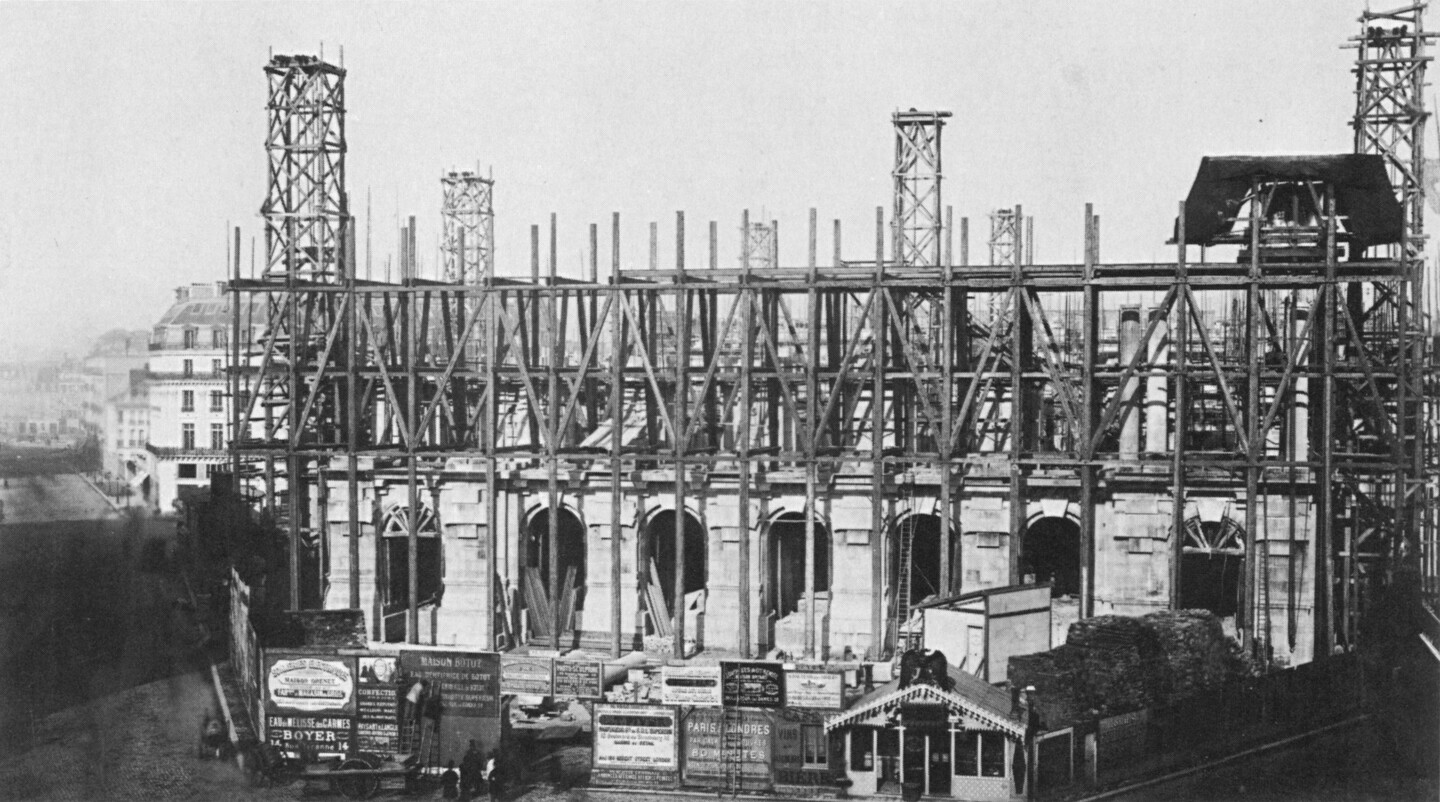
The Facade of Palais Garnier
: The Extravagant and Theatrical Facade of Palais Garnier
Palais Garnier, also known as the Opéra Garnier, stands as one of the top monuments in Paris holding itself up alongside the Louvre, the Tour Eiffel and L’Arc de Triomphe. It is known as one of the most lavish buildings as well as being the inspiration for Gaston Leroux’s 1910 novel The Phantom of the Opera. Stepping out of the Opéra metro stop and coming face-to-face with the Palais facade is a breathtaking experience.
Text
Located in the theater district that runs through the ninth arrondissement of Paris stands the luxurious building known as Palais Garnier. The location of the Opéra house was dictated by Baron Haussmann, who played a large part in the urban renewal of Paris which included the construction of new parks, streets, and buildings. The production of the building started in 1861 and took fifteen years to complete. In 1867, despite the building still being under construction, an event was held to inaugurate only the facade of the Palais. The inauguration for the completion of the entire building was held on January 5, 1875, and there were almost two thousand people in attendance from all over Europe.
The namesake for Opéra Garnier, Charles Garnier, was a designer and an architect who won the prize of a lifetime in a competition held for the design rights of this building. In 1860 a call for design submissions for the future opera house was held and in 1861 the contest came to a close with Charles Garnier as its champion. Garnier designed the building using a blend of different architectural styles that came together as the Napoleon III style. This involves elements of Baroque revival architecture, which is also known as Neo-Baroque, Second Empire architecture, which is exemplified by elaborate ornamentation, and Beaux-arts architecture. Second Empire style of architecture evolved into Baroque revival, and Beaux-arts style drew upon French neoclassical with gothic elements. This style drew upon Greek and Roman architectural characteristics, such as the creation of massive buildings with a symmetrical façade, decorated columns, and archways. Characteristic of this new, at the time, Napoleon III architectural style was to leave no space without decoration. This can be seen in the heavy ornamentation on every aspect of the building. Sculptures are placed in the spaces between arches and the columns are of Corinthian style, which is the most decorative order to use. Along the roof of the facade are gilded bronze faces that represent comic and tragic antique masks, which are used as symbols to represent the theater.
A great deal of work was put into the facade including work from fourteen painters and seventy-three sculptors and a variety of material, including gilded bronze, marble, and stone were used in its creation. It is very theatrical architecture for a very theatrical building. Placed within the faꞔade are bronze busts of some of the world’s greatest composers, including Beethoven and Mozart. Below these heads are relief sculptures of other composers including Bach and Pergolesi. The faꞔade also includes a variety of statues, as well as low relief and high relief sculpting. Two gilded figures on the roof, known as Harmony on the left and Poetry on the right, were created by French sculptor Charles Gumery and exemplify perfectly the opulence of the second empire architectural style. The tallest point of the building is a statue of Apollo created by Aimé Millet, a French sculptor, making the building one-hundred and eighty-four feet tall, which is only fifty-five feet taller than the Jefferson Memorial building in Washington D.C. Today Opéra Garnier primarily functions as a theater for ballet events.
Files
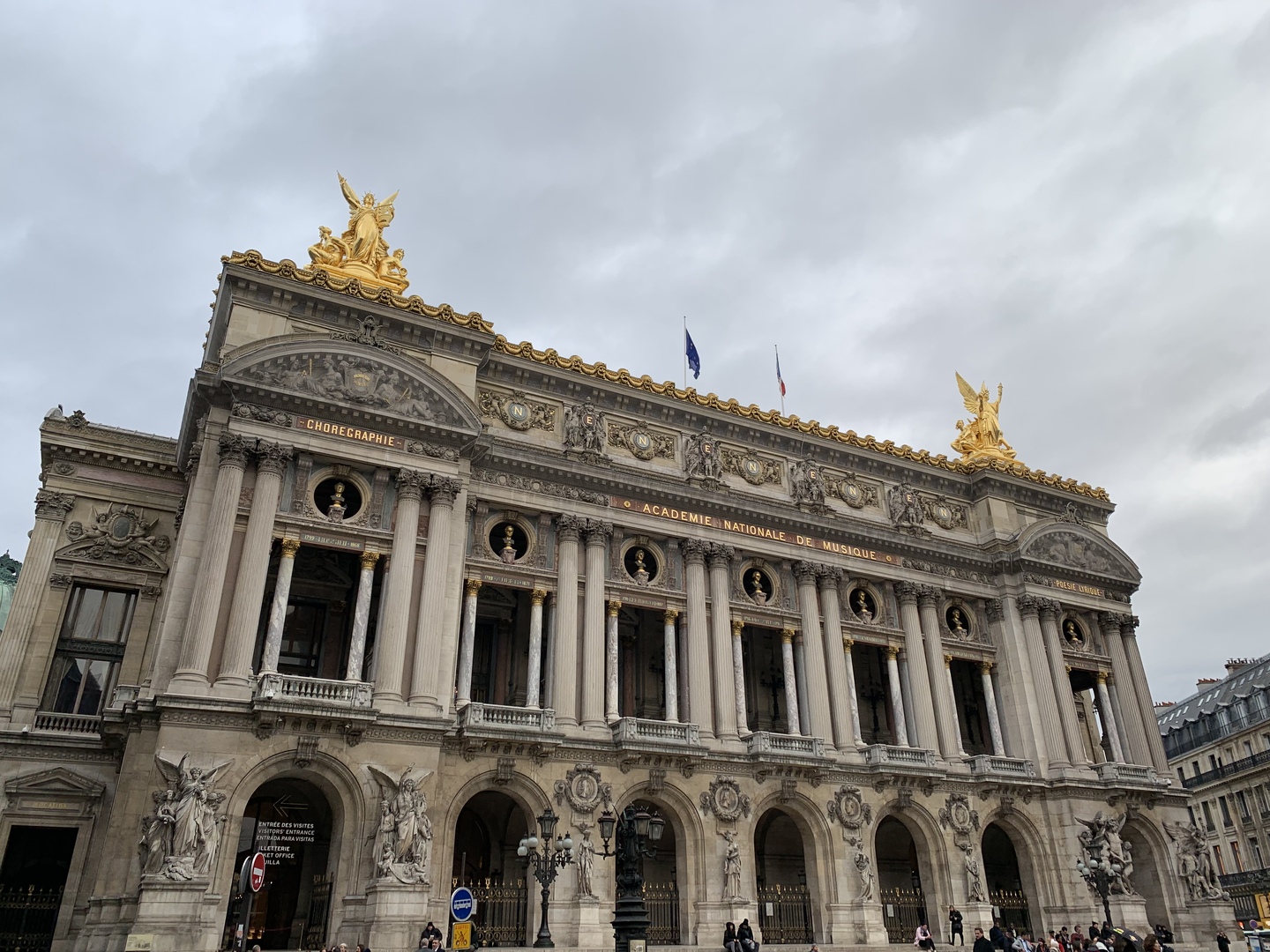
Palais Garnier Facade
This photograph shows the entire facade of Opera Garnier. The people standing next to the building provide a sense of scale and show how grand the theater is. | Date: March 2019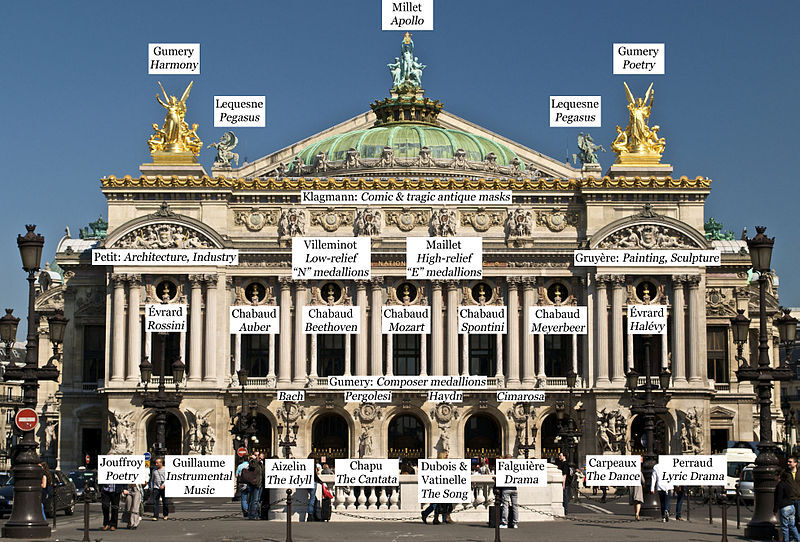
Palais Garnier with Labels
This photo of the facade of labels the many different sculptures that were made. The labels list the sculptor on the top, and the name of the piece is listed on the bottom. | Source: Wikipedia | Date: May 2009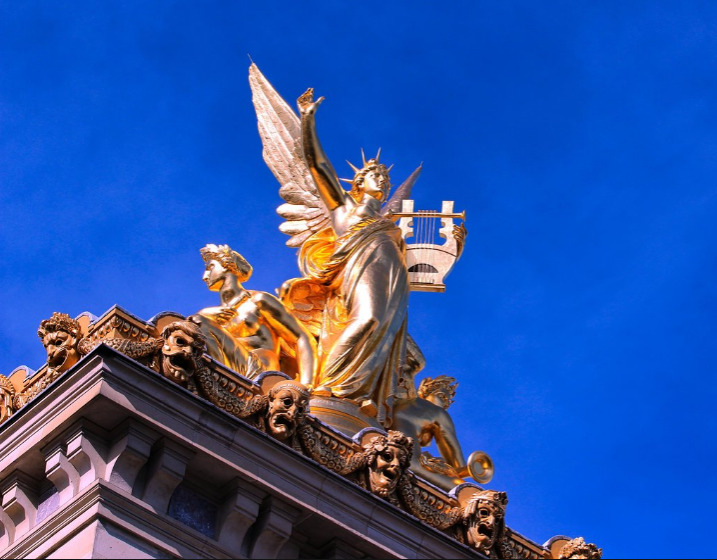
Harmony
A close-up of the gilded bronze statue created by Gumery entitled Harmony. This statue stands at the upper left corner of the facade. | Source: Tripadvisor | Date: May 2019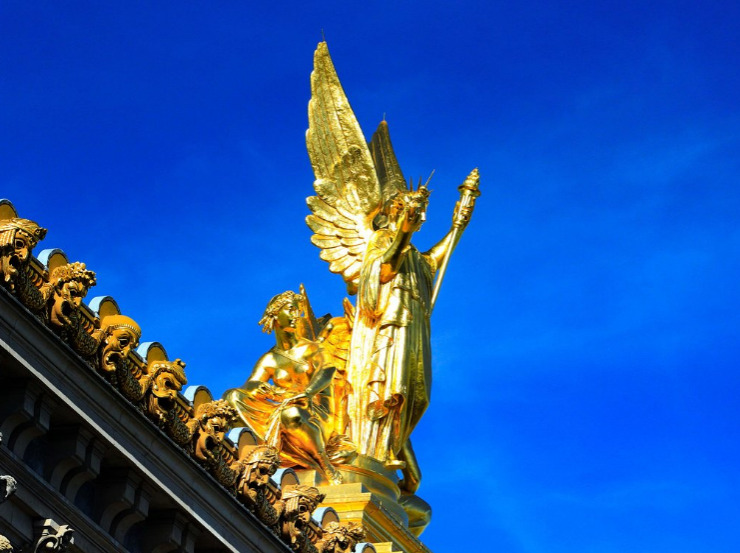
Poetry
A close-up view of the gilded bronze statue by Gumery entitled Poetry. This statue stands at the upper right corner of the facade. | Source: Tripadvisor | Date: May 2019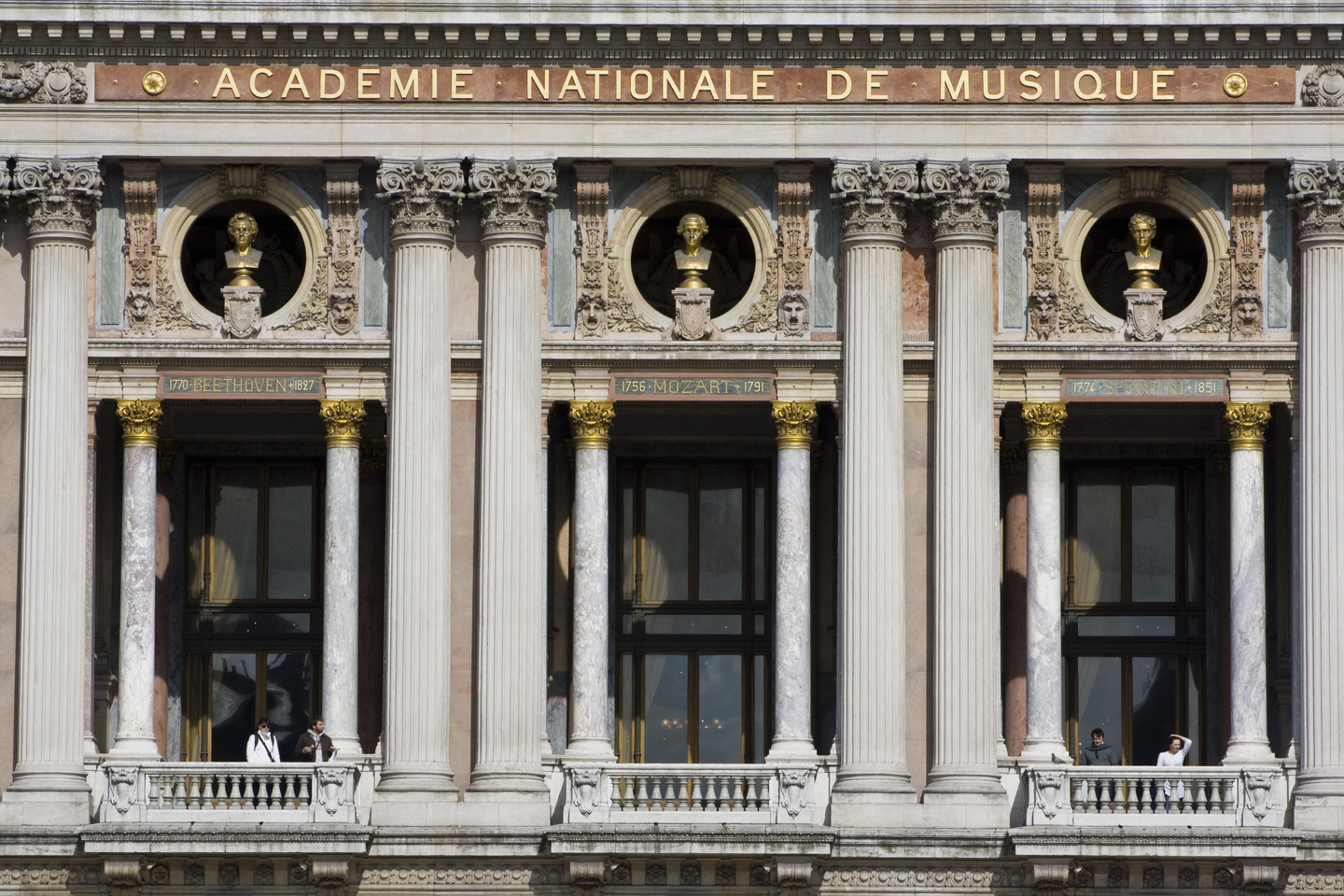
Detail of Busts
A detail of the facade shows three of the seven bronze busts of the world's greatest composers. Shown here from left to right are Beethoven, Mozart, and Spontini. | Source: Wikimedia | Date: March 2010