Parc de Buttes Chaumont: Parc de Buttes Chaumont, "The Ugly Duckling"
The fairytail story of The Ugly Duckling, is a concept that applies to this beautiful city park made for the benefit of the Parisian citizens. A man-made wonder created from ugliness, darkness and gloom, that has, metaphorically speaking, transformed into a beautiful swan.
Text
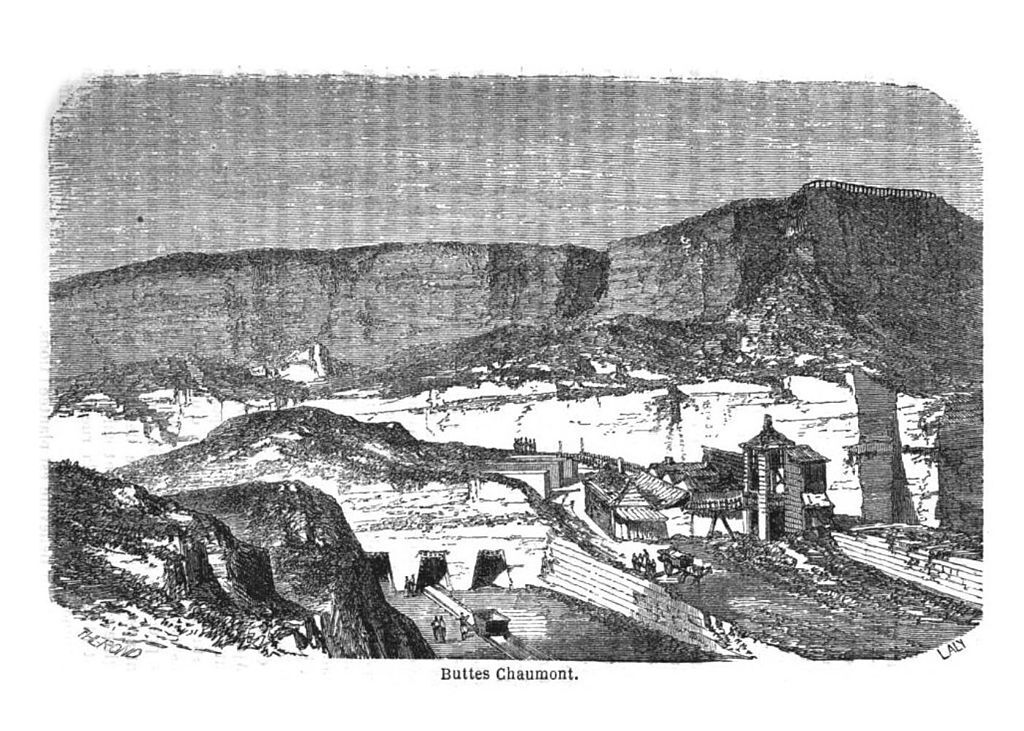
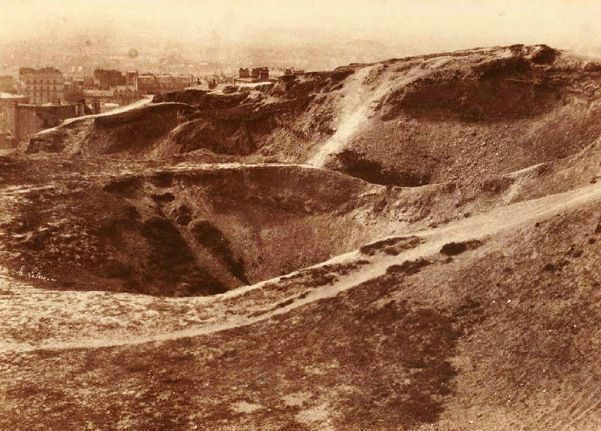
The fairytail, The Ugly Duckling, is a story of a sad little duckling that was born not as pretty as its siblings. It was marginalized and made fun of until it eventually transformed into a beautiful swan instead of a duck. Ironcially, this story was written in the mid 19th century during the same period that saw the birth of a city park that was transformed to a beautiful swan; now known as, Parc de Buttes Chaumont. As with the duckling, its history is filled with sadness and gloom. The site of the future city park was formally a dumping ground for horse carcasses, Additionally, it served as a waste and refuse depository. To further add to the darkness covering this 61 acres site, public execution gallows stood in close proximity to what would become one of Paris' finest city parks.
Located in the 19th arrondissement, the site's soil composition did not allow green vegetation to grow. Hence, the name, Buttes Chaumont, or "Chauvre-mont", meaning, "bare-hill." Interestingly, the site was also a quarry that produced raw materials for limestone and gypsum. It is said that America's White House foundation was built using gypsum from the quarry, making the United States of America, one of its largest importers.
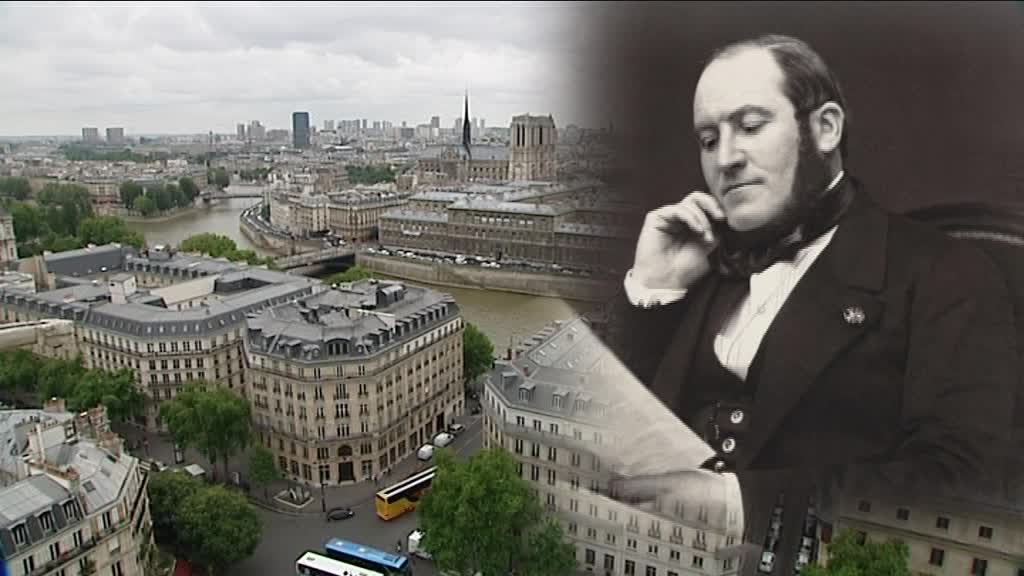
Transformation began in 1864 under the vision of Baron Haussmann, the city's Prefect. Haussmann's vision was to develop the surrounding communities away from central Paris, in an westerly and easterly direction. Under the watchful eye of its designer, Jean-Charles Alphand, the park began to take form. However, Alphand first had to address the bad soil composition by hauling in over 7,000,000 cubic square feet of topsoil, by installing railroad tracks and using railroad cars. This was a two-year process.
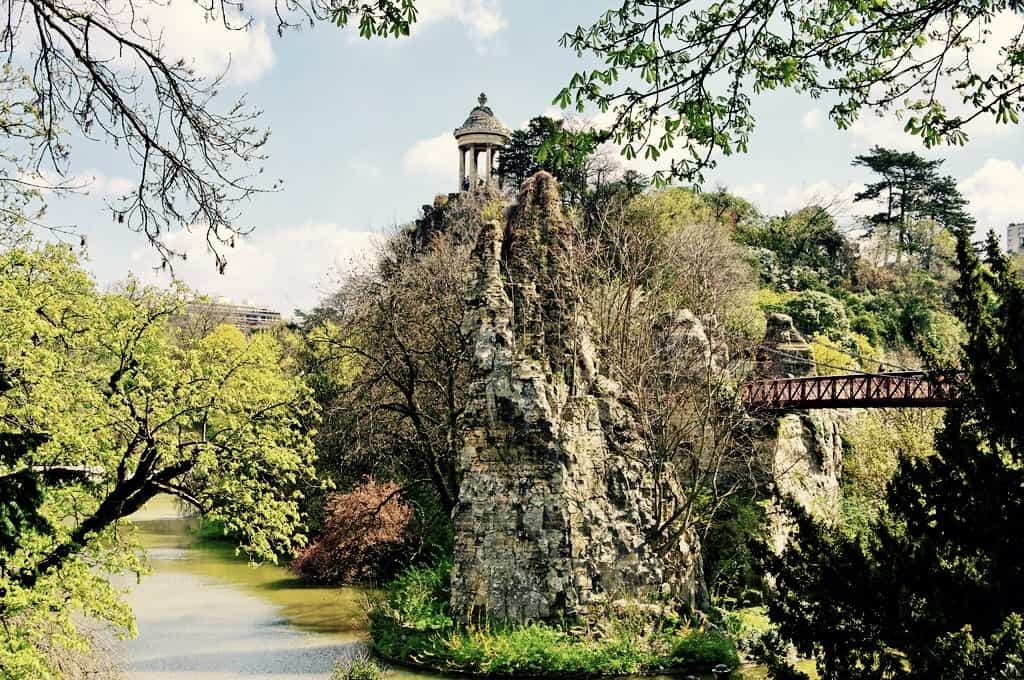
The park opened in 1867. One of its most prominent features is the Temple de la Sibylle, a monument modeled after a Roman temple, Vesta. Moreover, since islands are a huge concept in Paris, it is befitting that this temple was perched atop a man-made island called Ile de la Belvedere, an island made of the natural quarry stone located on the site. The island is surrounding by the city's largest man-made lake. The island is only accessible by two foot bridges. One of the bridges was created by Gustave Eiffel, creator of the internationally famed Eiffel Tower.
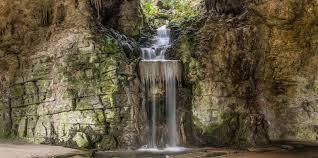
Gloom and sadness continued to rear its ugly face after the opening of the park. The second footbridge, aptly called, "Suicide Bridge," was used by its citizens seeking to committ suicide. Many of those seeking to do so, were successful. The city sought several ideas to preclude such events. The final solution was to encapsulate the bridge in mesh wiring, making it aesthetically pleasing to visitors, and preventing suicide seekers from from leaping to their death. Additional features are the man-made waterfalls, also made of the park's existing quarry stone. The breathtaking waterfalls are placed in several different locations throughout the park.
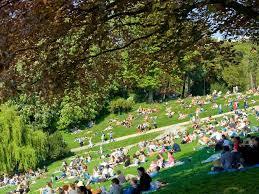
The park has evolved into one of the city's finest local attractions, a site for concerts and picnic goers. It is used as a respite for all Parisians, not just those residents from eastern Paris, but from throughout the city. Additionally, it is considered an Arboretum, boasting over one thousand indigenous and exotic trees, plants, and shrubbery. "The Ugly Duckling" has grown from darkness, gloom, and sadness, into beauty and grace befitting of the title, "Beautiful Swan."