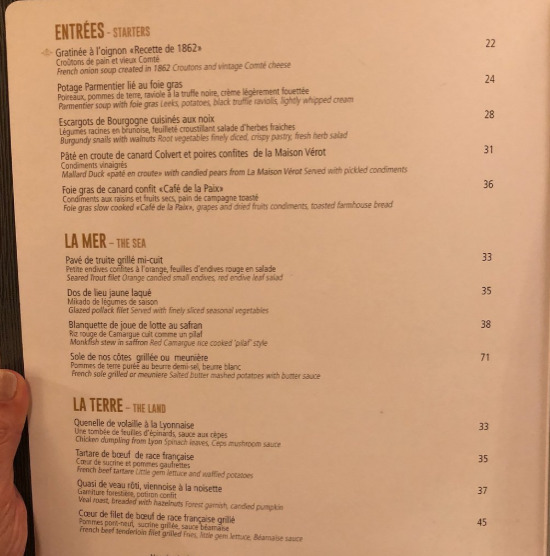
Le Café de la Paix: The Heart of Paris’ Theater District
The Café de la Paix, translated from French as the Cafe of Peace, is a historical Parisian institution that sits in the ninth arrondissement of Paris. It was a favorite location of many notable people such as French writer Guy de Maupassant, and TV journalist Leon Zitrone. The cafe is situated directly across the plaza from Opéra Garnier, the theater where author Gaston Leroux gained inspiration for his famous novel The Phantom of the Opera.
Text
The Café was inaugurated on May 5, 1862 by Empress Eugenie, wife of Napoleon III, and it officially opened July 30, 1862. Its name came from Le Grand Hôtel de la Paix (now known as L’intercontinental Paris Le Grand), which got its name from the nearby street Rue de la Paix. Its close proximity to Opéra Garnier added to its status as the heart of the theater district with a rich history concerning many well-known historical figures. Some of these historical figures include Emile Zola, French novelist, playwright, and journalist and the Prince of Wales and future King of the United Kingdom, Edward VII. Author Oscar Wilde was also known to be a regular at the Café, and during the 1950’s it became host to German-American actress Marlene Dietrich who often stayed at the Grand Hôtel de la Paix. This brought such massive crowds that the servers had to map out routes within the cafe to the kitchen, counters, and dining hall.
Upon the declaration of war in 1939, the Café closed for the first time. This closure did not diminish the spirits of those who worked at the cafe, though, when in 1944 a German grenade caused a fire within the cafe that was quickly put out by the head-waiter’s use of the soda siphons. After the war, in 1948, a radio studio was installed which broadcasted the program “This is Paris” to the United States. With hosts such as Maurice Chevalier, a French actor and entertainer, the broadcast was trying to reach an overseas audience to bring more tourists to France. The broadcast featured special guests such as Yves Montand, an Italian-French singer and actor, and included songs and different types of sketches.
On August 22, 1975, the Café was declared a historic site by the French government and in 2003 it underwent a complete renovation, opening up the space and exhuming the original opulence from when it originally opened. The Café is still very active and held close to Parisian hearts today. For Easter they traditionally host a Grand Easter Brunch that includes a grand meal and a large Easter egg hunt for children. The grand meal exemplifies the opulence of the Café de la Paix, with a price of 125€ per person.
Files
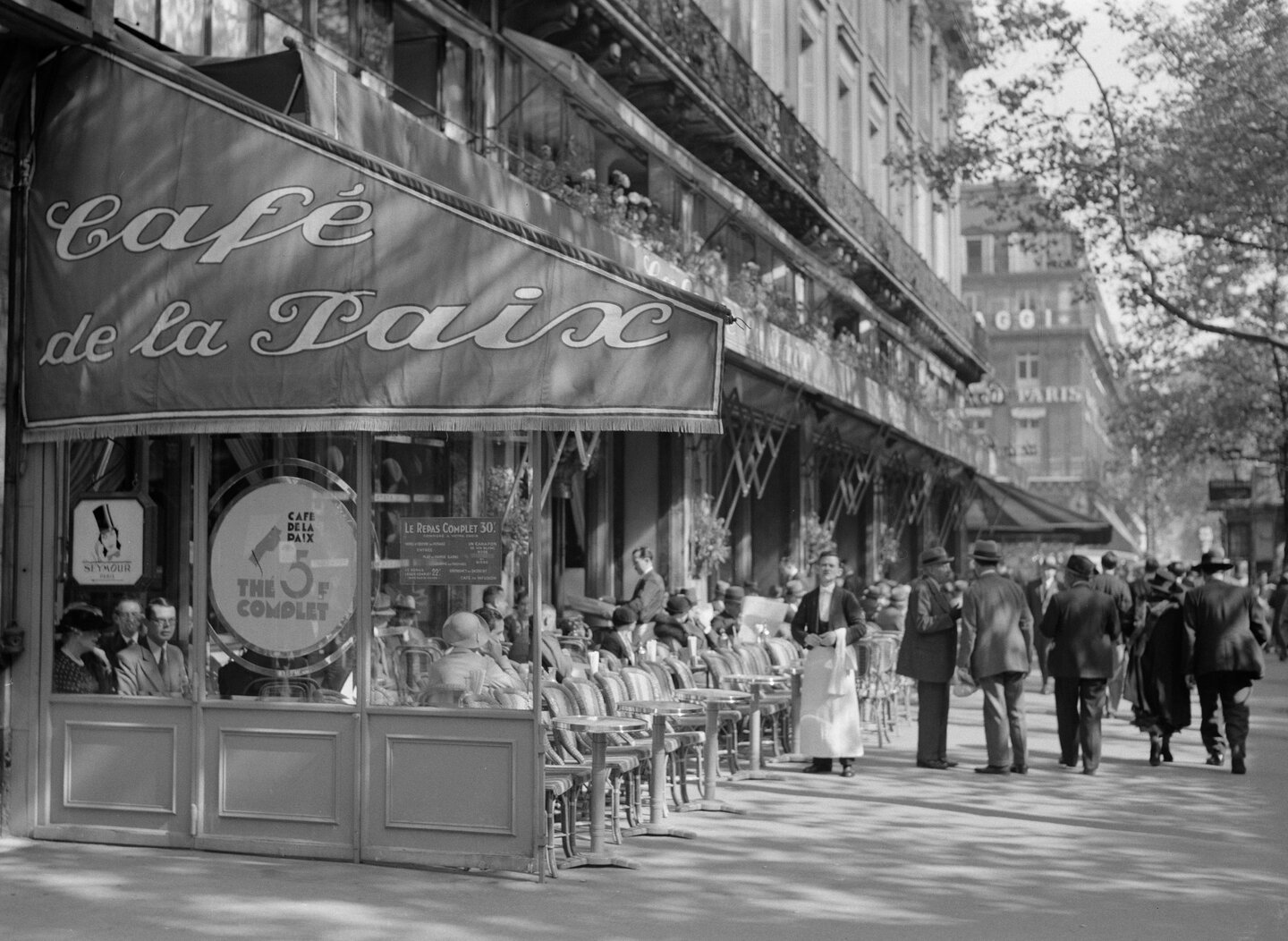
Le Café de la Paix
This photograph from 1935 shows the very Parisian past-time of sitting outside on the terrace of a cafe and people-watching. We get a sense of the neighborhood and the style of the era comes through in the clothing of the passers-by walking and in the waiter standing in the center of the photo. | Source: Wikimedia | Date: 1935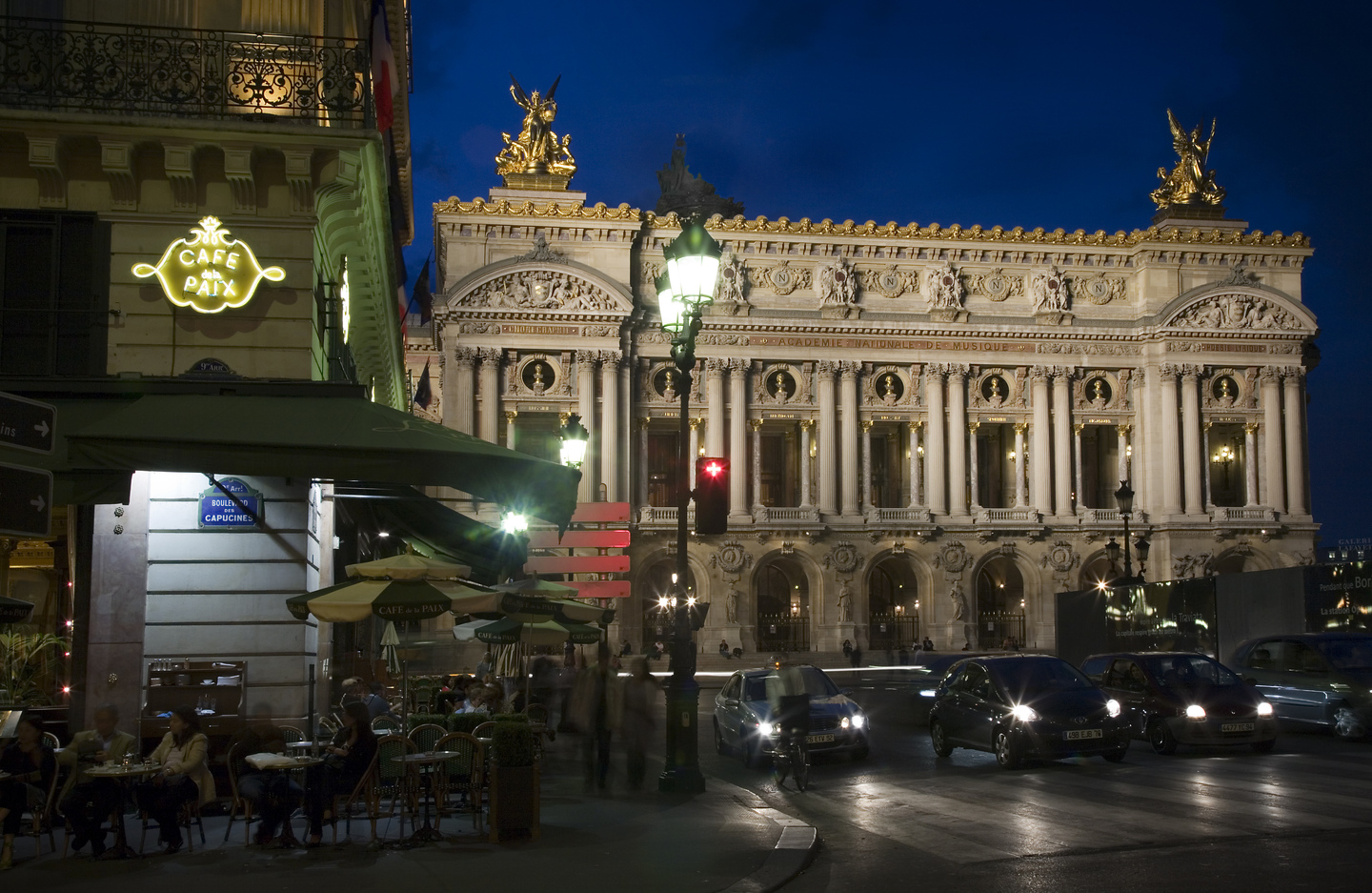
Café de la Paix & Opéra Garnier
This photograph by Jorge Royan gives us almost the same perspective as Cortes painted in his view of the Café. We can see the modern updates to the plaza such as cars, the replacement of the lampposts, and the addition of the electronic sign on the building. In this photograph, we are able to see the opulence of Opéra Garnier in the background. | Source: Wikimedia | Date: 2008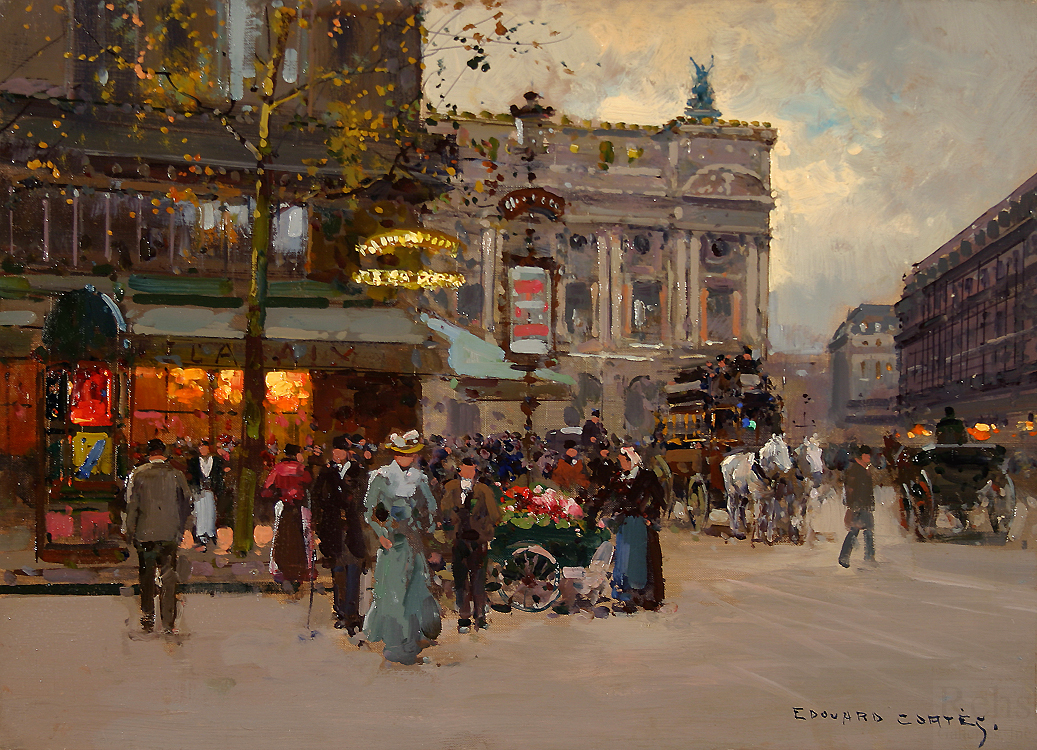
Café de la Paix
This painting, created by Edouard Leon Cortes around 1882, shows the Café placed against the backdrop of Opéra Garnier. Here Cortes paints the Café how it is known, as a lively and busy heart of the ninth arrondissement. | Source: Flickr | Date: 1882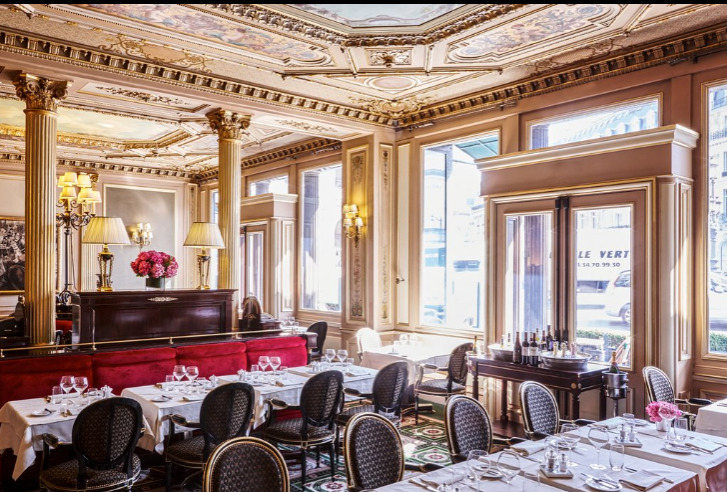
Coté Opéra
Interior of the Cafe de la Paix exemplifying its Second Empire extravagance. | Source: TripAdvisor | Date: 2018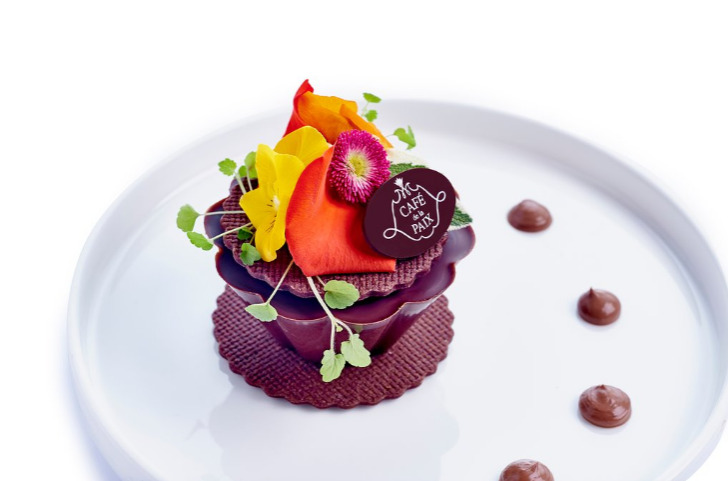
Un Dessert Délicat
A delicate little treat that can be ordered at the cafe with a piece of chocolate bearing its name. | Source: TripAdvisor | Date: 2019