<?xml version="1.0" encoding="UTF-8"?>
<feed xmlns="http://www.w3.org/2005/Atom">
  <title type="text">Paris City &amp;amp; Civ</title>
  <updated>2026-03-04T21:28:18+00:00</updated>
  <generator uri="http://framework.zend.com" version="1.12.20">Zend_Feed_Writer</generator>
  <link rel="alternate" type="text/html" href="https://paris.cityandciv.com/"/>
  <link rel="self" type="application/atom+xml" href="https://paris.cityandciv.com/items/browse?output=rss2"/>
  <id>https://paris.cityandciv.com/</id>
  <author>
    <name>Paris City &amp;amp; Civ</name>
    <uri>https://paris.cityandciv.com</uri>
  </author>
  <link rel="hub" href="https://pubsubhubbub.appspot.com/"/>
  <entry>
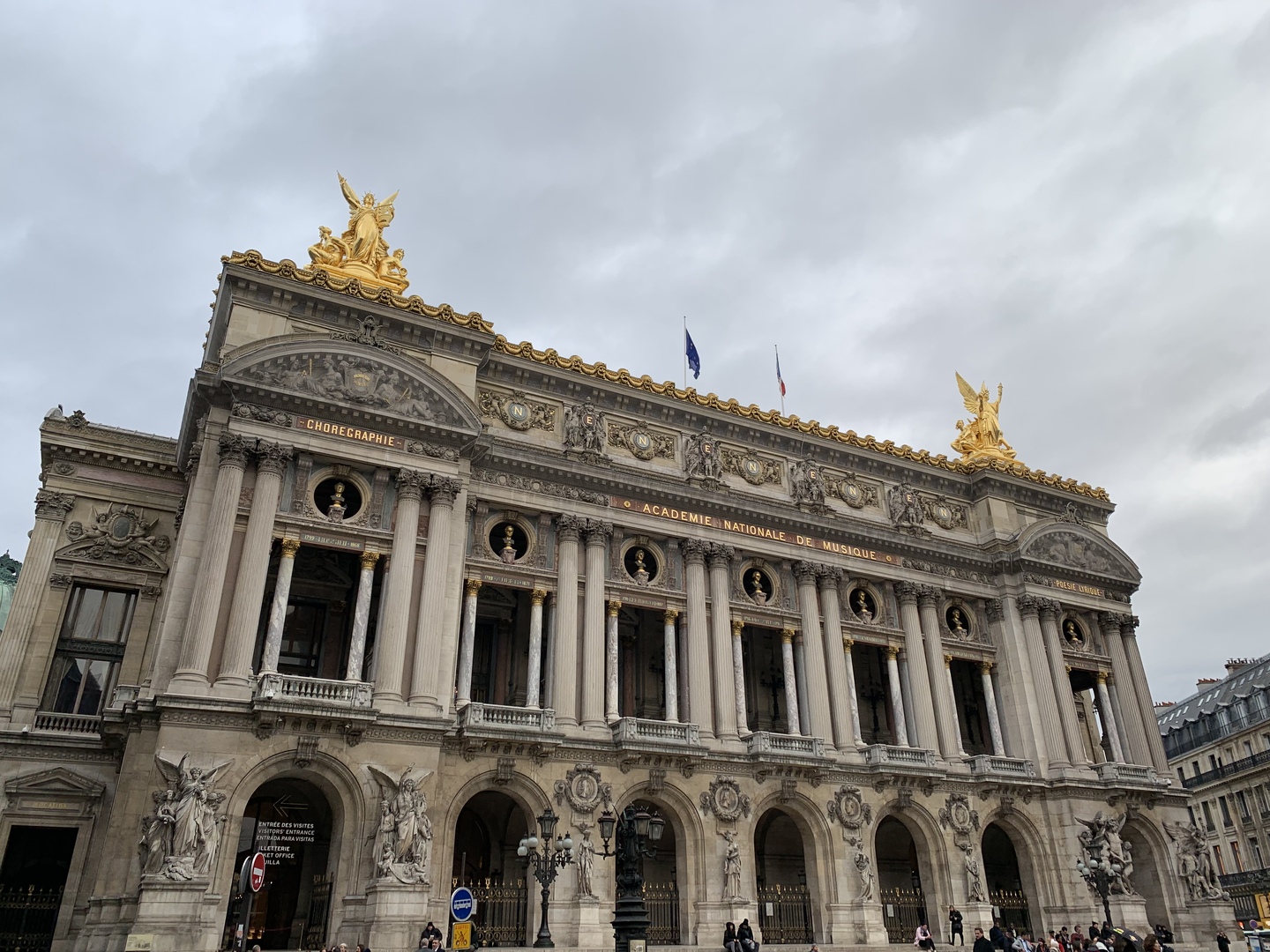
    <title type="html"><![CDATA[The Facade of Palais Garnier<br />
: The Extravagant and Theatrical Facade of Palais Garnier<br />
]]></title>
    <summary type="html"><![CDATA[<p><strong><em>Palais Garnier, also known as the Opéra Garnier, stands as one of the top monuments in Paris holding itself up alongside the Louvre, the Tour Eiffel and L’Arc de Triomphe.  It is known as one of the most lavish buildings as well as being the inspiration for Gaston Leroux’s 1910 novel The Phantom of the Opera.  Stepping out of the Opéra metro stop and coming face-to-face with the Palais facade is a breathtaking experience. </em></strong></p><img src="https://paris.cityandciv.com/files/fullsize/b587b1bac590b1997bde084781a971d1.jpg" alt="Palais Garnier Facade" /><br/><p>Located in the theater district that runs through the ninth arrondissement of Paris stands the luxurious building known as Palais Garnier.  The location of the Opéra house was dictated by Baron Haussmann, who played a large part in the urban renewal of Paris which included the construction of new parks, streets, and buildings.  The production of the building started in 1861 and took fifteen years to complete.  In 1867, despite the building still being under construction, an event was held to inaugurate only the facade of the Palais.  The inauguration for the completion of the entire building was held on January 5, 1875, and there were almost two thousand people in attendance from all over Europe. </p><p>The namesake for Opéra Garnier, Charles Garnier, was a designer and an architect who won the prize of a lifetime in a competition held for the design rights of this building.  In 1860 a call for design submissions for the future opera house was held and in 1861 the contest came to a close with Charles Garnier as its champion. Garnier designed the building using a blend of different architectural styles that came together as the Napoleon III style.  This involves elements of Baroque revival architecture, which is also known as Neo-Baroque, Second Empire architecture, which is exemplified by elaborate ornamentation, and Beaux-arts architecture.  Second Empire style of architecture evolved into Baroque revival, and Beaux-arts style drew upon French neoclassical with gothic elements.  This style drew upon Greek and Roman architectural characteristics, such as the creation of massive buildings with a symmetrical façade, decorated columns, and archways.  Characteristic of this new, at the time, Napoleon III architectural style was to leave no space without decoration.  This can be seen in the heavy ornamentation on every aspect of the building.  Sculptures are placed in the spaces between arches and the columns are of Corinthian style, which is the most decorative order to use.  Along the roof of the facade are gilded bronze faces that represent comic and tragic antique masks, which are used as symbols to represent the theater. </p><p>A great deal of work was put into the facade including work from fourteen painters and seventy-three sculptors and a variety of material, including gilded bronze, marble, and stone were used in its creation.  It is very theatrical architecture for a very theatrical building.  Placed within the faꞔade are bronze busts of some of the world’s greatest composers, including Beethoven and Mozart.  Below these heads are relief sculptures of other composers including Bach and Pergolesi.  The faꞔade also includes a variety of statues, as well as low relief and high relief sculpting.  Two gilded figures on the roof, known as Harmony on the left and Poetry on the right, were created by French sculptor Charles Gumery and exemplify perfectly the opulence of the second empire architectural style.  The tallest point of the building is a statue of Apollo created by Aimé Millet, a French sculptor, making the building one-hundred and eighty-four feet tall, which is only fifty-five feet taller than the Jefferson Memorial building in Washington D.C.  Today Opéra Garnier primarily functions as a theater for ballet events. </p><p><em><strong><a href="https://paris.cityandciv.com/items/show/23">For more (including 6 images) view the original article</a></strong></em></p>]]></summary>
    <published>2019-05-10T00:41:17+00:00</published>
    <updated>2026-03-04T21:28:18+00:00</updated>
    <link rel="alternate" type="text/html" href="https://paris.cityandciv.com/items/show/23"/>
    <id>https://paris.cityandciv.com/items/show/23</id>
    <author>
      <name>Mariah Workman</name>
    </author>
  </entry>
  <entry>
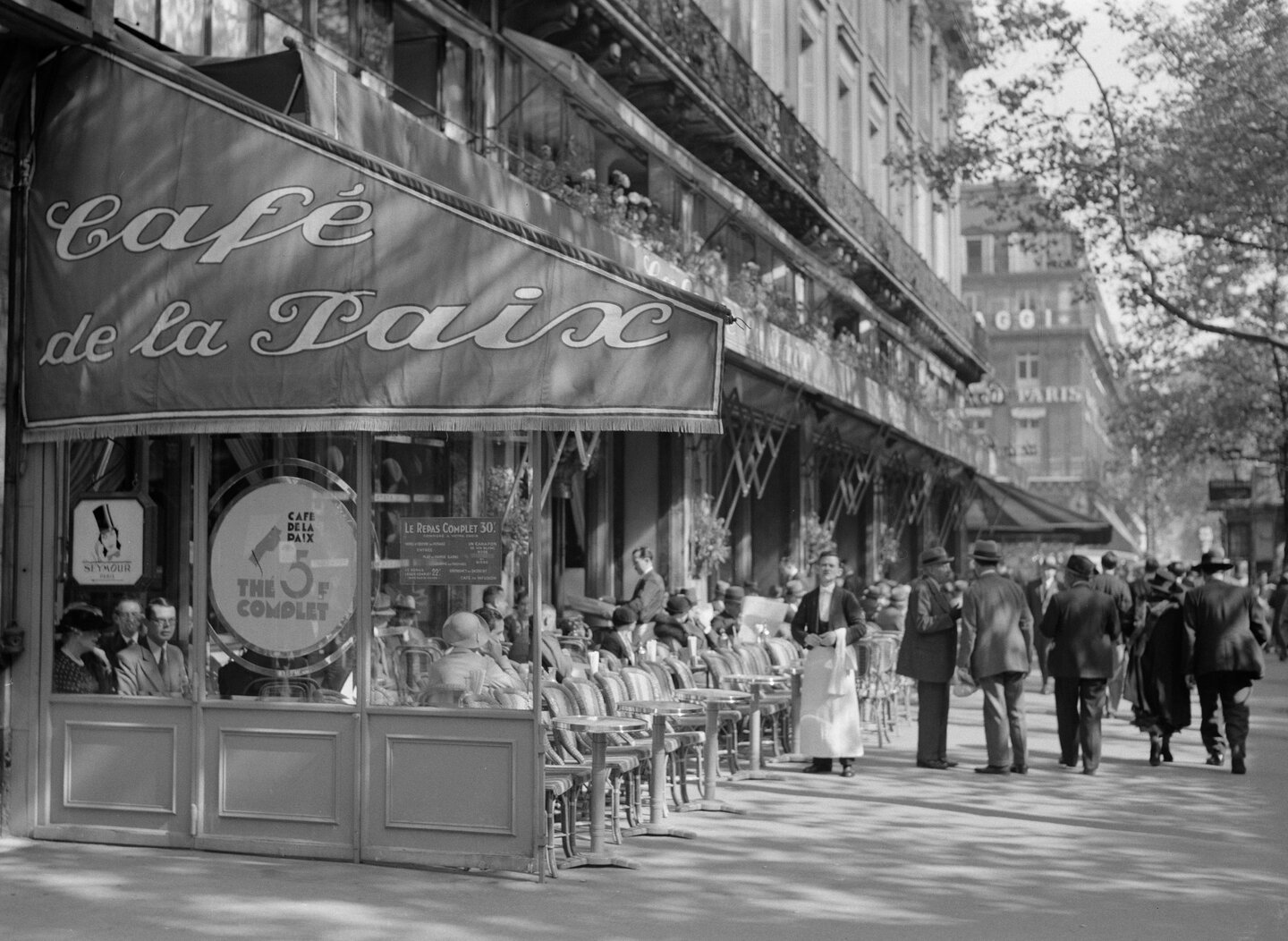
    <title type="html"><![CDATA[Le Café de la Paix: The Heart of Paris’ Theater District]]></title>
    <summary type="html"><![CDATA[<p><strong><em>The Café de la Paix, translated from French as the Cafe of Peace, is a historical Parisian institution that sits in the ninth arrondissement of Paris.  It was a favorite location of many notable people such as French writer Guy de Maupassant, and TV journalist Leon Zitrone.  The cafe is situated directly across the plaza from Opéra Garnier, the theater where author Gaston Leroux gained inspiration for his famous novel The Phantom of the Opera. </em></strong></p><img src="https://paris.cityandciv.com/files/fullsize/2ce4ed40f987561cebdf0fadf88aa38a.jpg" alt="Le Café de la Paix" /><br/><p>The Café was inaugurated on May 5, 1862 by Empress Eugenie, wife of Napoleon III,  and it officially opened July 30, 1862.  Its name came from Le Grand Hôtel de la Paix (now known as L’intercontinental Paris Le Grand), which got its name from the nearby street Rue de la Paix.  Its close proximity to Opéra Garnier added to its status as the heart of the theater district with a rich history concerning many well-known historical figures.  Some of these historical figures include Emile Zola, French novelist, playwright, and journalist and the Prince of Wales and future King of the United Kingdom, Edward VII. Author Oscar Wilde was also known to be a regular at the Café, and during the 1950’s it became host to German-American actress Marlene Dietrich who often stayed at the Grand Hôtel de la Paix.  This brought such massive crowds that the servers had to map out routes within the cafe to the kitchen, counters, and dining hall.  </p><p>Upon the declaration of war in 1939, the Café closed for the first time.  This closure did not diminish the spirits of those who worked at the cafe, though, when in 1944 a German grenade caused a fire within the cafe that was quickly put out by the head-waiter’s use of the soda siphons.  After the war, in 1948, a radio studio was installed which broadcasted the program “This is Paris” to the United States.  With hosts such as Maurice Chevalier, a French actor and entertainer, the broadcast was trying to reach an overseas audience to bring more tourists to France.  The broadcast featured special guests such as Yves Montand, an Italian-French singer and actor, and included songs and different types of sketches. </p><p>On August 22, 1975, the Café was declared a historic site by the French government and in 2003 it underwent a complete renovation, opening up the space and exhuming the original opulence from when it originally opened.  The Café is still very active and held close to Parisian hearts today.  For Easter they traditionally host a Grand Easter Brunch that includes a grand meal and a large Easter egg hunt for children.  The grand meal exemplifies the opulence of the Café de la Paix, with a price of 125€ per person.  </p><p><em><strong><a href="https://paris.cityandciv.com/items/show/9">For more (including 6 images) view the original article</a></strong></em></p>]]></summary>
    <published>2019-05-01T20:15:56+00:00</published>
    <updated>2026-03-04T21:28:17+00:00</updated>
    <link rel="alternate" type="text/html" href="https://paris.cityandciv.com/items/show/9"/>
    <id>https://paris.cityandciv.com/items/show/9</id>
    <author>
      <name>Mariah Workman</name>
    </author>
  </entry>
  <entry>
    <title type="html"><![CDATA[L&#039;Olympia: A stage fit for only the best – The Beatles, Aretha Franklin, Édith Piaf, and many more]]></title>
    <summary type="html"><![CDATA[<p><strong><em>As the epicenter of Parisian entertainment since the late 19th century, the stage at L' Olympia has become a home for many iconic performers such as The Beatles, Édith Piaf, Aretha Franklin, The Rolling Stones, Tina Turner, and more. Today, the extremely recognizable red, neon sign that stands proudly at the front of the concert venue, shows just how far L' Olympia has come since its humble beginnings.</em></strong></p><img src="https://paris.cityandciv.com/files/fullsize/d9f60a2c73c935b11406fb4222e22a93.jpg" alt="The bright red, neon sign at the front of L’Olympia," /><br/><p>Once called the Montagnes Russes (from the French name for roller coaster), but later renamed to L' Olympia, the performance hall was founded in 1888 by Joseph Oller and Charles Zidler, who eventually went on to construct the grandiose design for the Moulin Rouge. As L' Olympia grew in popularity, this iconic spot in the ninth arrondissement entertained thousands of Parisians with a colorful array of acts that ranged from musical concerts, operas and ballets, to circus performances. </p><p>Unfortunately, as the early twentieth century saw the decline of theatrical performances, L' Olympia began to lose its popularity as the main source for exuberant performances and dance spectacles. Instead, from the years 1929–1944, the venue served as a movie theater for the local residents. Following the Liberation of Paris, Allied troops that had served in World War II were treated to an occasional free performance at L'Olympia, which always ended with an energetic can-can dance. </p><p>Between the years of 1944 and 1954, L' Olympia was rebranded as a movie theater as people began to prefer the cinema over other forms of entertainment such as the theatrical performances, operettas, and ballets that L'Olympia was known for. It appeared that Parisians had lost interest in this once popular venue — that is, until Bruno Coquatrix stepped in. </p><p>Coquatrix bought L'Olympia with the hope that introducing up and coming bands and performers would revive interest in the neglected music hall. With that goal in mind, Coquatrix decided to completely rebrand the performance hall to appeal to a more modern-day audience. His idea for how to grab the attention of young people in the 1950s – live music! </p><p>Just a year after L' Olympia’s reestablishment in the world of live performance, one of France’s greatest treasures, Édith Piaf, performed an extremely memorable recital there for the citizens of Paris. She continued to perform at L' Olympia until the end of 1962. </p><p>Another singer that brought the crowd back to L' Olympia was Dalida. First auditioning for Coquatrix in 1956, she was immediately signed as a singer. Just three years later, Dalida would go on to perform every three to four years for nearly thirty nights in a row. Dalida was so attached to the music hall, and the concerts that she performed there, that many of her live album titles were actually titled after the venue and the years of her performances. </p><p>With L' Olympia beginning to boom in popularity again, another band on the rise was scheduled to play at the venue for eighteen consecutive days of performances — The Beatles. Playing nearly two to three times a day, The Beatles performed at L' Olympia before their famous landing in America, and, even played at the venue just the day before reaching their first number one single with “I Want To Hold Your Hand.” </p><p>L' Olympia continued in popularity with other rock bands and performers like The Rolling Stones, The Jackson Five, Madonna, Tina Turner, The Grateful Dead Cher, Diana Ross and the Supremes, Led Zeppelin, Pink Floyd, Jimi Hendrix, Blondie, and The Beach Boys until the 1990s when it was at risk of being torn down completely. Arguing the hall's historic impact, Jack Lang, France’s Minister of Culture during that time, stood against the hall’s demolishment. Lang eventually prevailed in preserving the hall and even ordered that the interior be refurbished in order to reflect the original design of the venue. </p><p>Since its renovation, L' Olympia has only continued to thrive and entertain new generations of music lovers in Pairs. Today many popular acts, international and local alike, including Lana Del Rey, Banks, Robyn, Vampire Weekend, The 1975, Arctic Monkeys, Partynextdoor, Hozier, Khalid, Miguel, Paramore, Arcade Fire, Jack White, Harry Styles, Lady Gaga, and more, have all called L' Olympia’s stage their home, even if only for a single night.</p><p><em><strong><a href="https://paris.cityandciv.com/items/show/5">For more (including 6 images) view the original article</a></strong></em></p>]]></summary>
    <published>2019-04-22T19:53:28+00:00</published>
    <updated>2026-03-04T21:28:17+00:00</updated>
    <link rel="alternate" type="text/html" href="https://paris.cityandciv.com/items/show/5"/>
    <id>https://paris.cityandciv.com/items/show/5</id>
    <author>
      <name>Amanda Chambers</name>
    </author>
  </entry>
</feed>