<?xml version="1.0" encoding="UTF-8"?>
<feed xmlns="http://www.w3.org/2005/Atom">
  <title type="text">Paris City &amp;amp; Civ</title>
  <updated>2026-03-04T21:28:19+00:00</updated>
  <generator uri="http://framework.zend.com" version="1.12.20">Zend_Feed_Writer</generator>
  <link rel="alternate" type="text/html" href="https://paris.cityandciv.com/"/>
  <link rel="self" type="application/atom+xml" href="https://paris.cityandciv.com/items/browse?output=rss2"/>
  <id>https://paris.cityandciv.com/</id>
  <author>
    <name>Paris City &amp;amp; Civ</name>
    <uri>https://paris.cityandciv.com</uri>
  </author>
  <link rel="hub" href="https://pubsubhubbub.appspot.com/"/>
  <entry>
    <title type="html"><![CDATA[Les Colonnes de Buren: L’art comme aire de jeux]]></title>
    <summary type="html"><![CDATA[<p><strong><em>Les Colonnes de Buren sont une installation d'art dans la Cour D'honneur du Palais Royal dans le cœur de Paris. Elles ont une histoire très compliquée en raison de la réception publique et des dysfonctionnements dans l'art publique.</em></strong></p><img src="https://paris.cityandciv.com/files/fullsize/a279d29a0d36ffeac07f77fbeef19b0a.jpg" alt="Les Colonnes de Buren" /><br/><p><span style="font-weight:400;"><span style="font-weight:400;">     Les Colonnes de Buren sont une installation artistique moderne dans la cour d'honneur du Palais Royal dans le premier Arrondissement de Paris. Le Palais Royal est une zone de Paris avec une histoire très riche. C'était originellement un palais construit en 1633 pour Cardinal Richelieu, et des membres de la famille royale y ont veçu après la mort de Richelieu. Maintenant cette structure architecturale historique abrite des magasins, des restaurants, des théâtres, et des institutions gouvernementales comme le conseil constitutionnel et le ministre de la culture.</p></span>
<span style="font-weight:400;">     Les Colonnes ont été conçues en 1985 par Daniel Buren. Il y a 260 colonnes octogonales noir et blanc rayées qui ont été disposées en carré.  Elles existent grâce à Jack Lang, un politicien de la ministre de la culture française qui ne voulait pas que la cour d’honneur devienne un parking pour les institutions gouvernementales. Il a détesté le spectacle des voitures dans Paris et il ne voulait pas qu'une cour historique devienne un espace pour les voitures. Il a décidé qu’une installation artistique est la meilleure solution, et il a organisé une compétition pour une œuvre d’art public pour cet espace. Daniel Buren a soumis les Colonnes qu’il a nommées “Les Deux Plateaux.” Finalement, c’est le maire de Paris, Jacques Chirac qui a choisi l'œuvre de Buren comme le gagnant du concours.</p><p> Les Colonnes sont construites au sous sol de la cours, et elles ont montré les fonctions électriques et de l’eau sous la cours d’honneur. Cependant, en 2001, l’eau s’est écoulée du sous sol et le gouvernement n'a pas fait de réparations parce que les chambres de répétition pour la Comédie Française sont très proches et on ne voulait pas les endommager.  Buren s’est mis en colère à cause de cette situation, mais puisqu'il s'agit d'une œuvre publique, on croit que l'artiste ne contrôle plus l'installation.</p>
<span style="font-weight:400;">     La réception des colonnes par le public était très mélangée. Certaines personnes l'aiment. Ils aiment la fonction et les idées de Buren. D'autres détestent leur look, et leur place dans une cour très historique. Certains questionnent la validité des colonnes comme une œuvre d’art. Ils croient que la simplicité et le look de l’installation ne correspondent pas à leurs idées de l’art français.</p>
<span style="font-weight:400;">     Buren a utilisé les colonnes parce qu’il voulait que les colonnes imitent les colonnes du Palais Royal; par contre, les couleurs (des rayures blanc et noir) ne donnent pas une impression artistique parce qu’ils imitent les toiles des stores comme celles des magasins du Palais Royal. Sa première intention c'était de faire agir le public comme les enfants en face des bâtiments du gouvernement. Aujourd'hui, c’est un aspect du projet qui a réussi. Les gens grimpent, s'asseyent, et jouent sur les colonnes tous les jours et soirs. Buren voulait juxtaposer l'aspect ludique et espiègle de son oeuvre avec le travail bureaucratique qui a lieu dans les bâtiments gouvernementaux du Palais Royal. </p>
<span style="font-weight:400;">     Pour moi, les Colonnes sont une pièce d’art très intéressante en raison de l’histoire et la place actuelle qu’elle a dans Paris. Les gens en servent comme une cour de récréation, c'est amusant et intéressant de voir les gens qui s’amusent en face des bâtiments gouvernementaux. Aussi l’installation originale a une intention pas typique avec Buren qui voulait montrer les fonctions des systèmes électroniques et les systèmes d’eau, un aspect de son projet qui n’est pas complètement réalisé. </p><p>Les Colonnes attirent pas mal de visiteurs qui adorent jouer au “Statue vivante” sur ces colonnes rayées, elles représentent des objets d’arts importants dans le Paris moderne ou la juxtaposition entre la tradition et la modernité se voit partout.</span></p><p><em><strong><a href="https://paris.cityandciv.com/items/show/77">For more (including 3 images) view the original article</a></strong></em></p>]]></summary>
    <published>2024-05-03T05:39:00+00:00</published>
    <updated>2026-03-04T21:28:19+00:00</updated>
    <link rel="alternate" type="text/html" href="https://paris.cityandciv.com/items/show/77"/>
    <id>https://paris.cityandciv.com/items/show/77</id>
    <author>
      <name>Andrew Delly</name>
    </author>
  </entry>
  <entry>
    <title type="html"><![CDATA[The Facade of Palais Garnier<br />
: The Extravagant and Theatrical Facade of Palais Garnier<br />
]]></title>
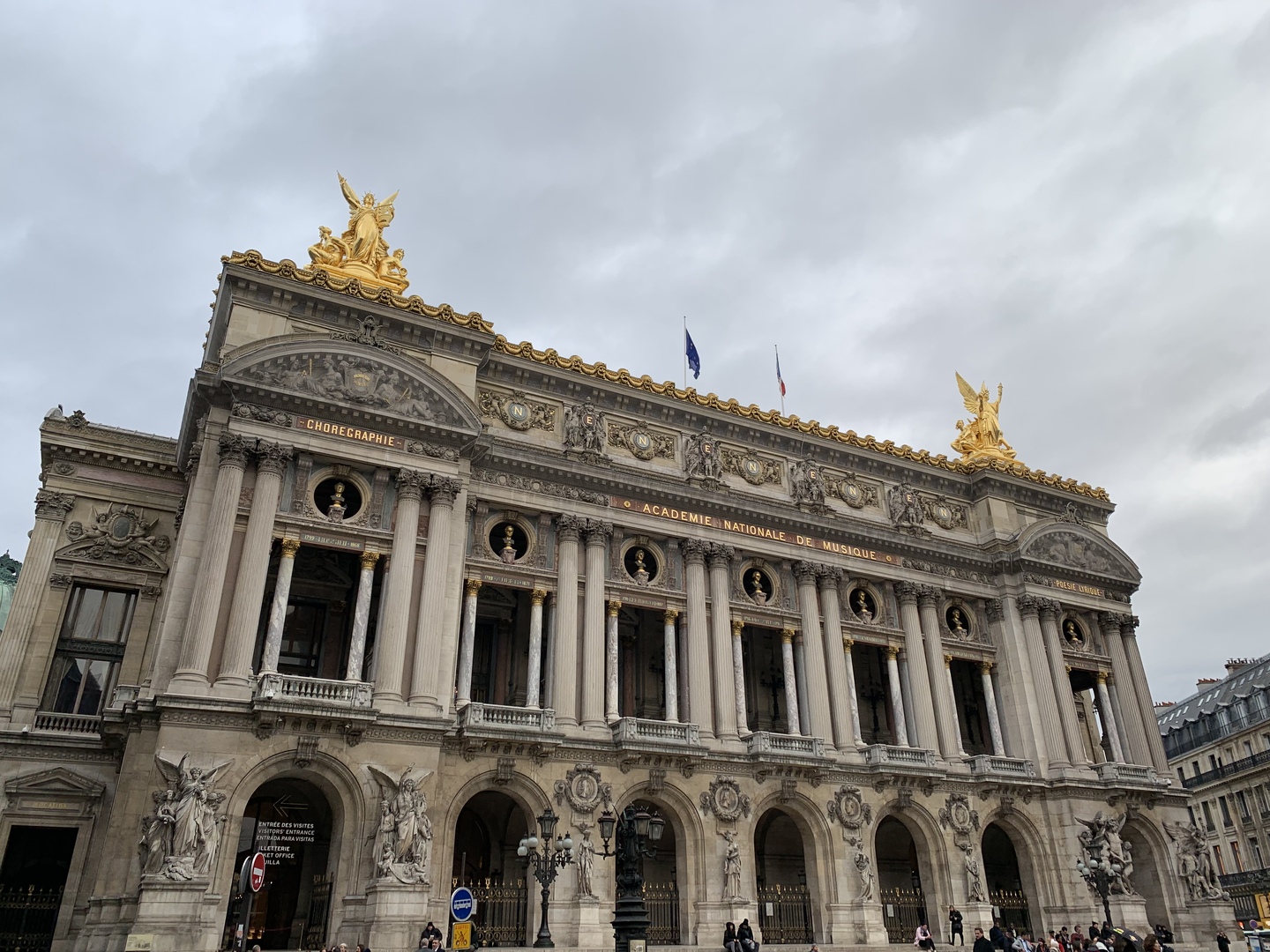
    <summary type="html"><![CDATA[<p><strong><em>Palais Garnier, also known as the Opéra Garnier, stands as one of the top monuments in Paris holding itself up alongside the Louvre, the Tour Eiffel and L’Arc de Triomphe.  It is known as one of the most lavish buildings as well as being the inspiration for Gaston Leroux’s 1910 novel The Phantom of the Opera.  Stepping out of the Opéra metro stop and coming face-to-face with the Palais facade is a breathtaking experience. </em></strong></p><img src="https://paris.cityandciv.com/files/fullsize/b587b1bac590b1997bde084781a971d1.jpg" alt="Palais Garnier Facade" /><br/><p>Located in the theater district that runs through the ninth arrondissement of Paris stands the luxurious building known as Palais Garnier.  The location of the Opéra house was dictated by Baron Haussmann, who played a large part in the urban renewal of Paris which included the construction of new parks, streets, and buildings.  The production of the building started in 1861 and took fifteen years to complete.  In 1867, despite the building still being under construction, an event was held to inaugurate only the facade of the Palais.  The inauguration for the completion of the entire building was held on January 5, 1875, and there were almost two thousand people in attendance from all over Europe. </p><p>The namesake for Opéra Garnier, Charles Garnier, was a designer and an architect who won the prize of a lifetime in a competition held for the design rights of this building.  In 1860 a call for design submissions for the future opera house was held and in 1861 the contest came to a close with Charles Garnier as its champion. Garnier designed the building using a blend of different architectural styles that came together as the Napoleon III style.  This involves elements of Baroque revival architecture, which is also known as Neo-Baroque, Second Empire architecture, which is exemplified by elaborate ornamentation, and Beaux-arts architecture.  Second Empire style of architecture evolved into Baroque revival, and Beaux-arts style drew upon French neoclassical with gothic elements.  This style drew upon Greek and Roman architectural characteristics, such as the creation of massive buildings with a symmetrical façade, decorated columns, and archways.  Characteristic of this new, at the time, Napoleon III architectural style was to leave no space without decoration.  This can be seen in the heavy ornamentation on every aspect of the building.  Sculptures are placed in the spaces between arches and the columns are of Corinthian style, which is the most decorative order to use.  Along the roof of the facade are gilded bronze faces that represent comic and tragic antique masks, which are used as symbols to represent the theater. </p><p>A great deal of work was put into the facade including work from fourteen painters and seventy-three sculptors and a variety of material, including gilded bronze, marble, and stone were used in its creation.  It is very theatrical architecture for a very theatrical building.  Placed within the faꞔade are bronze busts of some of the world’s greatest composers, including Beethoven and Mozart.  Below these heads are relief sculptures of other composers including Bach and Pergolesi.  The faꞔade also includes a variety of statues, as well as low relief and high relief sculpting.  Two gilded figures on the roof, known as Harmony on the left and Poetry on the right, were created by French sculptor Charles Gumery and exemplify perfectly the opulence of the second empire architectural style.  The tallest point of the building is a statue of Apollo created by Aimé Millet, a French sculptor, making the building one-hundred and eighty-four feet tall, which is only fifty-five feet taller than the Jefferson Memorial building in Washington D.C.  Today Opéra Garnier primarily functions as a theater for ballet events. </p><p><em><strong><a href="https://paris.cityandciv.com/items/show/23">For more (including 6 images) view the original article</a></strong></em></p>]]></summary>
    <published>2019-05-10T00:41:17+00:00</published>
    <updated>2026-03-04T21:28:18+00:00</updated>
    <link rel="alternate" type="text/html" href="https://paris.cityandciv.com/items/show/23"/>
    <id>https://paris.cityandciv.com/items/show/23</id>
    <author>
      <name>Mariah Workman</name>
    </author>
  </entry>
  <entry>
    <title type="html"><![CDATA[Le Café de la Paix: The Heart of Paris’ Theater District]]></title>
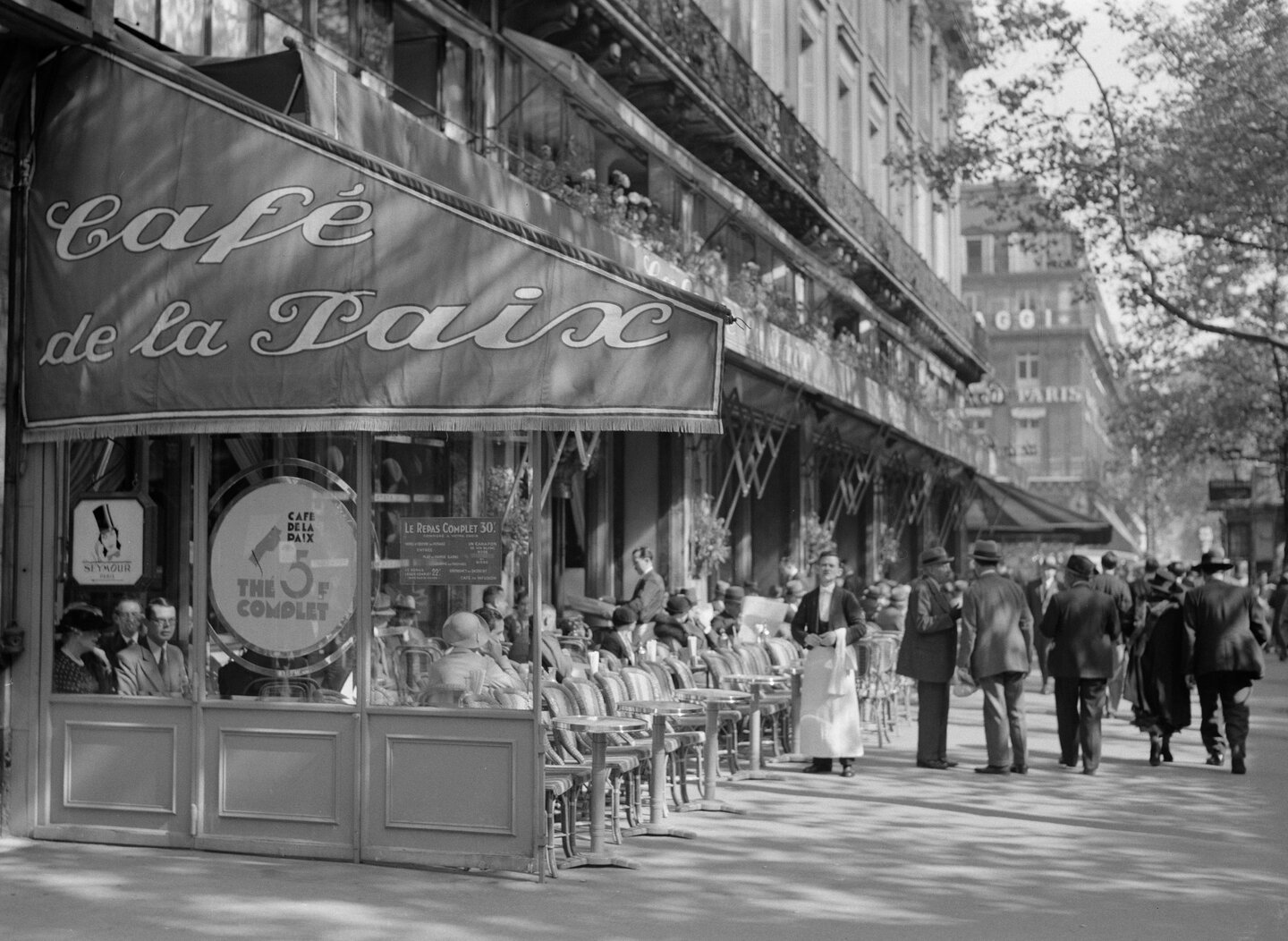
    <summary type="html"><![CDATA[<p><strong><em>The Café de la Paix, translated from French as the Cafe of Peace, is a historical Parisian institution that sits in the ninth arrondissement of Paris.  It was a favorite location of many notable people such as French writer Guy de Maupassant, and TV journalist Leon Zitrone.  The cafe is situated directly across the plaza from Opéra Garnier, the theater where author Gaston Leroux gained inspiration for his famous novel The Phantom of the Opera. </em></strong></p><img src="https://paris.cityandciv.com/files/fullsize/2ce4ed40f987561cebdf0fadf88aa38a.jpg" alt="Le Café de la Paix" /><br/><p>The Café was inaugurated on May 5, 1862 by Empress Eugenie, wife of Napoleon III,  and it officially opened July 30, 1862.  Its name came from Le Grand Hôtel de la Paix (now known as L’intercontinental Paris Le Grand), which got its name from the nearby street Rue de la Paix.  Its close proximity to Opéra Garnier added to its status as the heart of the theater district with a rich history concerning many well-known historical figures.  Some of these historical figures include Emile Zola, French novelist, playwright, and journalist and the Prince of Wales and future King of the United Kingdom, Edward VII. Author Oscar Wilde was also known to be a regular at the Café, and during the 1950’s it became host to German-American actress Marlene Dietrich who often stayed at the Grand Hôtel de la Paix.  This brought such massive crowds that the servers had to map out routes within the cafe to the kitchen, counters, and dining hall.  </p><p>Upon the declaration of war in 1939, the Café closed for the first time.  This closure did not diminish the spirits of those who worked at the cafe, though, when in 1944 a German grenade caused a fire within the cafe that was quickly put out by the head-waiter’s use of the soda siphons.  After the war, in 1948, a radio studio was installed which broadcasted the program “This is Paris” to the United States.  With hosts such as Maurice Chevalier, a French actor and entertainer, the broadcast was trying to reach an overseas audience to bring more tourists to France.  The broadcast featured special guests such as Yves Montand, an Italian-French singer and actor, and included songs and different types of sketches. </p><p>On August 22, 1975, the Café was declared a historic site by the French government and in 2003 it underwent a complete renovation, opening up the space and exhuming the original opulence from when it originally opened.  The Café is still very active and held close to Parisian hearts today.  For Easter they traditionally host a Grand Easter Brunch that includes a grand meal and a large Easter egg hunt for children.  The grand meal exemplifies the opulence of the Café de la Paix, with a price of 125€ per person.  </p><p><em><strong><a href="https://paris.cityandciv.com/items/show/9">For more (including 6 images) view the original article</a></strong></em></p>]]></summary>
    <published>2019-05-01T20:15:56+00:00</published>
    <updated>2026-03-04T21:28:17+00:00</updated>
    <link rel="alternate" type="text/html" href="https://paris.cityandciv.com/items/show/9"/>
    <id>https://paris.cityandciv.com/items/show/9</id>
    <author>
      <name>Mariah Workman</name>
    </author>
  </entry>
</feed>