<?xml version="1.0" encoding="UTF-8"?>
<feed xmlns="http://www.w3.org/2005/Atom">
  <title type="text">Paris City &amp;amp; Civ</title>
  <updated>2026-03-04T21:28:18+00:00</updated>
  <generator uri="http://framework.zend.com" version="1.12.20">Zend_Feed_Writer</generator>
  <link rel="alternate" type="text/html" href="https://paris.cityandciv.com/"/>
  <link rel="self" type="application/atom+xml" href="https://paris.cityandciv.com/items/browse?output=rss2"/>
  <id>https://paris.cityandciv.com/</id>
  <author>
    <name>Paris City &amp;amp; Civ</name>
    <uri>https://paris.cityandciv.com</uri>
  </author>
  <link rel="hub" href="https://pubsubhubbub.appspot.com/"/>
  <entry>
    <title type="html"><![CDATA[L&#039;Olympia: A stage fit for only the best – The Beatles, Aretha Franklin, Édith Piaf, and many more]]></title>
    <summary type="html"><![CDATA[<p><strong><em>As the epicenter of Parisian entertainment since the late 19th century, the stage at L' Olympia has become a home for many iconic performers such as The Beatles, Édith Piaf, Aretha Franklin, The Rolling Stones, Tina Turner, and more. Today, the extremely recognizable red, neon sign that stands proudly at the front of the concert venue, shows just how far L' Olympia has come since its humble beginnings.</em></strong></p><img src="https://paris.cityandciv.com/files/fullsize/d9f60a2c73c935b11406fb4222e22a93.jpg" alt="The bright red, neon sign at the front of L’Olympia," /><br/><p>Once called the Montagnes Russes (from the French name for roller coaster), but later renamed to L' Olympia, the performance hall was founded in 1888 by Joseph Oller and Charles Zidler, who eventually went on to construct the grandiose design for the Moulin Rouge. As L' Olympia grew in popularity, this iconic spot in the ninth arrondissement entertained thousands of Parisians with a colorful array of acts that ranged from musical concerts, operas and ballets, to circus performances. </p><p>Unfortunately, as the early twentieth century saw the decline of theatrical performances, L' Olympia began to lose its popularity as the main source for exuberant performances and dance spectacles. Instead, from the years 1929–1944, the venue served as a movie theater for the local residents. Following the Liberation of Paris, Allied troops that had served in World War II were treated to an occasional free performance at L'Olympia, which always ended with an energetic can-can dance. </p><p>Between the years of 1944 and 1954, L' Olympia was rebranded as a movie theater as people began to prefer the cinema over other forms of entertainment such as the theatrical performances, operettas, and ballets that L'Olympia was known for. It appeared that Parisians had lost interest in this once popular venue — that is, until Bruno Coquatrix stepped in. </p><p>Coquatrix bought L'Olympia with the hope that introducing up and coming bands and performers would revive interest in the neglected music hall. With that goal in mind, Coquatrix decided to completely rebrand the performance hall to appeal to a more modern-day audience. His idea for how to grab the attention of young people in the 1950s – live music! </p><p>Just a year after L' Olympia’s reestablishment in the world of live performance, one of France’s greatest treasures, Édith Piaf, performed an extremely memorable recital there for the citizens of Paris. She continued to perform at L' Olympia until the end of 1962. </p><p>Another singer that brought the crowd back to L' Olympia was Dalida. First auditioning for Coquatrix in 1956, she was immediately signed as a singer. Just three years later, Dalida would go on to perform every three to four years for nearly thirty nights in a row. Dalida was so attached to the music hall, and the concerts that she performed there, that many of her live album titles were actually titled after the venue and the years of her performances. </p><p>With L' Olympia beginning to boom in popularity again, another band on the rise was scheduled to play at the venue for eighteen consecutive days of performances — The Beatles. Playing nearly two to three times a day, The Beatles performed at L' Olympia before their famous landing in America, and, even played at the venue just the day before reaching their first number one single with “I Want To Hold Your Hand.” </p><p>L' Olympia continued in popularity with other rock bands and performers like The Rolling Stones, The Jackson Five, Madonna, Tina Turner, The Grateful Dead Cher, Diana Ross and the Supremes, Led Zeppelin, Pink Floyd, Jimi Hendrix, Blondie, and The Beach Boys until the 1990s when it was at risk of being torn down completely. Arguing the hall's historic impact, Jack Lang, France’s Minister of Culture during that time, stood against the hall’s demolishment. Lang eventually prevailed in preserving the hall and even ordered that the interior be refurbished in order to reflect the original design of the venue. </p><p>Since its renovation, L' Olympia has only continued to thrive and entertain new generations of music lovers in Pairs. Today many popular acts, international and local alike, including Lana Del Rey, Banks, Robyn, Vampire Weekend, The 1975, Arctic Monkeys, Partynextdoor, Hozier, Khalid, Miguel, Paramore, Arcade Fire, Jack White, Harry Styles, Lady Gaga, and more, have all called L' Olympia’s stage their home, even if only for a single night.</p><p><em><strong><a href="https://paris.cityandciv.com/items/show/5">For more (including 6 images) view the original article</a></strong></em></p>]]></summary>
    <published>2019-04-22T19:53:28+00:00</published>
    <updated>2026-03-04T21:28:17+00:00</updated>
    <link rel="alternate" type="text/html" href="https://paris.cityandciv.com/items/show/5"/>
    <id>https://paris.cityandciv.com/items/show/5</id>
    <author>
      <name>Amanda Chambers</name>
    </author>
  </entry>
  <entry>
    <title type="html"><![CDATA[The Parisian Catacombs: Skeletons of a City]]></title>
    <summary type="html"><![CDATA[<p><strong><em>In a city where people come to live life to the fullest, a chilling reminder of mortality rests just beneath the surface.</em></strong></p><img src="https://paris.cityandciv.com/files/fullsize/2ad4d7ee8fd71f0e73ce87eda817a7ab.jpg" alt="Catacombes de Paris" /><br/><p>Paris is a city where one can enjoy most every aspect of life; from delightful meals, sunny afternoons, fulfilling conversation, thought-provoking art, scenic views, and a rich history to enjoy, time in Paris is indeed time well spent. With the history of Paris expanding back to the time of the Ancient Romans, there are many ghosts of the past that linger in the city today. These ghosts, whispers of those who were here before, are not always easily detected by the common eye. Still-standing structures such as bath houses, walls, and churches are more obvious examples. But those who are privy to a more intimate knowledge of the city are aware of a far more literal example of Paris’ ‘ghosts’. The Parisian Catacombs are located 20 metres below the primped and paved streets of Paris. At this depth, a constant cool temperature is maintained, ensuring visitors find the experience chilling in more than one way. The catacombs have a complicated history; the dark and disturbing installation was ironically created in order to promote the health and well-being of Parisian citizens. Try not to hold your breath as we descend into the unique and fascinating history of this hidden treasure of Paris.</p><p>A city with extensive history is a city with extensive graves. Corpses, bodies from times past, buried in multitudes within the city when the expansion of Paris to the extent seen today was inconceivable in comparison to the time periods of those buried. Problems began to arise when various weather conditions caused the spilling over of corpses onto now developed properties. This instance occurred in 1780 at Les Innocents, and pushed the government of Paris to do something to both fix and prevent the mess from happening again. Paris was already home to a sprawling expanse of over 800 hectares of tunnels beneath the city that were used for the extraction of building materials to aid in constructing the city. Cemeteries, specifically Les Innocents, began to be emptied into the tunnels in an orderly fashion around 1785-6.  The project ended up taking 12 years, and the body count amounted to over 6 million. Reaching almost as far back into Parisian history as can be traced, the oldest bones moved belonged to the Merovingians, a people who inhabited Paris after the Romans. The catacombs come back into play via the realization of a Haussmannian city during the reign of Napoleon IIId. It had been deemed the “Paris Municipal Ossuary” in 1768.  The movement of bones to the catacombs ended officially in 1860. They were complete with both bones of old and bones of new, including Revolutionary icons Jean-Paul Marat and Maximilien de Robespierre. The catacombs were a successful attempt at improving the health of the city and allowing neighborhoods to live without fear of bodies popping up onto their lawns. They also became a popular and unique symbol of Paris, and provide an unforgettable visitor experience.</p><p>Visitors to the catacombs will encounter a relatively uniform display of the skulls and bones that rest there. No one skull clearly belongs to another body. An effort seems to be made to keep the space organized and respectful, yet the bones are strewn carelessly behind the ordered facade of skulls. The air is still, and quarters are tight. You must walk carefully as to not brush against a bone of some sort. The sheer number of bodies that lie within the catacombs is difficult to comprehend. A cemetary seeks to hide death; it is what humans are comfortable with and used to. In the catacombs of Paris, death stares you right in the face. </p><p>So now, when walking the streets of Paris, don’t forget to look down; for more lies beneath than the eye can see!</p><p><em><strong><a href="https://paris.cityandciv.com/items/show/6">For more (including 5 images) view the original article</a></strong></em></p>]]></summary>
    <published>2019-04-24T04:59:54+00:00</published>
    <updated>2026-03-04T21:28:17+00:00</updated>
    <link rel="alternate" type="text/html" href="https://paris.cityandciv.com/items/show/6"/>
    <id>https://paris.cityandciv.com/items/show/6</id>
    <author>
      <name>Danielle Cooke</name>
    </author>
  </entry>
  <entry>
    <title type="html"><![CDATA[Cimetière du Montparnasse: Colorful Stories of the Dead]]></title>
    <summary type="html"><![CDATA[<p><strong><em>Cimetiere du Montparnasse is the perfect forum to interact with some of the characterful deceased residents of Paris;  don’t forget your metro ticket and lipstick!</p></strong></p><img src="https://paris.cityandciv.com/files/fullsize/92149e2c91bd08a5c8d474f319d57225.jpg" alt="Man Ray Grave: Cemetery of Montparnasse" /><br/><p>	The bustling city of Paris is chock full of cemeteries. More and more grave markers appear as the city’s extensive history continues to grow. Located in a neighborhood with profound artistic significance, Cimetière du Montparnasse is home to a rich variety of creative minds. From the outside, the cemetery lies waiting behind the walls that hide it from the street. Foliage covers the expanse of the wall. When visiting in greener months, the beauty of both life and death can be observed at Cimetière du Montparnasse. Maps at the entrances establish the cemetery as a well visited spot, showing patrons the approximate locations of the graves belonging to those they wish to find. Little cobblestone pathways weave between grave sites and intersect with paved roads that enhance ease of navigation. There is no rhyme or rhythm to the staggered arrangement of tombs down each row. New graves are juxtaposed with old and all are unique, with special flares to commemorate the souls that reside there. The cemetery is crowded with individual gems, and only a few of its many treasures will be noted here. </p><p>First is both the grave site and works of sculptor Constantin Brancusi. Brancusi certainly left his mark on this infamous Parisian cemetery. The sculptor is buried in Cimetiere du Montparnasse alongside Alexandre Istrati and Natalia Dumitresco in a very simplistic and unpretentious grave. Brancusi’s body, however, is not the only item of his that lies there. The grave is located a short distance away from one of his earlier sculptures from 1907, ‘The Kiss’. The story behind this beautiful work makes it all the more interesting. Brancusi made the sculpture, which was chosen by his friend, the lover of Tania Rachevskaia, to be placed on her grave in memorial. It was their tragic love affair that led to her suicide in 1908. ‘The Kiss’ was the third sculpture of its kind in a series. Unfortunately visitors today, can no longer view the sculpture which has been unceremoniously surrounded by wooden boards. The reasoning for this is still widely unknown, but the best guesses point towards either restoration or family motives. Either way, thanks to his grave, Brancusi’s presence remains.</p><p>Another interesting member of Cimetiere du Montparnasse is famous photographer Man Ray. Adorning Man Ray’s grave is the quote “unconcerned, but not indifferent… Love Juliet”, from the woman who would be soon to join him in resting there, his wife. The quote alludes to his unique character and provocative works. His muse, ‘Kiki de Montparnasse’, also resides at the cemetery. Kiki made an appearance modeling in many of Man Ray’s works. As a legendary figure of the Montparnasse neighborhood, it is appropriate that she be buried there as well. Aside from serving as Man Ray’s muse and a model for many other artists Kiki was a singer, socialite, and actress. Ernest Hemingway claimed that Kiki “dominated the era of Montparnasse more than Queen Victoria ever dominated the Victorian era”. </p><p>Cimetière du Montparnasse is also home to the grave site of Jean Paul Sartre. Jean Paul Sartre was a very well-known philosopher. He is best recognized for his work in developing the concept of existentialism. There are two unique things about this grave that Sartre shares with Simone de Beauvoir, author of The Second Sex and an existentialist herself. The grave is often littered with Metro tickets weighted down by pebbles of various sizes and lipstick stains. It's a bit of a stretch from flowers, but there is a reasoning behind it. While the reasoning is not completely known or understood,  it is assumed that the Metro ticket tradition is derived from Sartre’s support of a Chinese Maoist group who gave free tickets out when prices shot up. Another theory relates the tickets to the Boulevard Voltaire riots. The brightly tinted lip marks smacked upon the face of the headstone arise from both the affection of Sartre’s fans as well as the recognition of his and Simone de Beauvoir’s open relationship. </p><p>The rich history of Cimetiere du Montparnasse does not end here. If interested in learning more about the cemetery’s contents, visit the recommended links below to see a full list of the cemetery’s inhabitants as well as a map. </p><p><em><strong><a href="https://paris.cityandciv.com/items/show/7">For more (including 6 images) view the original article</a></strong></em></p>]]></summary>
    <published>2019-04-24T05:50:52+00:00</published>
    <updated>2026-03-04T21:28:17+00:00</updated>
    <link rel="alternate" type="text/html" href="https://paris.cityandciv.com/items/show/7"/>
    <id>https://paris.cityandciv.com/items/show/7</id>
    <author>
      <name>Danielle Cooke</name>
    </author>
  </entry>
  <entry>
    <title type="html"><![CDATA[Charles Garnier &amp; the Palais Garnier: A competition to create one of Paris&#039; most iconic opera houses with obstacles including war, a ravaging fire, and a designer&#039;s dream to fulfill the extravagant wishes of the rich while doing so in an extremely short period of time. This is Charles Garnier&#039;s life and his ultimate masterpiece — The Palais Garnier.]]></title>
    <summary type="html"><![CDATA[<p><strong><em>Paris in the 1800s was a time of grand historical figures, disputes of religion, the call of revolution, and, of course, extravagant architecture. As many Parisians believed during this time, “there is no hesitation to be had between the arts. One must be God, or else an architect.” These exact words were spoken by one of the most famous Parisian architects in the 19th century, Charles Garnier.</em></strong></p><img src="https://paris.cityandciv.com/files/fullsize/f565124a3b4bbd8d359b17b5596a4d86.jpg" alt="Paris Opéra House (Palais Garnier)" /><br/><p>Garnier was born into a working-class family that lived in one of Paris’ most exciting neighborhoods, Rue Mouffetard. He was always fascinated by architecture, even as a young child, and remained a student of the works of Greek and Ancient Roman architects from his teenage years and beyond. </p><p>He won the title of multiple prestigious honors during his earlier years, including a fellowship in Rome at the Villa Medici, but it was not until the coveted Opéra competition that Garnier would come to be known as the Charles Garnier. </p><p>Garnier was a very competitive man. The first design he submitted for the Palais ranked last out of the five finalists. After receiving this news, he proposed a companionship with Léon Ginain to create a combined design but was rebuffed by Ginain. In response to this, he worked day and night to create a new outline that would immediately enamor the judges, all by himself. And just a few months after his first initial submission, he did. </p><p>Construction on the Palais began almost immediately after Garnier’s design was picked. The team of architects and draftsmen that created the Palais included only ten men, including Garnier, himself. He was always considered a kind, giving man, but was always recognized as a hard worker, as well. He suffered bouts of depression throughout his life but always managed to help his workers through their more difficult times during the construction of the Palais. Garnier was also an acclaimed playwright and songwriter who love to dabble in the world of writing (when he wasn’t busy with creating one of Paris’ most famous sites, of course). </p><p>During a time when oil paintings were the only way of capturing a portrait, Garnier had a distinct look about him that made him extremely recognizable. So famous was his look, with messy, curled hair, a distinctively large nose, and a fashionable mustache that he was often spotted by people on the streets of Paris. The fact that he was also considered the most famous architect in France at this time also helped promote his credibility as an architect to an unknown level. </p><p>Construction on the Palais faced major setbacks. Events including the Franco-Prussian war, the fall of the Second French Empire, and the Paris Commune didn't help the builders' mission to complete the Palais in a timely manner. Other disasters in other parts of Paris also created major issues for Garnier.</p><p>After Salle le Peletier, the temporary home of the Paris Opéra, was destroyed by a ravaging fire in 1873, Garnier was <i>then</i> commissioned to create the new home of the Opéra house, which would be located inside the Palais Garnier. Faced with many technical setbacks and a numerous amount of difficulties in creating a glamorous, yet sensibly safe Opéra house for the people of Paris, Garnier went straight to work to design such an incredible feature, focusing on one area of the Palais in particular - the ceiling of the grand staircase. </p><p>Garnier turned to Isidore Pils to create the main attraction of his Opéra house. A grand ceiling with the scenes of mythological figures such as Apollo and Orpheus painted onto it became quite the challenge for Pils, who fell ill during the creation of his masterpiece. Pils’ two younger students took over the job and worked until the day before the Palais’ grand opening. </p><p>As night fell upon the Opéra house, Garnier, Pils, and the rest of the painters and architects came together to admire their tremendous feat of work. On the evening of January 5, 1875, people from all over France crowded around the Palais Garnier to get even just a glimpse of the new Opéra House. During the intermission of the first performance officially held at the new Opéra House, Garnier stood center stage, receiving a booming sound of applause and cheers from those in attendance. Completely taken aback with emotion, Garnier had finally received the recognition he had always deserved, standing in the center of the greatest achievement in his life, as an architecture, and a proud Parisian.</p><p><em><strong><a href="https://paris.cityandciv.com/items/show/8">For more (including 6 images) view the original article</a></strong></em></p>]]></summary>
    <published>2019-04-24T19:03:15+00:00</published>
    <updated>2026-03-04T21:28:17+00:00</updated>
    <link rel="alternate" type="text/html" href="https://paris.cityandciv.com/items/show/8"/>
    <id>https://paris.cityandciv.com/items/show/8</id>
    <author>
      <name>Amanda Chambers</name>
    </author>
  </entry>
  <entry>
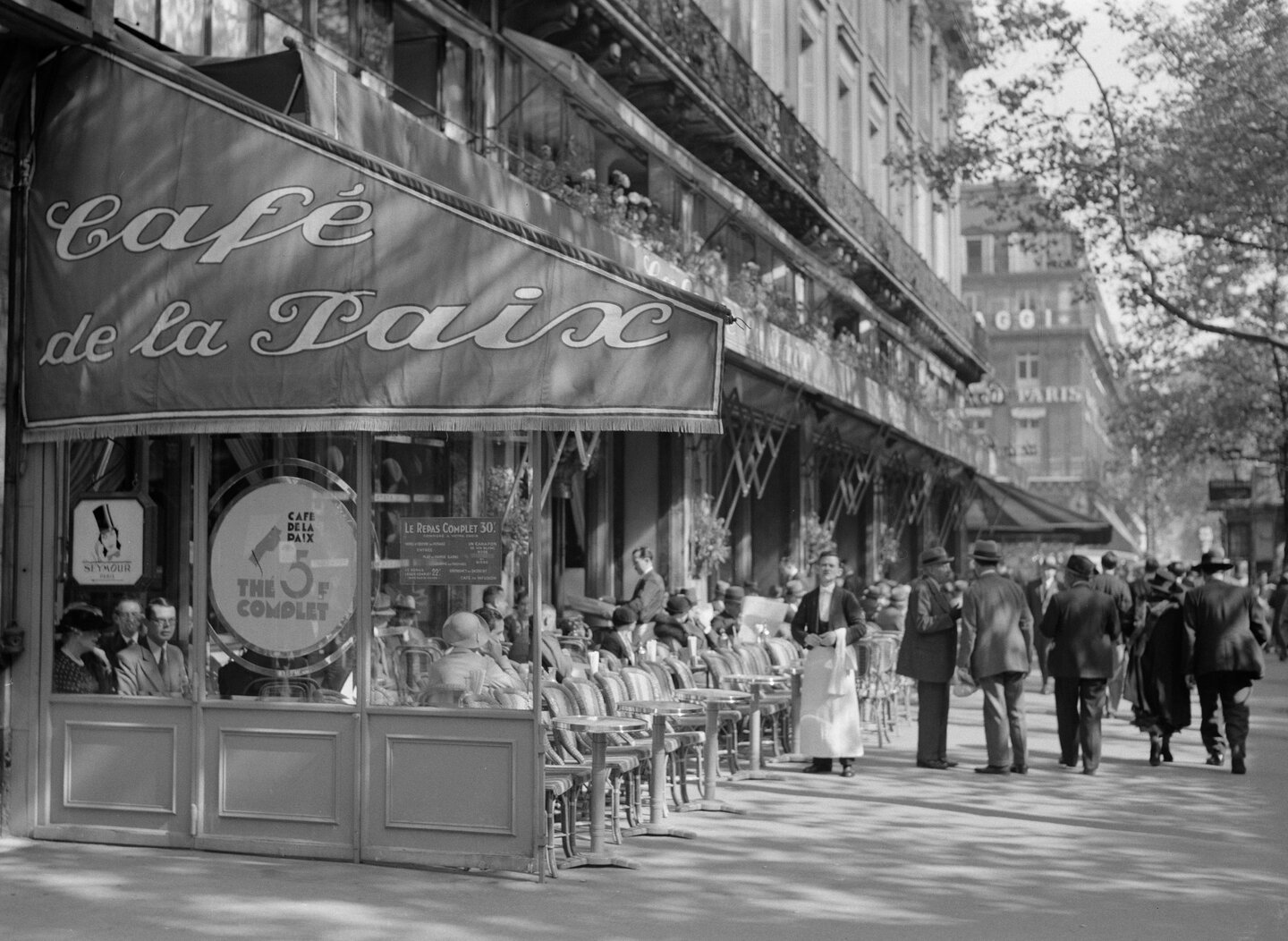
    <title type="html"><![CDATA[Le Café de la Paix: The Heart of Paris’ Theater District]]></title>
    <summary type="html"><![CDATA[<p><strong><em>The Café de la Paix, translated from French as the Cafe of Peace, is a historical Parisian institution that sits in the ninth arrondissement of Paris.  It was a favorite location of many notable people such as French writer Guy de Maupassant, and TV journalist Leon Zitrone.  The cafe is situated directly across the plaza from Opéra Garnier, the theater where author Gaston Leroux gained inspiration for his famous novel The Phantom of the Opera. </em></strong></p><img src="https://paris.cityandciv.com/files/fullsize/2ce4ed40f987561cebdf0fadf88aa38a.jpg" alt="Le Café de la Paix" /><br/><p>The Café was inaugurated on May 5, 1862 by Empress Eugenie, wife of Napoleon III,  and it officially opened July 30, 1862.  Its name came from Le Grand Hôtel de la Paix (now known as L’intercontinental Paris Le Grand), which got its name from the nearby street Rue de la Paix.  Its close proximity to Opéra Garnier added to its status as the heart of the theater district with a rich history concerning many well-known historical figures.  Some of these historical figures include Emile Zola, French novelist, playwright, and journalist and the Prince of Wales and future King of the United Kingdom, Edward VII. Author Oscar Wilde was also known to be a regular at the Café, and during the 1950’s it became host to German-American actress Marlene Dietrich who often stayed at the Grand Hôtel de la Paix.  This brought such massive crowds that the servers had to map out routes within the cafe to the kitchen, counters, and dining hall.  </p><p>Upon the declaration of war in 1939, the Café closed for the first time.  This closure did not diminish the spirits of those who worked at the cafe, though, when in 1944 a German grenade caused a fire within the cafe that was quickly put out by the head-waiter’s use of the soda siphons.  After the war, in 1948, a radio studio was installed which broadcasted the program “This is Paris” to the United States.  With hosts such as Maurice Chevalier, a French actor and entertainer, the broadcast was trying to reach an overseas audience to bring more tourists to France.  The broadcast featured special guests such as Yves Montand, an Italian-French singer and actor, and included songs and different types of sketches. </p><p>On August 22, 1975, the Café was declared a historic site by the French government and in 2003 it underwent a complete renovation, opening up the space and exhuming the original opulence from when it originally opened.  The Café is still very active and held close to Parisian hearts today.  For Easter they traditionally host a Grand Easter Brunch that includes a grand meal and a large Easter egg hunt for children.  The grand meal exemplifies the opulence of the Café de la Paix, with a price of 125€ per person.  </p><p><em><strong><a href="https://paris.cityandciv.com/items/show/9">For more (including 6 images) view the original article</a></strong></em></p>]]></summary>
    <published>2019-05-01T20:15:56+00:00</published>
    <updated>2026-03-04T21:28:17+00:00</updated>
    <link rel="alternate" type="text/html" href="https://paris.cityandciv.com/items/show/9"/>
    <id>https://paris.cityandciv.com/items/show/9</id>
    <author>
      <name>Mariah Workman</name>
    </author>
  </entry>
  <entry>
    <title type="html"><![CDATA[Museum of National Archives: The sinister past of the Hôtel  de Soubise. ]]></title>
    <summary type="html"><![CDATA[<p><strong><em>Located in the Marais neighborhood in Paris, France, the Hôtel de Soubise is a  massive hôtel that now houses the Museum of National Archives, but once served a very different purpose. In the late 1500s, the hôtel became the headquarters of the Catholic League during the Wars of Religion.  It  is believed that the infamous St. Bartholomew’s Day Massacre was planned here, an event that changed France’s history. </em></strong></p><img src="https://paris.cityandciv.com/files/fullsize/63550f815e2dd4a8d5dcaec4bc9064de.jpg" alt="National Archives, Paris" /><br/><p>The Hôtel de Soubise was owned by Francois de Lorraine, duke de Guise, who was the leader of the Catholic League, at the time. Under his influence, his mansion would become the setting for the League meetings and the planning of what became known as the St. Bartholomew’s Day Massacre. What happened on that bloody day in Paris? As a result of political and religious rivalries and upheaval, a massacre between French Huguenots and Catholics broke out. The Catholics targeted the Huguenots and started the slaughter. Thousands were killed on the grounds of the Louvre and the Tuileries, and bodies were dumped in the Seine River. Many suspect this heinous event was planned by Catherine de Medici, the ambitious mother of the King of France, King Charles IX.</p><p>Medici feared Huguenot influence was growing over her son, King Charles IX, and because of this, she agreed to have Huguenot Admiral Coligny assassinated by the Roman Catholics. Things snowballed from there. To add fuel to an already tense situation,  Medici’s daughter was to be married to a Huguenot, Henry of Navarre, in just a few days. This meant that there would be a large number of prominent Huguenots in Paris, all gathered in the same place for the same event.  However, the plot to assassinate Coligny failed, and Medici consequently agree to investigate the attempt. Instead, she met in secret to hatch a new assassination plan to have the Huguenot nobles killed who were still in Paris for her daughter’s wedding. </p><p>When Medici’s heinous plan finally came to fruition on the morning of August 24th, 1572, the massacre began. Admiral Coligny and Navarre’s right-hand men were murdered. People were slaughtered on the streets and their corpses thrown in the Seine, Huguenot homes and shops were destroyed by the Catholics. Even after the king issued a degree for the killing to stop on the 25th of August, it continued to the outskirts of Paris. It is estimated that a total of 10,000 Huguenots were killed by Catholics, by the order of Catherine de Medici. This event prolonged the Wars on Religion. The Huguenots in France were not weakened after this event, as expected, but furthered enraged. This day created a need for revenge in them that powered the war to go on. </p><p>Those passing by the Museum of National Archives housed in the stately Hôtel de Soubise today, may not suspect that this site once contributed to the planning of the mass slaughter fueled by religious hatred that is now known as the St. Bartholomew’s Day Massacre. As headquarters of the Catholic League, it served as the planning table for the massacre, an infamous day in French history that resulted in the deaths of 10,000 Huguenots in Paris and throughout France. </p><p><em><strong><a href="https://paris.cityandciv.com/items/show/10">For more (including 3 images) view the original article</a></strong></em></p>]]></summary>
    <published>2019-05-02T03:14:50+00:00</published>
    <updated>2026-03-04T21:28:17+00:00</updated>
    <link rel="alternate" type="text/html" href="https://paris.cityandciv.com/items/show/10"/>
    <id>https://paris.cityandciv.com/items/show/10</id>
    <author>
      <name>Savannah Slusher</name>
    </author>
  </entry>
  <entry>
    <title type="html"><![CDATA[The Palais Garnier: A Phantom in the Shadows of the City of Light ]]></title>
    <summary type="html"><![CDATA[<p><strong><em>Around every corner you turn in the Paris, a new adventure awaits. This adventure starts in the 9th arrondissement, at the Palais Garnier: one of the most influential opera houses in Parisian history and home to a cunning phantom that still haunts us to this day. </em></strong></p><img src="https://paris.cityandciv.com/files/fullsize/f1c441e498fddf21f0ab830e0a127061.jpg" alt="[Untitled]" /><br/><p>The Palais Garnier in all its grandiosity hides behind a seemingly normal corner in a seemingly normal neighborhood. As you pass a series of high-end cafés and boutiques that were and are still visited by some of the most famous and wealthy visitors to Paris, you would never guess the rich history you are about to encounter. The opera house is breathtaking. As your mind begins to get used to its size and grandeur, you notice its beautiful design. It is ornamented with sculptures and gold décor running towards the top of its enormous architecture. Across the front of the building lies a series of busts representing famous composers like Rousseau and Mozart. If its beauty isn’t enough, its history says it all. There, before your eyes, lies the single influence of one of the most influential works of theatrical art:  "The Phantom of the Opera." </p><p>The Palais was built after Napoleon III survived an assassination attempt at an opera house. This affair led to a competition of 171 people, with the winner being named chief architect for a new opera house with a separate and secure entrance for the Emperor. </p><p>The legend of Phantom of the Opera began with the creation of the Palais. It was built in 1861 and completed in 1874; but not without trouble. There is a body of water in the ground beneath The Palais Garnier that was quite a hassle when it was being built. The architects tried numerous times to pump the water out of the ground, but  were unsuccessful. The water continued to bubble up into the ground of the theater. Finally, to ensure that it would be contained, a water tank was built.</p><p>News of the new theater sitting atop a water tank laid way for the rise of legends. Those rumors particularly interested journalist Gaston Leroux who found them so compelling that he wrote the details into his novel entitled "The Phantom of the Opera." The story follows a deformed composer who holds a love obsession over a chorus singer at the opera house and haunts the rest of the theater as a phantom. The “phantom” is known to live in sewers beneath the opera house, only coming out of them to further his ulterior motives. Leroux published the novel in 1910 and it’s popularity grew to inspire several plays, films, comic strips, and even a ballet, before becoming the beloved musical we know today. </p><p>Furthermore, Leroux incorporated actual life events into his tale. In 1886, the counterweight for a chandelier fell in the Palais and killed a construction worker. The novelist used this event to influence a main plot point in his book. In "The Phantom of the Opera," the phantom drops a chandelier on an audience member, killing him. </p><p>To this day, "The Phantom of the Opera" in its many forms and expressions holds a place in the hearts of theater lovers across the entire world, as well as the place that inspired it all. Rumors of the infamous phantom remain strong, blurring the lines between fiction and reality. One thing does remain consistent between Leroux’s story and real life: the white catfish. To this day a large white catfish lives in the tank and is fed by the opera house staff who say they can see it swimming from time to time. </p><p>As for the Palais itself, the water tank beneath the Palais is still in place. It is used by firefighters of Paris to learn to swim in the dark. When Leroux was on his death bed in 1927, he insisted that the Palais Garnier was indeed haunted by a phantom, further solidifying the chilling affect that his story has had on the world. </p><p><em><strong><a href="https://paris.cityandciv.com/items/show/12">For more (including 6 images) view the original article</a></strong></em></p>]]></summary>
    <published>2019-05-03T02:17:05+00:00</published>
    <updated>2026-03-04T21:28:17+00:00</updated>
    <link rel="alternate" type="text/html" href="https://paris.cityandciv.com/items/show/12"/>
    <id>https://paris.cityandciv.com/items/show/12</id>
    <author>
      <name>Joycelynn Wiggins </name>
    </author>
  </entry>
  <entry>
    <title type="html"><![CDATA[Musee d’art et d’histoire du Judaisme (Museum of Jewish Art and History)]]></title>
    <summary type="html"><![CDATA[<p><strong><em>Upon entering the courtyard of the Musee d’art et d’histoire du Judaisme, right in the center, you encounter a figural sculpture of a man. That man was known as Alfred Dreyfus and he divided the French public in a pinnacle of anti-Semitism. The Dreyfus affair occurred during 1894 and 1906 and was a time of political crisis for the country, people either sided with Dreyfus or sided against him. France, like most other European countries, was a place of anti-Semitism. Jews were viewed as lesser, even before the Holocaust. </em></strong></p><img src="https://paris.cityandciv.com/files/fullsize/51cc583325b16c6b3a0624cd76242f38.jpg" alt="Alfred Dreyfus in 1890" /><br/><p>Alfred Dreyfus was a Jewish army captain during the Third Republic in France. He was accused and convicted of treason for allegedly selling army secrets to the Germans. A French document, known as a bordereau, was sent to German military officials. There was evidence found that could prove Dreyfus’s innocence, but based on a fabricated handwriting analysis and the bias of anti-Semitism, Dreyfus was arrested for this crime. The political crisis came over whether or not you believed Dreyfus. Those who did not side with Dreyfus were said to be anti-Semitic. Basing their opinions solely on the fact that Dreyfus was Jewish, not basing it on evidence. La Libre Parole is an example of a newspaper that covered the publicity of the affair early on and this paper was run and edited by known anti-Semitics. Dreyfus became a symbol in France demonstrating how disloyal French Jews really were. </p><p>Clearly, from the very beginning, Dreyfus was treated unfairly. When it came time for the trial, documents were forged, and some were kept hidden from his attorney. The Ministry of War held a secret trial where false testimonies were made, and hidden files were shown. Due to all of this, Dreyfus was found guilty. To make matters even worse, Dreyfus was dishonored in 1895 in a huge act of public humiliation. His stripes were torn, and his sword was broken in front of a large crowd. All the while he was shouting his innocence to the masses. </p><p>Dreyfus was then sent to Devil’s Island off the coast of French Guiana in South America. For a long time, very few advocated for Dreyfus to be liberated, in fact those who were against this were dubbed “anti-Dreyfusards” and those who wanted him free were called Dreyfusards. The Dreyfus family pressed for the case to be reopened due to lack of evidence. It was not until 1898 and 1899 that the Dreyfusards gained enough strength to make any sort of difference in the case. Radical left-wing coalitions formed, and the political crisis continued. </p><p>But how was Dreyfus finally proven innocent? French Intelligent Services got a new head during Dreyfus’s imprisonment, Lieutenant Picquart. Picquart never believed that he was guilty and sought the truth. Evidence surfaced that someone else in the French army was in fact guilty of writing the bordereau and pushed to have the truth revealed. Picquart was eventually forced to resign, but not before novelist Emile Zola also started trying to expose the truth with his article “J’accuse.” All this activity reached the French Senate and eventually led to Dreyfus being formally exonerated in 1906. He was admitted back into the army, promoted to Major, served in World War l and promoted again to Lieutenant Colonel. However, it was not until 1995, over 100 years later, that Alfred Dreyfus was publicly declared innocent to the country. </p><p>The statue of Dreyfus is rightfully placed in the courtyard of the Jewish Art and History Museum in the Marais in Paris. The Marais is Paris’s Jewish Quarter, with most Jewish owned shops, restaurants and businesses being in this neighborhood. The museum focuses on the Jewish history in France. The Dreyfus affair creating such political turmoil and unrest marked a monumental period of change in the country. Alfred Dreyfus remains a historical Jewish icon today and a mark of the injustice Jews in France have faced.</p><p><em><strong><a href="https://paris.cityandciv.com/items/show/14">For more (including 4 images) view the original article</a></strong></em></p>]]></summary>
    <published>2019-05-07T23:18:26+00:00</published>
    <updated>2026-03-04T21:28:17+00:00</updated>
    <link rel="alternate" type="text/html" href="https://paris.cityandciv.com/items/show/14"/>
    <id>https://paris.cityandciv.com/items/show/14</id>
    <author>
      <name>Savannah Slusher</name>
    </author>
  </entry>
  <entry>
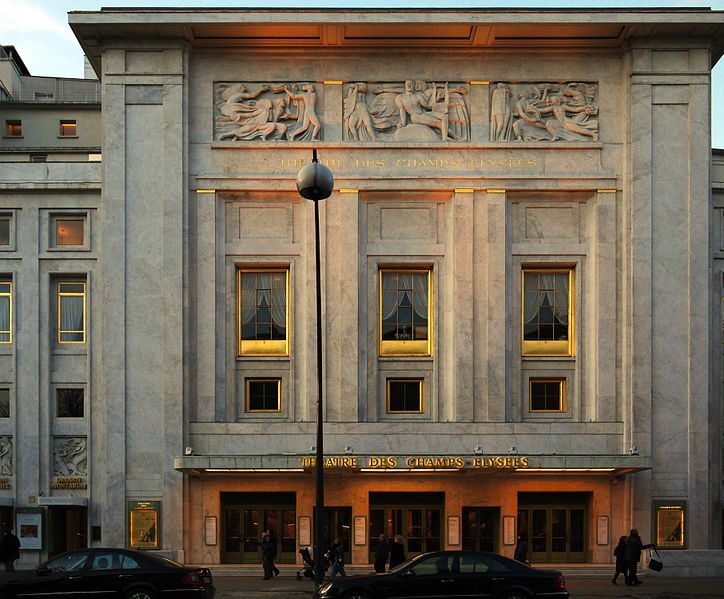
    <title type="html"><![CDATA[Théâtre des Champs-Elyées: A theater that set both an architectural precedent as well as sparked a riot.]]></title>
    <summary type="html"><![CDATA[<p><strong><em>In 1913 the completion and inauguration of the Théâtre des Champs-Elyées represented a new age in architectural style, construction, and the arts. It was poised at a crucial point between the traditionalists and modernists that would later spark a riot at one of the theaters staple events. Late,r with all this history under the theater's belt, the National Radio Orchestra decided to make the theater its home.</em></strong></p><img src="https://paris.cityandciv.com/files/fullsize/aaab0870b4b89cc562900207a77d194d.jpg" alt="Théatre des Champs Elysées, Paris, France" /><br/><p>The idea of the building first began with a man named Gabriel Astruc, but the original scheme for the actual building was drawn up by Henri Fivaz. Later the planning of the building was taken over by a gentleman named Roger Bouvard, this was in 1911 and signified the beginning of the building process. The project was then passed on to several other men until the final architects solidified in history took the reigns. Those men are that of Auguste Perret and Gustave Perret with schemes based off of Roger Bouvard and Henry van de Velde. The original plan for the construction of the theater was that of a metal framework however it was suggested and decided on that the building would actually be made out of reinforced concrete due to a few reasons. The main three being that it was the Perret Brothers medium of choice, it was to be more economical, and finally more fire resistant. The Théâtre des Champs-Elyées also became known not only for the previously mentioned construction tactics but also for the style that the building's front façade ushered in. The front of the building if looked at closely resembles and can be argued that it takes notes from the building style of the 1925 Paris Exposition of decorative arts that exemplify the Art Deco style.</p><p>Later the Théâtre des Champs-Elyées also makes its mark not only as an architecturally modern building but also as a cultural haven for all sorts of modernist ideas. The most impactful of these being the debut of Stravinsky’s Rite of Spring. The Théâtre des Champs-Elyées begins to become a battle ground between the traditionalist and modernist viewpoints and again no program demonstrates this better than the previously mentioned Rite of Spring as it sparked a fierce riot between the two opposing ideals. The ballet has become known as the most important and violent in the industry’s history. While much of the information of the ballet has been lost or was discounted some facts and accounts of the events remain. Many attendees say that it began after the ballet began and to much of the dismay of the traditionalists the ballet was very harsh and staccato in its portrayal of traditional harmonies of older music. These jarring rhythms and harsh tones led many in the two camps of ideals to begin a scuffle that could only be described as riotous and utter chaos. Many of the traditionalist Parisians threwr food and other objects toward the orchestra and dancers on stage while the more modernist inclined patrons tried to stop them and harassed the traditionalists. Though many patrons were escorted or ejected out of the theater, the ballet luckily managed to stay on track and the show went on.</p><p>As for the later years of the Théâtre des Champs-Elyées no other riots or architectural advancements were made. However, over the course of the theater’s history it did play host to many other famous musicians, actors, and shows. In the years between 1941 and 1944 the theater played host to the Grand-Orchestra de Radio-Paris which then gave way to the National Radio Orchestra as a full-time resident of the theater. Finally, between 1976 and 1990 the theater reached its peak usage and underwent a large renovation project to bring it into the 21st century. Luckily to this day though the Théâtre des Champs-Elysées still functions as one of Paris’s premiere arts theaters.</p><p><em><strong><a href="https://paris.cityandciv.com/items/show/16">For more (including 3 images) view the original article</a></strong></em></p>]]></summary>
    <published>2019-05-08T01:46:22+00:00</published>
    <updated>2026-03-04T21:28:18+00:00</updated>
    <link rel="alternate" type="text/html" href="https://paris.cityandciv.com/items/show/16"/>
    <id>https://paris.cityandciv.com/items/show/16</id>
    <author>
      <name>Jeremy Shawe</name>
    </author>
  </entry>
  <entry>
    <title type="html"><![CDATA[Café de Flore: Literary Hub in Saint-Germain-des-Pres]]></title>
    <summary type="html"><![CDATA[<p><strong><em>Café de Flore: one of the oldest surviving literary cafés. Its hallowed walls are a testament to over one hundred years of knowledge, and creativity. Intelligent dreamers, banded together under the greenery of the Flore to influence their country and the world. During the 1880s, on the corner where Boulevard Saint Germain and Saint Benoit meet, the Café de Flore opened its doors. Flore comes from the Roman goddess Flora, who is the goddess of flowers and spring. You can see a statue of her across from the café. The glass-enclosed terrasse, red banquettes, mahogany tables as well as mirrored walls and tiled floors, remain relatively unchanged to this day. </em></strong></p><img src="https://paris.cityandciv.com/files/fullsize/67b7f8346cde64832de6b51bfc7dbfba.jpg" alt="Café de Flore in the 1900s" /><br/><p>          Today, you might see actors or other celebrities enjoying expensive beverages and desserts at the Café de Flore, but in the 19th and early 20th centuries, it was full of writers, artists, philosophers, and even prostitutes. These people didn’t have a regular workflow, thus the Café de Flore became their workspace. They worked and ate breakfast, chatted amongst friends over lunch, and then lunch became dinner. Many creative minds worked and ate together, contributing to the world from their terrasse view.</p><p>The author Charles Maurras penned his work Au signe de Flore in this space during the late 19th century, an influential book that promoted a right-wing political movement. The Café de Flore remained a haven for intellectuals during both World Wars. It was completely untouched by German occupation. Guillaume Apollinaire, a writer and founder of surrealism, found that haven. He and Andrew Salmon made the Café their own publishing house where they created the literary art magazine Les Soirées de Paris, championing cubism in its pages. Some say the word “surrealist” was invented in the large main floor room of the Café. Pablo Picasso also frequented the café. After the war, many intellectuals such as the existentialist Jean-Paul Sartre and Simone de Beauvoir continued to visit the Café. Though it is difficult to tell if he preferred the Flore to its rival across the boulevard, Les Deux Magots, Jean-Paul Sartre spent many days here, engaging in rigorous intellectual conversations. </p><p>The environment in the mid 20th century was social and robust. You can imagine the exchanging of manuscripts between passionate poets and authors, and the heated debates between philosophers. The Café created a family, knit together by their creativity and brilliance. To commemorate its literary history, the Café de Flore established its own literary award called Prix de Flore, in 1994. Today, the café retains its private club atmosphere, but it is now expensive with a pretentious atmosphere. Café de Flore’s historical reputation of housing celebrities has shut out the new crowd of world influencers but tourists are still drawn by its colorful past. Strangely, the impoverished writers today work in carbon copy Starbucks. Instead of socializing afterward, they stare blankly at screens. It’s difficult to imagine Jean-Paul Sartre and Simone de Beauvoir, lounging in a Starbucks. While only the ghosts of these great minds remain, the Café de Flore lives on. </p><p><em><strong><a href="https://paris.cityandciv.com/items/show/17">For more (including 3 images) view the original article</a></strong></em></p>]]></summary>
    <published>2019-05-08T07:03:56+00:00</published>
    <updated>2026-03-04T21:28:18+00:00</updated>
    <link rel="alternate" type="text/html" href="https://paris.cityandciv.com/items/show/17"/>
    <id>https://paris.cityandciv.com/items/show/17</id>
    <author>
      <name>Noelle Bibyk</name>
    </author>
  </entry>
</feed>