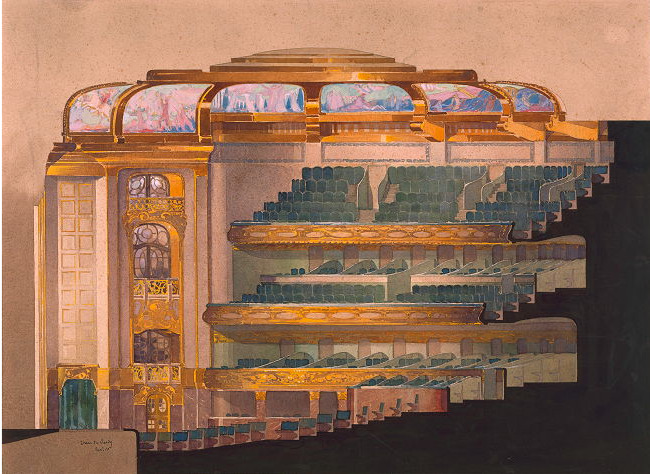
Théâtre des Champs-Elyées: A theater that set both an architectural precedent as well as sparked a riot.
In 1913 the completion and inauguration of the Théâtre des Champs-Elyées represented a new age in architectural style, construction, and the arts. It was poised at a crucial point between the traditionalists and modernists that would later spark a riot at one of the theaters staple events. Late,r with all this history under the theater's belt, the National Radio Orchestra decided to make the theater its home.
Text
The idea of the building first began with a man named Gabriel Astruc, but the original scheme for the actual building was drawn up by Henri Fivaz. Later the planning of the building was taken over by a gentleman named Roger Bouvard, this was in 1911 and signified the beginning of the building process. The project was then passed on to several other men until the final architects solidified in history took the reigns. Those men are that of Auguste Perret and Gustave Perret with schemes based off of Roger Bouvard and Henry van de Velde. The original plan for the construction of the theater was that of a metal framework however it was suggested and decided on that the building would actually be made out of reinforced concrete due to a few reasons. The main three being that it was the Perret Brothers medium of choice, it was to be more economical, and finally more fire resistant. The Théâtre des Champs-Elyées also became known not only for the previously mentioned construction tactics but also for the style that the building's front façade ushered in. The front of the building if looked at closely resembles and can be argued that it takes notes from the building style of the 1925 Paris Exposition of decorative arts that exemplify the Art Deco style.
Later the Théâtre des Champs-Elyées also makes its mark not only as an architecturally modern building but also as a cultural haven for all sorts of modernist ideas. The most impactful of these being the debut of Stravinsky’s Rite of Spring. The Théâtre des Champs-Elyées begins to become a battle ground between the traditionalist and modernist viewpoints and again no program demonstrates this better than the previously mentioned Rite of Spring as it sparked a fierce riot between the two opposing ideals. The ballet has become known as the most important and violent in the industry’s history. While much of the information of the ballet has been lost or was discounted some facts and accounts of the events remain. Many attendees say that it began after the ballet began and to much of the dismay of the traditionalists the ballet was very harsh and staccato in its portrayal of traditional harmonies of older music. These jarring rhythms and harsh tones led many in the two camps of ideals to begin a scuffle that could only be described as riotous and utter chaos. Many of the traditionalist Parisians threwr food and other objects toward the orchestra and dancers on stage while the more modernist inclined patrons tried to stop them and harassed the traditionalists. Though many patrons were escorted or ejected out of the theater, the ballet luckily managed to stay on track and the show went on.
As for the later years of the Théâtre des Champs-Elyées no other riots or architectural advancements were made. However, over the course of the theater’s history it did play host to many other famous musicians, actors, and shows. In the years between 1941 and 1944 the theater played host to the Grand-Orchestra de Radio-Paris which then gave way to the National Radio Orchestra as a full-time resident of the theater. Finally, between 1976 and 1990 the theater reached its peak usage and underwent a large renovation project to bring it into the 21st century. Luckily to this day though the Théâtre des Champs-Elysées still functions as one of Paris’s premiere arts theaters.
Files
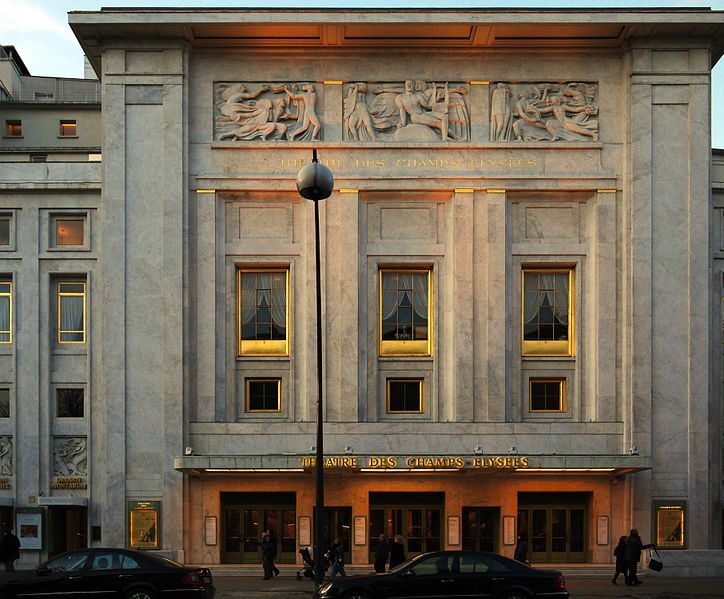
Théatre des Champs Elysées, Paris, France
A picture of the front façade of the theater. It shows the art deco styling as well as the detailed art sculpture above the marquee. | Source: Photograph | Date: November 2008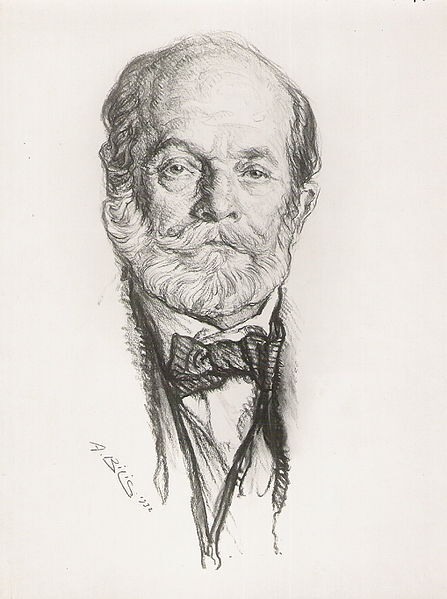
Auguste Perret architecte
The following is a portrait of the man who had the biggest impact on the construction and design of the Théâtre des Champs-Elyées. He lived 1874-1952 | Source: Sketch | Date: 1932