La Cimitière de Picpus: Lafayette, he is here!
A hero of the American Revolution, Gilbert du Motier, the Marquis de Lafayette, lies buried in Picpus Cemetery under American soil brought back from Bunker Hill. His presence in this private cemetery, however, reflects a darker and lesser-known relationship with another revolution--that of his native France.
Text
Lafayette was given the rank of Major General when he left France at age 19 to serve the cause of American independence alongside his mentor and spiritual father, George Washington. For his service, Lafayette not only earned the gratitude of the American people, he was also given honorary American citizenship and fêted with a year-long triumphant farewell tour of all 24 U.S. states in 1824. When he died in 1834, he was mourned by the entire nation. A bicentennial tour planned for 2024 will follow the same route as the 1824 tour, a reminder to Americans of the role that Lafayette played in securing our freedom.
An American flag flies over Lafayette's tomb at Picpus which is maintained by Daughters of the American Revolution. Each July 4th the flag is renewed in a ceremony that pays tribute to Lafayette and the friendship between our two nations. When American troops liberated Paris in July 1917, General Pershing sent Colonel Stanton to Lafayette's grave at Picpus where, in a stirring speech, he pronounced the famous words "Lafayette, we are here." It is said that the American flag remained flying over Lafayette's grave in Picpus during the occupation of Paris by the Nazis. These stories are well-known to many Americans, but the horrific history of Picpus may not be evident to the groups of Americans who visit the cemetery in Paris each year.
La Cimitière de Picpus is located near the current Place de la Nation. This square went by the name of the "La Place du Trône Renversé" (Square of the Overturned Throne) during the final bloody years of the French Revolution known as the "Reign of Terror." It was one of several sites in Paris where "enemies of the revolution" were guillotined--up to 55 executions per day. An estimated 16,000 to 40,000 people died during this dark period of French history. During the six-week period between June 17th and July 27, 1794, 1,306 people were guillotined in the square near Picpus.
With so many headless bodies rotting in the summer heat, and no space left to bury them in Paris, the government seized the land of a nearby convent, dug two enormous pits, and under cover of night, dumped the corpses into these mass graves after their names were recorded and their clothing and belongings inventoried. Among the dead were the sister, mother and aunt of Lafayette's wife, Adrienne. The victims came from all walks of life and included commoners, aristocrats, clergy, and sixteen Carmelite nuns who sang hymns as they were led to the guillotine platform. Known as "Les Martyres de Compiègne," their story inspired a novella, a motion picture, and an opera.
The Reign of Terror that Robespierre orchestrated finally ended with his beheading in this same square on July 29, 1794. France wanted to forget this horrific chapter in their past, but the families of the victims, including Lafayette's wife and sister-in-law, could not. They were among a number of families from Old Regime nobility who raised money to purchase the garden of Picpus in 1802 as a site of commemoration. They established a religious community charged with praying for the victims on the site and built a chapel where you can still see the names of all 1,306 victims recorded on the chapel wall. Burial in this private cemetery is strictly limited to families of these victims, which explains why the tombs of Lafayette and his wife are located there. After the French Revolution, Napoleon made all cemeteries public. Picpus is one of the rare exceptions and critics consider its establishment as anti-revolutionary since only the wealthy can afford to be buried in what is now a socially exclusive lieu de mémoire.
By the time Lafayette died in 1834, his considerable contributions to France--including La Declaration des droits de l'homme et du citoyen, which he drafted with help from Thomas Jefferson--were overshadowed by the king's fear of his influence. King Louis-Philippe put a ban on any official recognition for Lafayette and placed armed guards along the funeral route to keep French citizens away. Today, Americans and French alike can make the pilgrimage to Lafayette's tomb at Picpus Cemetery. Behind the cemetery walls, this "hero of two worlds" lies buried near the mass graves that contain more than a thousand headless bodies. Picpus is a stark reminder of the high cost of liberty and the revolutions on both sides of the Atlantic that called for sacrifices from people like Lafayette and others in order to secure it.
Files
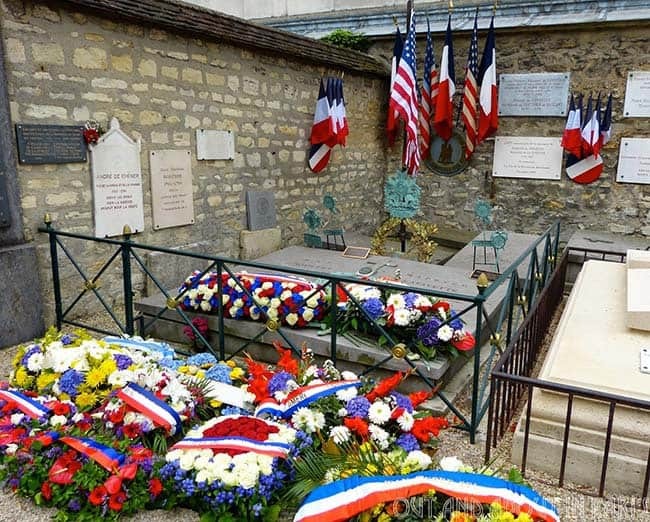
Lafayette's Tomb
Grave of the Marquis de Lafayette and his wife Adrienne located in Picpus Cemetery in Paris. | Source: Lafayette College | Date: 2011
Portrait of General Lafayette
Portrait of the Marquis de Lafayette dressed in the uniform on an American Major General | Source: Wikimedia Commons | Date: 1779-1780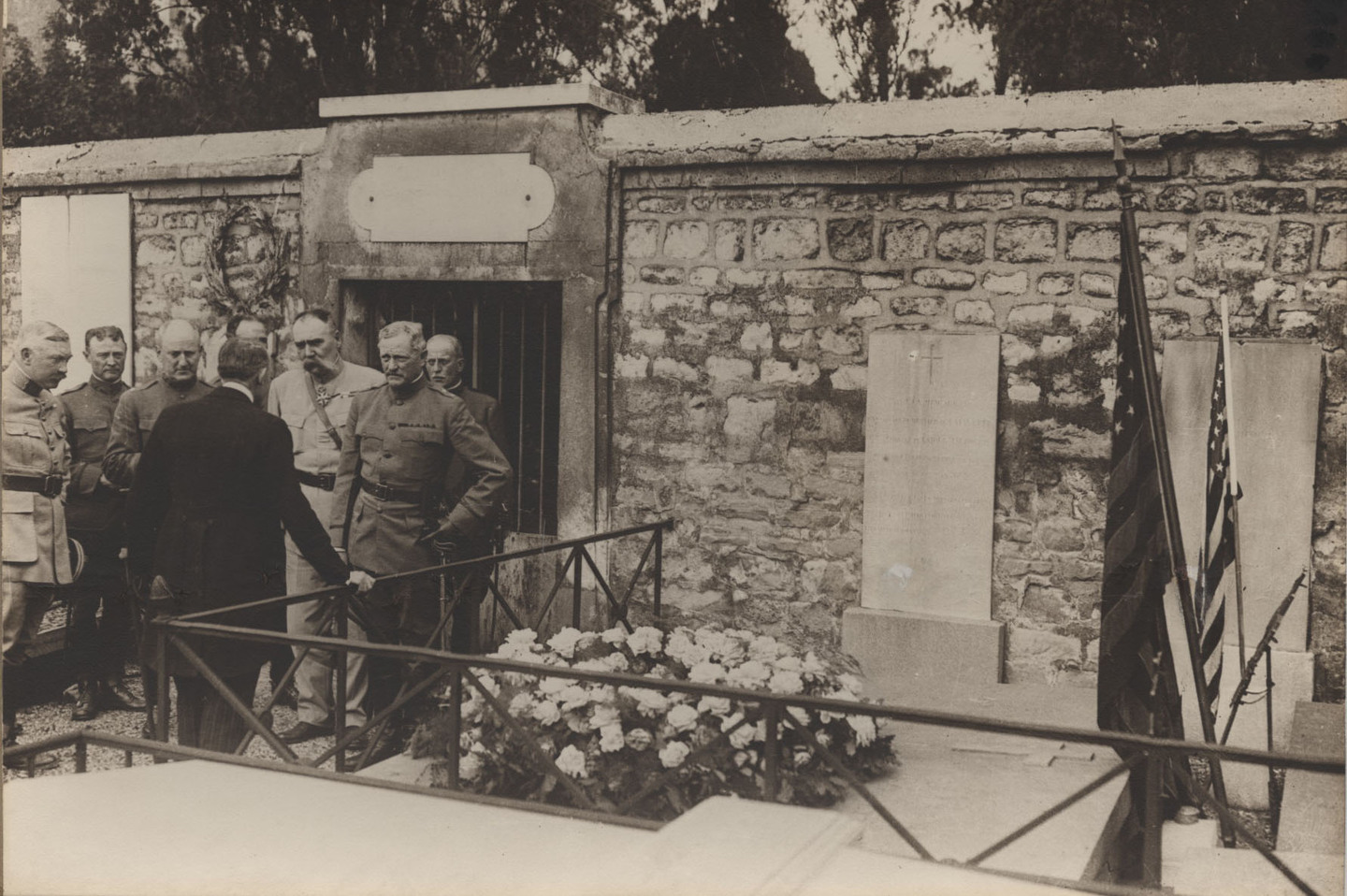
"Lafayette, we are here!"
Photo of General Pershing and Colonel Stanton at Lafayette's tomb in Picpus Cemetery on July 4, 1917. It was here that Stanton said the famous words, "Lafayette, we are here!" | Source: Special Collections and College Archives, Skillman Library, Lafayette College | Date: July 4, 1917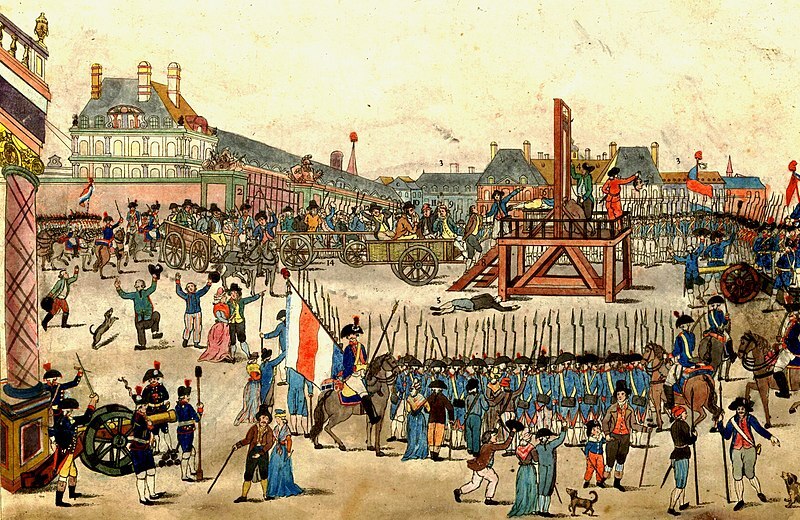
File #282: [Untitled]
Execution of Maximilien Robespierre and his supporters on July 28, 1794. Robespierre is shown in the cart as his younger brother is led to the guillotine. This image shows what a spectacle the beheadings had become under Robespierre's Reign of Terror. | Source: Wikimedia Commons. Original image is at the Bibliotheque Nationale de France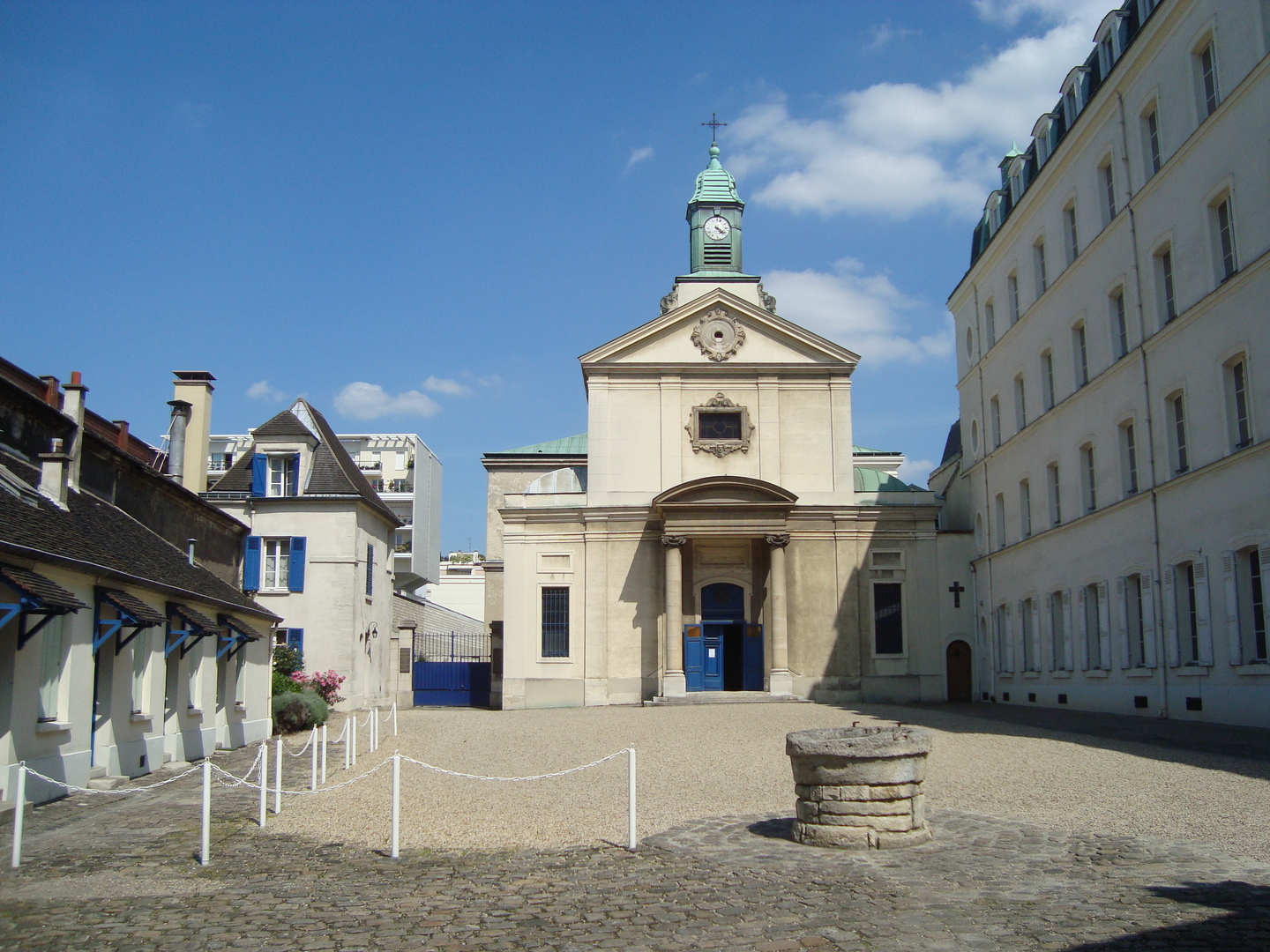
File #283: [Untitled]
Entrance to Picpus Cemetery with a view of Notre-Dame-de la Paix | Source: Wikimedia Commons | Date: 2010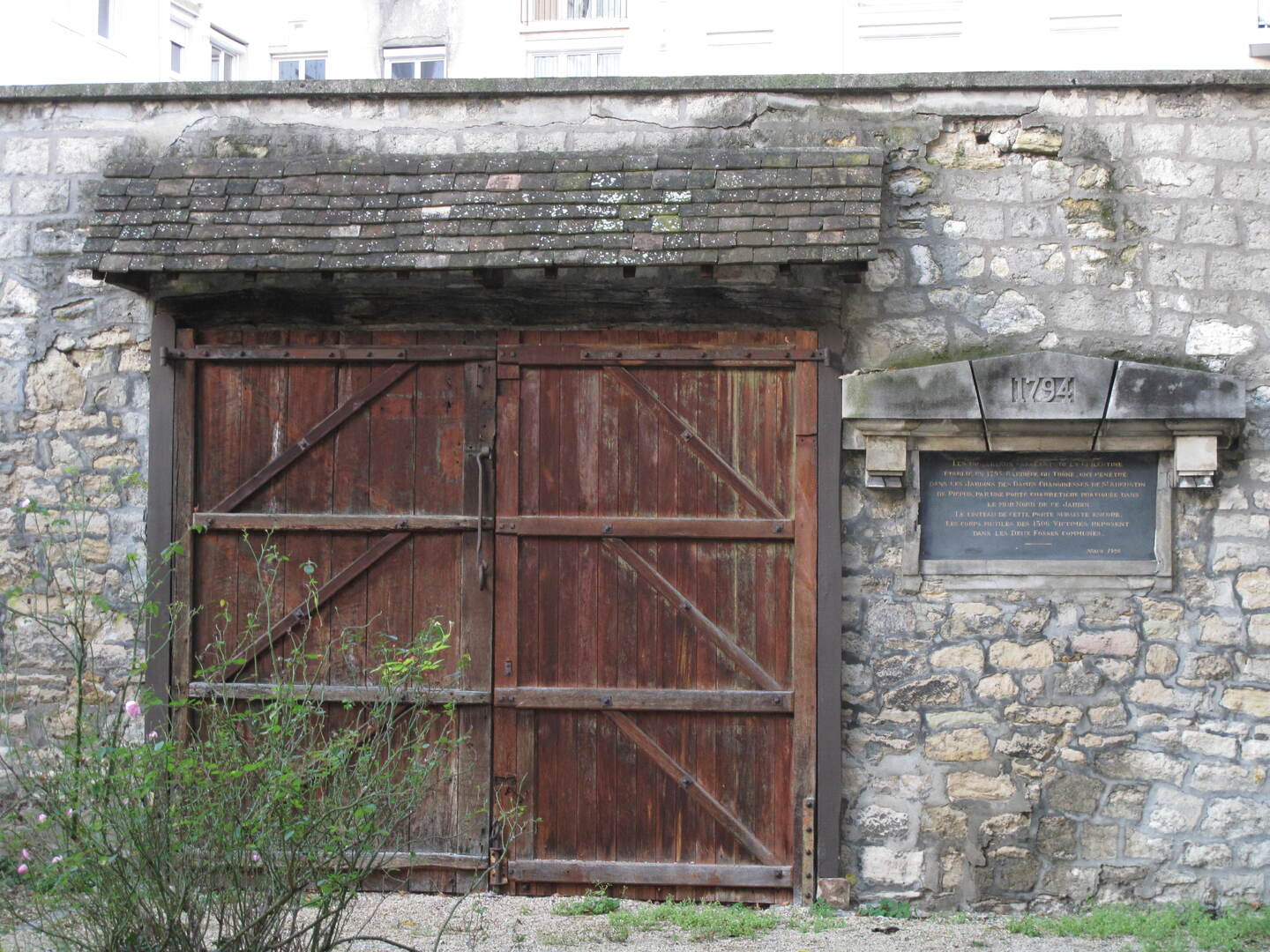
File #284: [Untitled]
Horse carriage gate that opens onto Picpus Cemetery. This is the gate where carts piled with decapitated bodies would enter the cemetery at night to deposit the corpses into the two mass graves dug on the site. | Source: Wikimedia Commons | Date: 2010Map
Located in the 12th Arrondissement of Paris.
Closest metro stop: La Nation