<?xml version="1.0" encoding="UTF-8"?>
<feed xmlns="http://www.w3.org/2005/Atom">
  <title type="text">Paris City &amp;amp; Civ</title>
  <updated>2026-03-04T21:28:20+00:00</updated>
  <generator uri="http://framework.zend.com" version="1.12.20">Zend_Feed_Writer</generator>
  <link rel="alternate" type="text/html" href="https://paris.cityandciv.com/"/>
  <link rel="self" type="application/atom+xml" href="https://paris.cityandciv.com/items/browse?output=rss2"/>
  <id>https://paris.cityandciv.com/</id>
  <author>
    <name>Paris City &amp;amp; Civ</name>
    <uri>https://paris.cityandciv.com</uri>
  </author>
  <link rel="hub" href="https://pubsubhubbub.appspot.com/"/>
  <entry>
    <title type="html"><![CDATA[Musée Du Quai Branly - Jacques Chirac: Explore the Musée du Quai Branly in Paris and journey through time with its captivating exhibits and artifacts from around the world.]]></title>
    <summary type="html"><![CDATA[<p><strong><em>The Musée du Quai Branly in Paris is a treasure trove of history and culture, inviting each visitor to embark on a journey of exploration and discovery. With its vast collection of artifacts, exhibits, and gardens, the Museum offers a glimpse into the art of diverse civilizations of the past and present. Whether you are drawn to the educational facilities or simply looking to enjoy a leisurely lunch, the Musée du Quai Branly is a must-visit destination that promises to transport you across time and space.</em></strong></p><img src="https://paris.cityandciv.com/files/fullsize/91d54403b395ba929a37d4084406f8d2.jpg" alt="Musee du quai Branly exterieur" /><br/><p>The Musée du Quai Branly opened on June 23, 2006. It features non-Western art and artifacts from Africa, Asia, Oceania, and the Americas, ranging from the Neolithic period to the twentieth-century. Like many other educational institutions, the Museum was founded to enhance the understanding of cultural arts and civilizations. It’s known for rehousing artifacts from other museums such as the Musée de l’Homme and Musée National des Arts d’Afrique et d’Océanie. The late President of France, Jacques Chirac, was a strong advocate for promoting and preserving non-Western arts. Chirac’s inauguration speech, just before the opening day, is why his name will forever remain associated with the Museum.</p><p>The Musée du Quai Branly is considered a World Culture Museum as its design deviates from traditional ethnographic museum styles. The goal is to create a space that celebrates the places and cultures where the objects on display come from. The Museum's exhibits take visitors on a journey through different cultures, giving them a chance to learn about and appreciate the art and traditions of various parts of the world. Unlike traditional Western-style museums, the Musée du Quai Branly has a unique design that creates an immersive experience for visitors. The dimly lit winding paths and dramatic displays both inside and outside the Museum make visitors feel as if they are traveling to a distant land. </p><p>The Museum, designed by French architect Jean Nouvel, is a remarkable complex. The 220-meter permanent gallery, temporary exhibition halls, auditorium, lecture theaters, library, cinema, conservation laboratories, and interactive research facilities cover a distance of over 29,450 square meters. The building is elevated on stilts, allowing a beautiful garden to grow both around and underneath it. This garden, created by Gilles Clément, is home to plenty of green plants, different kinds of trees, and beautiful botanicals. The garden features various trails, hills, paths, and fountains perfect for hiking, walking, and meditation. With over 150 trees and 30 different plant species, the garden offers a diverse range of flora and fauna.</p><p>There can be consequences when showcasing cultural works and identities in public spaces. The Musée du quai Branly is no stranger to controversy, given concerns about the ownership of some of the artworks, the preservation of the collections, and the purpose of the space. Some believe the Museum’s aesthetic display of cultural property may promote Western hierarchies by creating an imperial gaze toward the "other." Artifacts looted from conquered civilizations often end up in museums if they possess monetary value, show symbols of power, or captivate viewers' interests by depicting them as primitive, exotic, tropical, or oriental objects. Calls for the repatriation of art have recently gained traction, particularly in European countries with a history of colonial conquest.</p><p>The late President Jacques Chirac's vision of creating new World Culture Museums aimed to transform the outdated and problematic missions of ethnographic museums. The goal was to establish a new institution dedicated to promoting and teaching visitors about diverse cultural identities while upholding values of respect. The Musée du Quai Branly was established with this mission in mind, dedicated to preserving and showcasing art, diversity, and cultural identity. Whether or not they have achieved this goal, the Museum remains committed to its mission.</p><p>From its magnificent gardens to its many educational facilities, the Musée du Quai Branly is a spectacular museum that offers a delightful journey into the past and present. It has an impressive collection of exhibits that let visitors explore different parts of the world, taking them on a fascinating journey across the seas and through the history of diverse civilizations, all without ever leaving the beautiful city of Paris. Whether you are there to learn, explore, or simply relax, the Musée du Quai Branly never fails to amaze its visitors, beckoning them to cross a bridge into a world of wonder, diversity, and endless possibilities.</p><p><em><strong><a href="https://paris.cityandciv.com/items/show/88">For more (including 7 images) view the original article</a></strong></em></p>]]></summary>
    <published>2024-05-06T21:33:44+00:00</published>
    <updated>2026-03-04T21:28:20+00:00</updated>
    <link rel="alternate" type="text/html" href="https://paris.cityandciv.com/items/show/88"/>
    <id>https://paris.cityandciv.com/items/show/88</id>
    <author>
      <name>Makialani Kanewa-Mariano</name>
    </author>
  </entry>
  <entry>
    <title type="html"><![CDATA[Hotel Lutetia: The Left Bank&#039;s Most Lavish Hotel]]></title>
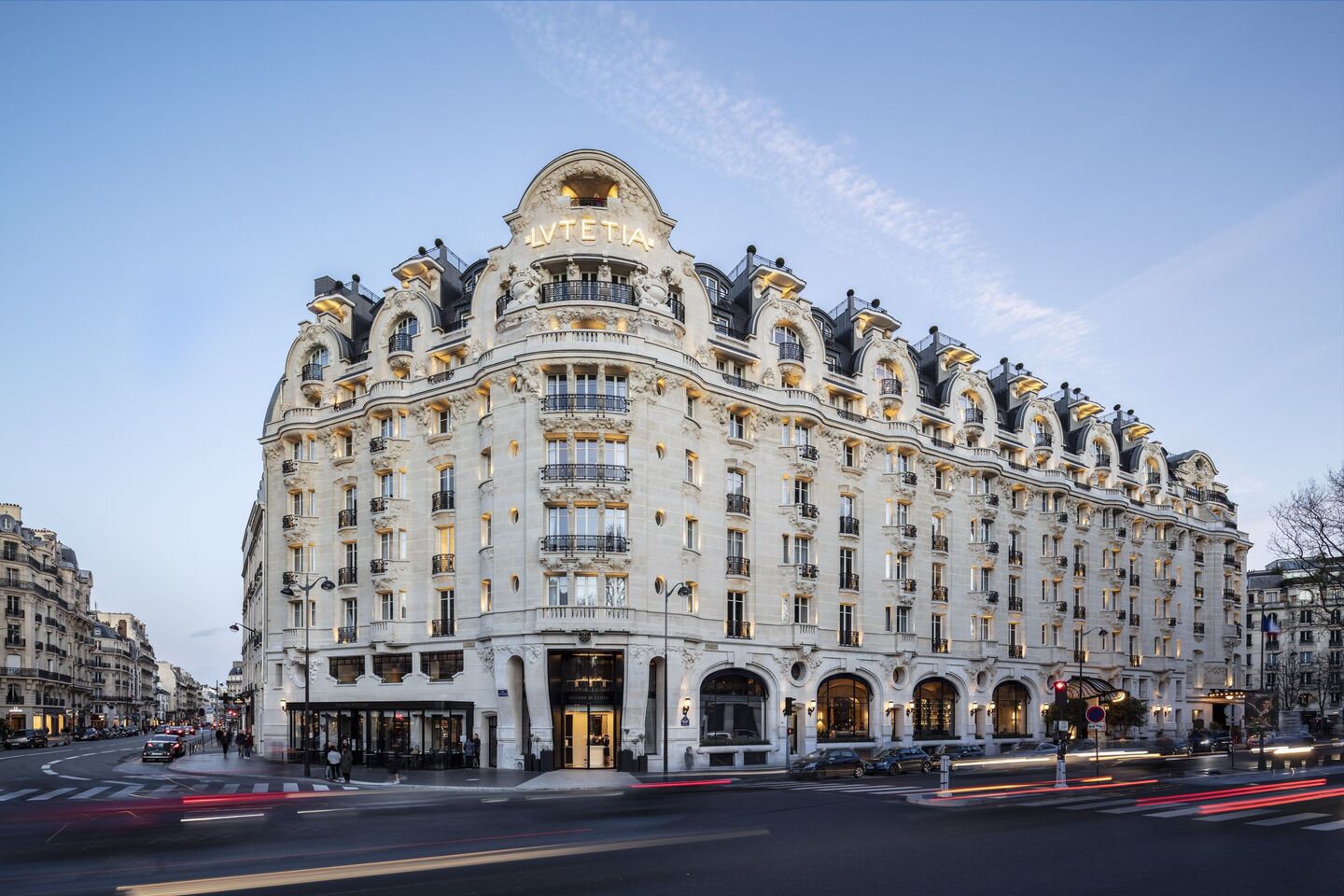
    <summary type="html"><![CDATA[<p><strong><em>Situated in the heart of St Germain des Prés sits the only “Grand Hotel” on Paris’ Left Bank. A relic of France’s Belle Époque period, the Hôtel Lutetia has traded many hands since it’s opening in 1910. Built as a hotel, the site has gone on to function as a counter-espionage Nazi office during World War II, a site for concentration camp victims to relocate loved ones, and finally, the Lutetia has been returned to its intended opulence.</em></strong></p><img src="https://paris.cityandciv.com/files/fullsize/d1a43964c8b4d789218d9fad9a846ff3.jpg" alt="[Untitled]" /><br/><p>Hotel Lutetia was built by French entrepreneurial family, the Boucicauts. Patriarch, Aristide Boucicaut, was born in Bellême, France, about 100 miles West of Paris, in 1810. He found himself in Paris in 1835, working as an apprentice for a traveling salesman. He went on to work for a magasin de nouveauté (novelty store) which sold dry goods, fabrics, and other miscellaneous goods. </p><p>Boucicaut worked his way up at the magasin de nouveauté and found himself a business partner, Paul Videau, and shared ownership of a novelty store on the Left Bank, Au Bon Marché Videau. Here, Boucicaut was able to test new marketing tactics, such as extravagant window displays, seasonal sales, and newspaper advertising. </p><p>After finding success with his new marketing tactics, Boucicaut’s partner, Videau, sold his remaining shares of the novelty shop to Boucicaut. Marché Videau was wildly successful under the management of Boucicaut, turning a 1,000% yearly profit. The shop was not only financially successful, but Boucicaut introduced pensions, boarding for unmarried workers, most of which were women, promotion from within, and paid sick leave for employees. </p><p>In the late 1860’s, Boucicaut met entrepreneur Henry-Francois Maillard from New York who introduced him to the concept of a multi-story building built entirely for the sale of merchandise. By 1869 the new department store, Le Bon Marché, was built with aid from engineer, Gustave Eiffel. The building was finished ten years after the death of Boucicaut and was operated by his widow. </p><p>Today, Le Bon Marché is still operated as a department store boasting high end luxury designer goods. Finally, on December 28, 1910, more than twenty years after the death of Boucicaut, Hôtel Lutetia opened. Built to accommodate the elite patrons of Le Bon Marché, the advisory board of Le Bon Marché contracted architects Louis-Charles Boileau and Henri Tauzin. The construction of the hotel was considered innovative in its use of glass, steel, and concrete. It also featured air conditioning, hot water, and telephones. Boileau was involved in the original construction of Le Bon Marché. The board also hired sculptor, Léon Binet, to carve the limestone façade. Binet is credited with sculpting the facades on a number of grand buildings in Paris. He is known for his intricate and organic, almost dreamlike style, very much in line with the popular art-nouveau style of the early 1900’s.</p><p>The hotel was a hot bed for celebrity visitations.among them  Picasso, James Joyce, Simone de Beauvoir and Charles De Gaulle. . James Joyce wrote part of his novel, Ulysses, while boarding at the hotel. This was short lived as the Nazis conquered Paris in 1940. Lutetia was taken up as the headquarters for the counter intelligence agency, the Abwehr. In August of 1944, the Nazis withdrew from Paris and French and American forces moved into the hotel. During this period, the hotel was repurposed into a medical center and a reunification center for Jewish families who had been in concentration camps or imprisoned during the war. </p><p>In 1985, the 40-year anniversary of the camps' liberations, a plaque was placed on the hotel. </p><p>The plaque reads:</p><p>“From April to August 1945, in this hotel, then transformed into a reception center, received a large part of the survivors of the Nazi concentration camps. Happy to find a freedom and the dear ones to whom they had been wrenched. Their joy could not erase the anguish and sorrow of the families of the thousands of disappeared who vainly waited for theirs in these places” </p><p>After the war, the hotel began operation as a hotel and once again caught the attention of the rich and famous. David Lynch, Peggy Guggenheim, and Yves-Saint Laurent were all familiar faces during this ear. In 1955, Lutetia was purchased by the Tattinger family, well known for their production of Champagne. Tattinger Champagne was then sold in 2005 to Starwood Capitol, who finally sold the hotel to Israeli Alrov Group in 2010 for 150 million euros. In 2014, Alrov Group closed the hotel for a proposed $100 million renovation. Finally, after four years of construction, and $234 million later, the hotel reopened in July of 2018. </p><p>Guest rooms reduced from 230 to 184 to accommodate much larger and luxurious suites. The Bar Joséphine features historical fresco paintings as well as the architectural design input from renowned architect, Jean-Michel Wilmotte. Room rates vary between 850 euro to 19,000 euro a night. The rooms feature solid marble bathrooms, custom 1930’s inspired furniture, Hermes toiletries, some rooms feature balconies with views of the Eiffel Tower.</p><p><em><strong><a href="https://paris.cityandciv.com/items/show/19">For more (including 8 images) view the original article</a></strong></em></p>]]></summary>
    <published>2019-05-08T20:43:56+00:00</published>
    <updated>2026-03-04T21:28:18+00:00</updated>
    <link rel="alternate" type="text/html" href="https://paris.cityandciv.com/items/show/19"/>
    <id>https://paris.cityandciv.com/items/show/19</id>
    <author>
      <name>Angela Medcalf</name>
    </author>
  </entry>
</feed>