<?xml version="1.0" encoding="UTF-8"?>
<feed xmlns="http://www.w3.org/2005/Atom">
  <title type="text">Paris City &amp;amp; Civ</title>
  <updated>2026-03-04T21:28:19+00:00</updated>
  <generator uri="http://framework.zend.com" version="1.12.20">Zend_Feed_Writer</generator>
  <link rel="alternate" type="text/html" href="https://paris.cityandciv.com/"/>
  <link rel="self" type="application/atom+xml" href="https://paris.cityandciv.com/items/browse?output=rss2"/>
  <id>https://paris.cityandciv.com/</id>
  <author>
    <name>Paris City &amp;amp; Civ</name>
    <uri>https://paris.cityandciv.com</uri>
  </author>
  <link rel="hub" href="https://pubsubhubbub.appspot.com/"/>
  <entry>
    <title type="html"><![CDATA[Palais de Tokyo: An Insight into Parisian Artistic Innovation]]></title>
    <summary type="html"><![CDATA[<p><strong><em>Burrowed in the heart of Paris, the Palais de Tokyo stands as a bastion of contemporary art, calling out to those pushing the boundaries of creativity. From its historical past as a visual symbol of 20th-century architecture to its modern counterpart as a vibrant and illustrious hub of imagination, this institution has continuously redefined the artistic landscape. Let’s explore the dynamic world of the Palais de Tokyo, where artistic experimentation and cultural innovation converge.</em></strong></p><img src="https://paris.cityandciv.com/files/fullsize/e9c8b78c08c1fc74b0054935fd5d3334.jpg" alt="Palais de Tokyo" /><br/><p>The Palais de Tokyo, originally constructed in 1937 for the International Exposition dedicated to modern art and technology, has evolved into one of the most prestigious and important contemporary art venues in Europe. The architecture of the building is quite special and differs from other museums with the inside being gutted completely leaving it to its basic foundations exposed, giving it a visually altered contrast to the backdrop of amazing art installations. Renowned for its ever-expansive exhibition spaces and unconventional approach to curating, the Palais de Tokyo offers a platform for rising artists to showcase their work alongside established self-starters and professionals.</p><p>Embarking upon the Palais de Tokyo is akin to stepping into another world where traditional artistic norms are upended and experimenting reigns supreme. The museum’s commitment to adopting a culture of creativity is evident in its ever-transforming exhibitions, which offers a challenge to visitors to expand their perceptions of what art and culture truly are. A lot of these art performances and exhibits touch upon societal issues that have not only plagued Paris, but the rest of the world. One such exhibit reaches into the obscure practice of psychotherapy, exploring different ways to turn places of isolation into places of refuge from a hurtful society. From immersive installations to performances pushing high-soaring limits, each visit to the Palais de Tokyo is a unique and thought-provoking experience.</p><p>The most intriguing aspect about the Palais de Tokyo is its embrace of the unexpected. Unlike more traditional museums, which often adhere to very rigid exhibition schedules, the Palais de Tokyo thrives on spontaneity. Some exhibits last around for 24 hours to a couple of days or they could span for months at a time. This allows artists to respond to current events and societal issues in real-time, giving it a more flexible edge compared to other museums. This uncertain fluidity curates the museum so that each visit offers a fresh and diverse perspective on the world around us and to keep people up to date on current modern complexities. </p><p>Beyond its role as a showcase for contemporary art, the Palais de Tokyo serves as a cultural laboratory of sorts, fostering dialogue and collaboration amongst artists, curators, and audience members. Through its distinct programming, offering workshops, lectures, and performances, the museum actively strives for public engagement. Inviting the general public to become active participants helps with the creative progression that museum is so rightfully known for.</p><p>The Palais de Tokyo stands as a testament to the power of art to provoke, inspire, and challenge the status quo of contemporary art. From world renowned artists showcasing their new visions of creativity to touching art performances that call upon society’s insecurities, this museum breathes new life to art forum. By embracing innovation and pushing the envelope of modern art, this architecturally iconic institution continues to help shape the cultural landscape of Paris and the rest of Europe. </p><p><em><strong><a href="https://paris.cityandciv.com/items/show/69">For more (including 3 images) view the original article</a></strong></em></p>]]></summary>
    <published>2024-04-29T18:55:33+00:00</published>
    <updated>2026-03-04T21:28:19+00:00</updated>
    <link rel="alternate" type="text/html" href="https://paris.cityandciv.com/items/show/69"/>
    <id>https://paris.cityandciv.com/items/show/69</id>
    <author>
      <name>Aaron Glowacki</name>
    </author>
  </entry>
  <entry>
    <title type="html"><![CDATA[Pont Alexandre III: The Beautiful Outcome of the Franco-Russian Alliance]]></title>
    <summary type="html"><![CDATA[<p><strong><em>Like many people who have visited the city of Paris for the very first time, prior to getting there I spent a great deal of time daydreaming about all of the monuments, museums, cafés, and palaces that I would get to see during my visit.  However, not once did it cross my mind that one of my favorite places would be a bridge. Pont Alexandre III took my breath away at first sight. Unlike most bridges I’ve come across in my lifetime, this one became one of the most memorable landmarks I have witnessed. Although its beauty is what originally drew me to it, learning its history is why I recommend it to anyone I know who will be visiting Paris from now on.</em></strong></p><img src="https://paris.cityandciv.com/files/fullsize/3086596f1d50aa96e8edc821ec656dc8.jpg" alt="Pont Alexandre III from the Seine River" /><br/><p>Built just in time for the Exposition Universelle of 1900, Pont Alexandre III was put in place to commemorate the Franco-Russian alliance that took place in 1892 when the two countries formed an alliance for economic and military purposes. The bridge itself was named after the Russian Tsar Alexander III who was responsible for forming the alliance between the two nations. Although not widely known, a similar but not as extravagant twin bridge was also built in St. Petersburg, Russia at the same time and it was designed by Gustave Eiffel, who also created the Eiffel Tower. Tsar Alexander III unfortunately died before construction on the bridge began, and his son Tsar Nicholas II laid the foundation stone to begin construction in October of 1896.</p><p>Architecturally, the bridge is a masterpiece due to the challenges faced by its designers in the process of making the plans for the bridge. Originally the bridge was supposed to be much higher, but the French government demanded that the bridge be low enough so that it wouldn’t block the views on opposite ends; Understandably so, the bridge connects the Place de Invalides where Napoleon’s tomb rests, to the Champs-Elysees which is the most famous avenue in Paris. Pont Alexandre III also contains symbolism representing France and Russia; Both the Russian and Parisian coat of arms are carved ornately into the bridge. There are also four gilt-bronze statues atop massive pillars that act as counterweights for the bridge on each end, each representing a different era in French history: King Louis XIV, Emperor Charlemagne, the Renaissance, and Modern Times.</p><p>Walking across the bridge is an experience of its own. Once you are done admiring all of the ornate Art-Nouveau lamps, statues, and decorations you realize just how perfectly situated the bridge is. Pont Alexandre III offers a breathtaking view of Place de Invalides along with the Grand and Petit Palais, and romantic views of the Eiffel Tower, which explains why the bridge also has a fame for engagements and wedding photos. The beauty of Pont Alexandre III will draw you in, and its history will make you not only want to come back but also share it with those who have not experienced it.</p><p><em><strong><a href="https://paris.cityandciv.com/items/show/50">For more (including 3 images) view the original article</a></strong></em></p>]]></summary>
    <published>2022-04-22T00:19:29+00:00</published>
    <updated>2026-03-04T21:28:19+00:00</updated>
    <link rel="alternate" type="text/html" href="https://paris.cityandciv.com/items/show/50"/>
    <id>https://paris.cityandciv.com/items/show/50</id>
    <author>
      <name>Alejandro Vergara</name>
    </author>
  </entry>
  <entry>
    <title type="html"><![CDATA[Luxor Obelisk: Egypt in Paris]]></title>
    <summary type="html"><![CDATA[<p><strong><em>Paris is known as the city of romance, fashion, culture, art, street cafes, wine, and architecture. However, the city of Paris shows off its history not only through sites such as Notre Dame Cathedral, the Eiffel Tower, or the most famous museum of the modern age, the Louvre, but also through many of the older buildings, such as the Pantheon and St.-Germain-de Pres, which are prime examples of neoclassical architecture, which borrows heavily from Greece and Rome. As many know, Greece and Rome are believed to be the start of civilization and borrowed aspects of each other’s culture such as the Gods and Goddesses, architectural styles, and marketplaces while also leaving behind unique aspects to each civilization. One piece of architecture found in the city is peculiar as it shows no ties to Greece or Rome, but hails from the mysterious and ancient sands of Egypt. This is the monument known as the Luxor Obelisk.</em></strong></p><img src="https://paris.cityandciv.com/files/fullsize/ba667e30d8b42182f7ed9169c48216dc.jpg" alt="Luxor Temple at Night" /><br/><p>The story of the Luxor Obelisk begins in Egypt in 1392 BC, when the Pharoah Amenhotep III began building the Luxor Temple. It was completed during the reign of the Pharoah Tutankhamun or, as he is better known, King Tut. The Luxor Temple stands tall and proud in the city of Thebes on the East bank of the Nile River. As with most temples, it was dedicated to a deity or deities. In this case, the temple was built in the honor of three deities: Mut, who was seen as the Mother Goddess of Thebes, Khonsu, who was the God of the Moon, and Amun, who was the God of the Air and in Thebes was adopted as King of the Gods. These three deities formed a triad for the people of Thebes and so were deserving of their own temple.  </p><p>In the modern-day world, obelisks are a monument symbolizing death, commonly found in cemeteries. However, in ancient Egypt, the use of obelisks arose during the time when the Pharaohs were believed to be the human prophets of Ra, the Sun God. Therefore, the obelisks were a representation of their connection to Ra and showed honor to the powerful deity. The design of the obelisk is like the pyramids, a trademark of ancient Egyptian innovation. The peculiar pictures on the obelisk are known as hieroglyphics, which is Egyptian picture writing. Each picture means a different word or phrase. The question now becomes how did the Luxor Obelisk find its way to Paris?</p><p>This feat of engineering was a gift to the French from Mohammed-Ali.  No, not the boxer, but the Viceroy of Egypt under the watch of the Ottoman Empire in 1833.  The gift was an attempt to signify an alliance between Egypt and France when he turned on the Ottoman Empire. From Egypt, it traveled on ship that was created specially just for this important task. Jean-Baptiste Lebas was the one who erected it 1836 in one of the most prominent locations in Paris, the Place de la Concorde.</p><p>After it was constructed, the excitement burned out which is par for the course. The Obelisk then became a natural part of the Parisian landscape until attention was called to it once during the 1848 revolution. After that, three writers chose to include the Luxor Obelisk in their work. Victor Hugo is the most famous of the three mentioning it in a poem where he looks back upon the years of the 1848 Republics. The translation is as follows: “Who therefore put you here, in a day of irony, Near the august stone where the genius Of vanished times and ancient peoples lives again. Who therefore leans you, oh fragile statue, Against the obelisk imprinted with the finger of Sesostris? What are you doing, at a time when the fall Specter of plaster at the foot of the granite giant?” Thus, the Luxor Obelisk has stayed in Paris since it arrived in 1833, attracting tourists from around the world and adding to the extensive history and cultural experiences of the city. So, if you are ever in Paris, grab a baguette, or cheese and wine, take in the view at Place de la Concorde, and visit the Luxor Obelisk.</p><p>All information is provided by the Rosicrucian Egyptian Museum, Nichola A. Haxell’s 19th Century French Studies vol. 1, Wellesley College, Britannica, and Ancient Egypt Online.</p><p><em><strong><a href="https://paris.cityandciv.com/items/show/51">For more (including 3 images) view the original article</a></strong></em></p>]]></summary>
    <published>2022-04-23T20:04:26+00:00</published>
    <updated>2026-03-04T21:28:19+00:00</updated>
    <link rel="alternate" type="text/html" href="https://paris.cityandciv.com/items/show/51"/>
    <id>https://paris.cityandciv.com/items/show/51</id>
    <author>
      <name>Alex Hansel</name>
    </author>
  </entry>
  <entry>
    <title type="html"><![CDATA[L&#039;Olympia: A stage fit for only the best – The Beatles, Aretha Franklin, Édith Piaf, and many more]]></title>
    <summary type="html"><![CDATA[<p><strong><em>As the epicenter of Parisian entertainment since the late 19th century, the stage at L' Olympia has become a home for many iconic performers such as The Beatles, Édith Piaf, Aretha Franklin, The Rolling Stones, Tina Turner, and more. Today, the extremely recognizable red, neon sign that stands proudly at the front of the concert venue, shows just how far L' Olympia has come since its humble beginnings.</em></strong></p><img src="https://paris.cityandciv.com/files/fullsize/d9f60a2c73c935b11406fb4222e22a93.jpg" alt="The bright red, neon sign at the front of L’Olympia," /><br/><p>Once called the Montagnes Russes (from the French name for roller coaster), but later renamed to L' Olympia, the performance hall was founded in 1888 by Joseph Oller and Charles Zidler, who eventually went on to construct the grandiose design for the Moulin Rouge. As L' Olympia grew in popularity, this iconic spot in the ninth arrondissement entertained thousands of Parisians with a colorful array of acts that ranged from musical concerts, operas and ballets, to circus performances. </p><p>Unfortunately, as the early twentieth century saw the decline of theatrical performances, L' Olympia began to lose its popularity as the main source for exuberant performances and dance spectacles. Instead, from the years 1929–1944, the venue served as a movie theater for the local residents. Following the Liberation of Paris, Allied troops that had served in World War II were treated to an occasional free performance at L'Olympia, which always ended with an energetic can-can dance. </p><p>Between the years of 1944 and 1954, L' Olympia was rebranded as a movie theater as people began to prefer the cinema over other forms of entertainment such as the theatrical performances, operettas, and ballets that L'Olympia was known for. It appeared that Parisians had lost interest in this once popular venue — that is, until Bruno Coquatrix stepped in. </p><p>Coquatrix bought L'Olympia with the hope that introducing up and coming bands and performers would revive interest in the neglected music hall. With that goal in mind, Coquatrix decided to completely rebrand the performance hall to appeal to a more modern-day audience. His idea for how to grab the attention of young people in the 1950s – live music! </p><p>Just a year after L' Olympia’s reestablishment in the world of live performance, one of France’s greatest treasures, Édith Piaf, performed an extremely memorable recital there for the citizens of Paris. She continued to perform at L' Olympia until the end of 1962. </p><p>Another singer that brought the crowd back to L' Olympia was Dalida. First auditioning for Coquatrix in 1956, she was immediately signed as a singer. Just three years later, Dalida would go on to perform every three to four years for nearly thirty nights in a row. Dalida was so attached to the music hall, and the concerts that she performed there, that many of her live album titles were actually titled after the venue and the years of her performances. </p><p>With L' Olympia beginning to boom in popularity again, another band on the rise was scheduled to play at the venue for eighteen consecutive days of performances — The Beatles. Playing nearly two to three times a day, The Beatles performed at L' Olympia before their famous landing in America, and, even played at the venue just the day before reaching their first number one single with “I Want To Hold Your Hand.” </p><p>L' Olympia continued in popularity with other rock bands and performers like The Rolling Stones, The Jackson Five, Madonna, Tina Turner, The Grateful Dead Cher, Diana Ross and the Supremes, Led Zeppelin, Pink Floyd, Jimi Hendrix, Blondie, and The Beach Boys until the 1990s when it was at risk of being torn down completely. Arguing the hall's historic impact, Jack Lang, France’s Minister of Culture during that time, stood against the hall’s demolishment. Lang eventually prevailed in preserving the hall and even ordered that the interior be refurbished in order to reflect the original design of the venue. </p><p>Since its renovation, L' Olympia has only continued to thrive and entertain new generations of music lovers in Pairs. Today many popular acts, international and local alike, including Lana Del Rey, Banks, Robyn, Vampire Weekend, The 1975, Arctic Monkeys, Partynextdoor, Hozier, Khalid, Miguel, Paramore, Arcade Fire, Jack White, Harry Styles, Lady Gaga, and more, have all called L' Olympia’s stage their home, even if only for a single night.</p><p><em><strong><a href="https://paris.cityandciv.com/items/show/5">For more (including 6 images) view the original article</a></strong></em></p>]]></summary>
    <published>2019-04-22T19:53:28+00:00</published>
    <updated>2026-03-04T21:28:17+00:00</updated>
    <link rel="alternate" type="text/html" href="https://paris.cityandciv.com/items/show/5"/>
    <id>https://paris.cityandciv.com/items/show/5</id>
    <author>
      <name>Amanda Chambers</name>
    </author>
  </entry>
  <entry>
    <title type="html"><![CDATA[Charles Garnier &amp; the Palais Garnier: A competition to create one of Paris&#039; most iconic opera houses with obstacles including war, a ravaging fire, and a designer&#039;s dream to fulfill the extravagant wishes of the rich while doing so in an extremely short period of time. This is Charles Garnier&#039;s life and his ultimate masterpiece — The Palais Garnier.]]></title>
    <summary type="html"><![CDATA[<p><strong><em>Paris in the 1800s was a time of grand historical figures, disputes of religion, the call of revolution, and, of course, extravagant architecture. As many Parisians believed during this time, “there is no hesitation to be had between the arts. One must be God, or else an architect.” These exact words were spoken by one of the most famous Parisian architects in the 19th century, Charles Garnier.</em></strong></p><img src="https://paris.cityandciv.com/files/fullsize/f565124a3b4bbd8d359b17b5596a4d86.jpg" alt="Paris Opéra House (Palais Garnier)" /><br/><p>Garnier was born into a working-class family that lived in one of Paris’ most exciting neighborhoods, Rue Mouffetard. He was always fascinated by architecture, even as a young child, and remained a student of the works of Greek and Ancient Roman architects from his teenage years and beyond. </p><p>He won the title of multiple prestigious honors during his earlier years, including a fellowship in Rome at the Villa Medici, but it was not until the coveted Opéra competition that Garnier would come to be known as the Charles Garnier. </p><p>Garnier was a very competitive man. The first design he submitted for the Palais ranked last out of the five finalists. After receiving this news, he proposed a companionship with Léon Ginain to create a combined design but was rebuffed by Ginain. In response to this, he worked day and night to create a new outline that would immediately enamor the judges, all by himself. And just a few months after his first initial submission, he did. </p><p>Construction on the Palais began almost immediately after Garnier’s design was picked. The team of architects and draftsmen that created the Palais included only ten men, including Garnier, himself. He was always considered a kind, giving man, but was always recognized as a hard worker, as well. He suffered bouts of depression throughout his life but always managed to help his workers through their more difficult times during the construction of the Palais. Garnier was also an acclaimed playwright and songwriter who love to dabble in the world of writing (when he wasn’t busy with creating one of Paris’ most famous sites, of course). </p><p>During a time when oil paintings were the only way of capturing a portrait, Garnier had a distinct look about him that made him extremely recognizable. So famous was his look, with messy, curled hair, a distinctively large nose, and a fashionable mustache that he was often spotted by people on the streets of Paris. The fact that he was also considered the most famous architect in France at this time also helped promote his credibility as an architect to an unknown level. </p><p>Construction on the Palais faced major setbacks. Events including the Franco-Prussian war, the fall of the Second French Empire, and the Paris Commune didn't help the builders' mission to complete the Palais in a timely manner. Other disasters in other parts of Paris also created major issues for Garnier.</p><p>After Salle le Peletier, the temporary home of the Paris Opéra, was destroyed by a ravaging fire in 1873, Garnier was <i>then</i> commissioned to create the new home of the Opéra house, which would be located inside the Palais Garnier. Faced with many technical setbacks and a numerous amount of difficulties in creating a glamorous, yet sensibly safe Opéra house for the people of Paris, Garnier went straight to work to design such an incredible feature, focusing on one area of the Palais in particular - the ceiling of the grand staircase. </p><p>Garnier turned to Isidore Pils to create the main attraction of his Opéra house. A grand ceiling with the scenes of mythological figures such as Apollo and Orpheus painted onto it became quite the challenge for Pils, who fell ill during the creation of his masterpiece. Pils’ two younger students took over the job and worked until the day before the Palais’ grand opening. </p><p>As night fell upon the Opéra house, Garnier, Pils, and the rest of the painters and architects came together to admire their tremendous feat of work. On the evening of January 5, 1875, people from all over France crowded around the Palais Garnier to get even just a glimpse of the new Opéra House. During the intermission of the first performance officially held at the new Opéra House, Garnier stood center stage, receiving a booming sound of applause and cheers from those in attendance. Completely taken aback with emotion, Garnier had finally received the recognition he had always deserved, standing in the center of the greatest achievement in his life, as an architecture, and a proud Parisian.</p><p><em><strong><a href="https://paris.cityandciv.com/items/show/8">For more (including 6 images) view the original article</a></strong></em></p>]]></summary>
    <published>2019-04-24T19:03:15+00:00</published>
    <updated>2026-03-04T21:28:17+00:00</updated>
    <link rel="alternate" type="text/html" href="https://paris.cityandciv.com/items/show/8"/>
    <id>https://paris.cityandciv.com/items/show/8</id>
    <author>
      <name>Amanda Chambers</name>
    </author>
  </entry>
  <entry>
    <title type="html"><![CDATA[The Church of Notre-Dame-de-l&#039;Assomption: A Refuge in the City of Light]]></title>
    <summary type="html"><![CDATA[<p><strong><em>Along the narrow but bustling Rue Saint-Honoré in Paris's 1st arrondissement, the church of Notre-Dame-de-l'Assomption has stood tall for centuries and witnessed hundreds of years of war, piece and change in the city.   During its use as a convent, as a church for Polish émigrés in the mid-19th century and its current use as a Catholic church, Notre-Dame-de-l'Assomption has served as a refuge in the City of Light!&nbsp;</em></strong></p><img src="https://paris.cityandciv.com/files/fullsize/87f568a431678ed151d1d9dabba857d3.jpg" alt="Nativity Scene" /><br/><p>An all-female religious order in the late 17th century, the Ladies of the Assumption (Dames de l’Assomption), were the first occupants of the building, which was constructed between 1670-76. It continued to be used by wealthy women as a sort of religious refuge through the Ancien Régime. However, this changed when the French Revolution, which opposed both royalty and the Catholic Church, tore through Paris in 1789.</p><p>As the revolution raged on and change ran rampant across Paris, the church building became military barracks in 1793. After the French Revolution ended and France returned to royalty, Notre-Dame-de-l’Assomption’s original religious use was restored. The Church of Notre-Dame-de-l’Assomption played an important part in an often-overlooked, but still quite important historical event- the Great Emigration of Polish exiles to Paris.</p><p>Political turmoil in Poland and Lithuania led to the emigration of over 50,000 Poles and Lithuanians that peaked in 1830 and 1831. Many of these émigrés- especially those of Polish Catholic origin- migrated to Paris, where the Polish Catholic Mission had been recently established. Notre-Dame-de-l’Assomption soon became an important centerpiece of Paris’s Polish Catholic community and, just as it did when it was a women’s convent, acted as a sort of refuge and an important community establishment. Throughout the world in ethnic communities, churches have long been the centerpiece, with Notre-Dame-de-l’Assomption being no exception!</p><p>After its reestablishment as a church and the “demographic shift” to Polish Catholic émigrés, Notre-Dame-de-l’Assomption retained its religious use and remained intact even as Paris grew and changed around it (i.e. industrialization and World Wars I and II). As tourism in Paris grew because of the city’s history and architecture, Notre-Dame-de-l’Assomption gained another use- as a tourist attraction for those interested in the church’s rich past and/or Roman Catholics who visited the church as a connection to their faith. Despite the city changing around its Polish Catholic community since its founding nearly two centuries ago, Mass is still said in Polish every week and it remains a home parish for many.</p><p>In conclusion, Notre-Dame-de-l’Assomption has changed quite a bit since its founding during the Ancien Régime, but, yet, it hasn’t. The church has weathered many storms and seen many changes- revolution, a demographic shift brought by the Great Emigration, industrialization, World Wars I and II, modernization- but, since its earliest days as a convent, it has served as a refuge in one way or another- a refuge in the City of Light.</p><p><em><strong><a href="https://paris.cityandciv.com/items/show/55">For more (including 3 images) view the original article</a></strong></em></p>]]></summary>
    <published>2022-04-25T05:11:20+00:00</published>
    <updated>2026-03-04T21:28:19+00:00</updated>
    <link rel="alternate" type="text/html" href="https://paris.cityandciv.com/items/show/55"/>
    <id>https://paris.cityandciv.com/items/show/55</id>
    <author>
      <name>Andrew D. France</name>
    </author>
  </entry>
  <entry>
    <title type="html"><![CDATA[Les Colonnes de Buren: L’art comme aire de jeux]]></title>
    <summary type="html"><![CDATA[<p><strong><em>Les Colonnes de Buren sont une installation d'art dans la Cour D'honneur du Palais Royal dans le cœur de Paris. Elles ont une histoire très compliquée en raison de la réception publique et des dysfonctionnements dans l'art publique.</em></strong></p><img src="https://paris.cityandciv.com/files/fullsize/a279d29a0d36ffeac07f77fbeef19b0a.jpg" alt="Les Colonnes de Buren" /><br/><p><span style="font-weight:400;"><span style="font-weight:400;">     Les Colonnes de Buren sont une installation artistique moderne dans la cour d'honneur du Palais Royal dans le premier Arrondissement de Paris. Le Palais Royal est une zone de Paris avec une histoire très riche. C'était originellement un palais construit en 1633 pour Cardinal Richelieu, et des membres de la famille royale y ont veçu après la mort de Richelieu. Maintenant cette structure architecturale historique abrite des magasins, des restaurants, des théâtres, et des institutions gouvernementales comme le conseil constitutionnel et le ministre de la culture.</p></span>
<span style="font-weight:400;">     Les Colonnes ont été conçues en 1985 par Daniel Buren. Il y a 260 colonnes octogonales noir et blanc rayées qui ont été disposées en carré.  Elles existent grâce à Jack Lang, un politicien de la ministre de la culture française qui ne voulait pas que la cour d’honneur devienne un parking pour les institutions gouvernementales. Il a détesté le spectacle des voitures dans Paris et il ne voulait pas qu'une cour historique devienne un espace pour les voitures. Il a décidé qu’une installation artistique est la meilleure solution, et il a organisé une compétition pour une œuvre d’art public pour cet espace. Daniel Buren a soumis les Colonnes qu’il a nommées “Les Deux Plateaux.” Finalement, c’est le maire de Paris, Jacques Chirac qui a choisi l'œuvre de Buren comme le gagnant du concours.</p><p> Les Colonnes sont construites au sous sol de la cours, et elles ont montré les fonctions électriques et de l’eau sous la cours d’honneur. Cependant, en 2001, l’eau s’est écoulée du sous sol et le gouvernement n'a pas fait de réparations parce que les chambres de répétition pour la Comédie Française sont très proches et on ne voulait pas les endommager.  Buren s’est mis en colère à cause de cette situation, mais puisqu'il s'agit d'une œuvre publique, on croit que l'artiste ne contrôle plus l'installation.</p>
<span style="font-weight:400;">     La réception des colonnes par le public était très mélangée. Certaines personnes l'aiment. Ils aiment la fonction et les idées de Buren. D'autres détestent leur look, et leur place dans une cour très historique. Certains questionnent la validité des colonnes comme une œuvre d’art. Ils croient que la simplicité et le look de l’installation ne correspondent pas à leurs idées de l’art français.</p>
<span style="font-weight:400;">     Buren a utilisé les colonnes parce qu’il voulait que les colonnes imitent les colonnes du Palais Royal; par contre, les couleurs (des rayures blanc et noir) ne donnent pas une impression artistique parce qu’ils imitent les toiles des stores comme celles des magasins du Palais Royal. Sa première intention c'était de faire agir le public comme les enfants en face des bâtiments du gouvernement. Aujourd'hui, c’est un aspect du projet qui a réussi. Les gens grimpent, s'asseyent, et jouent sur les colonnes tous les jours et soirs. Buren voulait juxtaposer l'aspect ludique et espiègle de son oeuvre avec le travail bureaucratique qui a lieu dans les bâtiments gouvernementaux du Palais Royal. </p>
<span style="font-weight:400;">     Pour moi, les Colonnes sont une pièce d’art très intéressante en raison de l’histoire et la place actuelle qu’elle a dans Paris. Les gens en servent comme une cour de récréation, c'est amusant et intéressant de voir les gens qui s’amusent en face des bâtiments gouvernementaux. Aussi l’installation originale a une intention pas typique avec Buren qui voulait montrer les fonctions des systèmes électroniques et les systèmes d’eau, un aspect de son projet qui n’est pas complètement réalisé. </p><p>Les Colonnes attirent pas mal de visiteurs qui adorent jouer au “Statue vivante” sur ces colonnes rayées, elles représentent des objets d’arts importants dans le Paris moderne ou la juxtaposition entre la tradition et la modernité se voit partout.</span></p><p><em><strong><a href="https://paris.cityandciv.com/items/show/77">For more (including 3 images) view the original article</a></strong></em></p>]]></summary>
    <published>2024-05-03T05:39:00+00:00</published>
    <updated>2026-03-04T21:28:19+00:00</updated>
    <link rel="alternate" type="text/html" href="https://paris.cityandciv.com/items/show/77"/>
    <id>https://paris.cityandciv.com/items/show/77</id>
    <author>
      <name>Andrew Delly</name>
    </author>
  </entry>
  <entry>
    <title type="html"><![CDATA[La Grande Arche de la Defense: La Grande Arche de la Defense, Failures and Successes]]></title>
    <summary type="html"><![CDATA[<p><strong><em>How did a skyscraper commissioned by a former Vichy regime member benefit Paris while also doing financial damage in the long run?</em></strong></p><img src="https://paris.cityandciv.com/files/fullsize/6e5f83ec3b8a4a5c6bf01039a8903f98.jpg" alt="Le Parisien" /><br/><p>La Grande Arche de la Defense is a skyscraper built in Europe's largest business district, la Defense.  During la Grande Arche's inception, la Defense was somewhat successful but it had little green space, lacked a full skyline, and did not look like it was in Paris. Former French prime minister, Francois Mitterand decided that he would commission a monumental skyscraper in the center of la Defensethat he wanted it to be a more modern version of l'arc de Triomphe.  His goal was to make la Defense Europe's largest business district while also trying to preserve the aesthetics of Paris.</p><p>At first, la Defense followed the model of many American cities central business districts by dividing it with a highway, lacking green space, and having little guidelines on building aesthetics and placement.Francois Mitterand aimed to remedy these problems by adding a modern arc de Triomphe on le boulevard de Grand armee which is a road that lines up with the Champs Elysees.  This meant that if you look at the arc de Triomphe from the Champs Elysees, then you will get a juxtaposition of Haussmann style buildings and older, smaller monuments with a larger modern arc and skyscrapers in the background.</p><p>La Grande Arche provides one of the best views in Paris as from the top of the building you can see most of the modern skyscrapers, while also having an unobstructed view down le boulevard de Grand Armee.  This allows you to juxtapose the new Paris with the more famous, older, haussmann style Paris.  It also provided a public plaza and eventually more green space was added (by burying roads) so most of the previous issues with la Defense were being remedied.  La Grande Arche also made la Defense look more Parisian as there was a monument on a long straight boulevard, with buildings radiating from the central point of the monument.  </p><p>La Grande Arche did not come without its failures.  It was very expensive to build due to its unique shape and large size.  Elevators, windows, and mold problems have added to the growing list of expensive repairs to this building.  It lacks green space although it makes up for this by having a large public plaza.  Also due to the design of the building, it is difficult to make your money back on rent as the building takes up a large footprint in an expensive part of the city while not allowing a lot of office space.  The building also has issues with businesses at the top due to elevator problems, and issues with the structure at the top.  There was a 5 star restaurant at the top part of the tower, but it was forced to move a year after the tower opened and there are no signs that it will return to this site.</p><p>.  </p><p>In conclusion, la Grande Arche was a mixed bag as it skyrocketed la defense into Europe's largest business district, but it did this at the cost of some very valuable land and millions of dollars of repairs every year.  Finally, the monument anchored la Defense, and helped create a central business district that still makes you feel like you are in Paris. </p><p><em><strong><a href="https://paris.cityandciv.com/items/show/18">For more (including 7 images) view the original article</a></strong></em></p>]]></summary>
    <published>2019-05-08T17:44:46+00:00</published>
    <updated>2026-03-04T21:28:18+00:00</updated>
    <link rel="alternate" type="text/html" href="https://paris.cityandciv.com/items/show/18"/>
    <id>https://paris.cityandciv.com/items/show/18</id>
    <author>
      <name>Andy Oster</name>
    </author>
  </entry>
  <entry>
    <title type="html"><![CDATA[Hotel Lutetia: The Left Bank&#039;s Most Lavish Hotel]]></title>
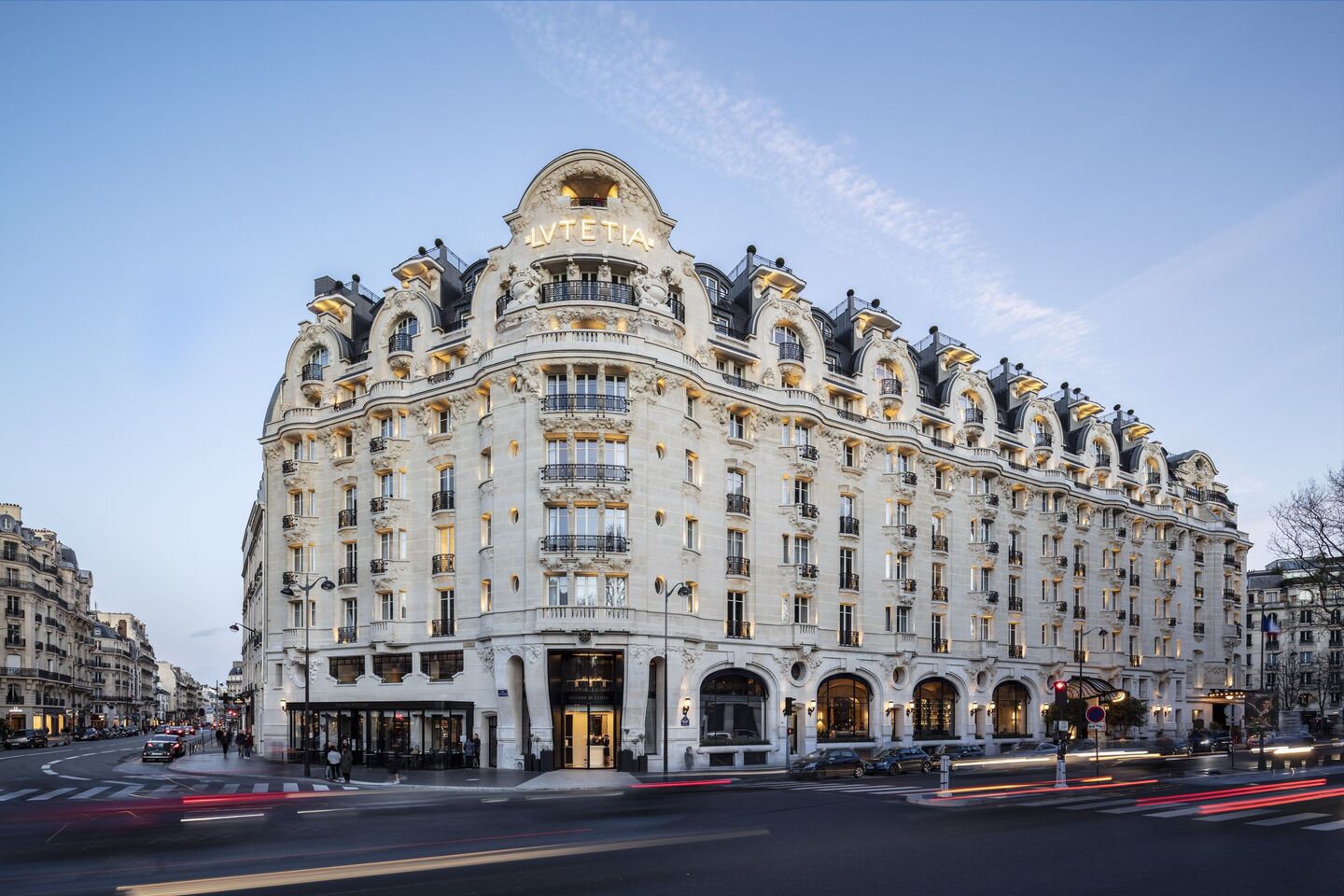
    <summary type="html"><![CDATA[<p><strong><em>Situated in the heart of St Germain des Prés sits the only “Grand Hotel” on Paris’ Left Bank. A relic of France’s Belle Époque period, the Hôtel Lutetia has traded many hands since it’s opening in 1910. Built as a hotel, the site has gone on to function as a counter-espionage Nazi office during World War II, a site for concentration camp victims to relocate loved ones, and finally, the Lutetia has been returned to its intended opulence.</em></strong></p><img src="https://paris.cityandciv.com/files/fullsize/d1a43964c8b4d789218d9fad9a846ff3.jpg" alt="[Untitled]" /><br/><p>Hotel Lutetia was built by French entrepreneurial family, the Boucicauts. Patriarch, Aristide Boucicaut, was born in Bellême, France, about 100 miles West of Paris, in 1810. He found himself in Paris in 1835, working as an apprentice for a traveling salesman. He went on to work for a magasin de nouveauté (novelty store) which sold dry goods, fabrics, and other miscellaneous goods. </p><p>Boucicaut worked his way up at the magasin de nouveauté and found himself a business partner, Paul Videau, and shared ownership of a novelty store on the Left Bank, Au Bon Marché Videau. Here, Boucicaut was able to test new marketing tactics, such as extravagant window displays, seasonal sales, and newspaper advertising. </p><p>After finding success with his new marketing tactics, Boucicaut’s partner, Videau, sold his remaining shares of the novelty shop to Boucicaut. Marché Videau was wildly successful under the management of Boucicaut, turning a 1,000% yearly profit. The shop was not only financially successful, but Boucicaut introduced pensions, boarding for unmarried workers, most of which were women, promotion from within, and paid sick leave for employees. </p><p>In the late 1860’s, Boucicaut met entrepreneur Henry-Francois Maillard from New York who introduced him to the concept of a multi-story building built entirely for the sale of merchandise. By 1869 the new department store, Le Bon Marché, was built with aid from engineer, Gustave Eiffel. The building was finished ten years after the death of Boucicaut and was operated by his widow. </p><p>Today, Le Bon Marché is still operated as a department store boasting high end luxury designer goods. Finally, on December 28, 1910, more than twenty years after the death of Boucicaut, Hôtel Lutetia opened. Built to accommodate the elite patrons of Le Bon Marché, the advisory board of Le Bon Marché contracted architects Louis-Charles Boileau and Henri Tauzin. The construction of the hotel was considered innovative in its use of glass, steel, and concrete. It also featured air conditioning, hot water, and telephones. Boileau was involved in the original construction of Le Bon Marché. The board also hired sculptor, Léon Binet, to carve the limestone façade. Binet is credited with sculpting the facades on a number of grand buildings in Paris. He is known for his intricate and organic, almost dreamlike style, very much in line with the popular art-nouveau style of the early 1900’s.</p><p>The hotel was a hot bed for celebrity visitations.among them  Picasso, James Joyce, Simone de Beauvoir and Charles De Gaulle. . James Joyce wrote part of his novel, Ulysses, while boarding at the hotel. This was short lived as the Nazis conquered Paris in 1940. Lutetia was taken up as the headquarters for the counter intelligence agency, the Abwehr. In August of 1944, the Nazis withdrew from Paris and French and American forces moved into the hotel. During this period, the hotel was repurposed into a medical center and a reunification center for Jewish families who had been in concentration camps or imprisoned during the war. </p><p>In 1985, the 40-year anniversary of the camps' liberations, a plaque was placed on the hotel. </p><p>The plaque reads:</p><p>“From April to August 1945, in this hotel, then transformed into a reception center, received a large part of the survivors of the Nazi concentration camps. Happy to find a freedom and the dear ones to whom they had been wrenched. Their joy could not erase the anguish and sorrow of the families of the thousands of disappeared who vainly waited for theirs in these places” </p><p>After the war, the hotel began operation as a hotel and once again caught the attention of the rich and famous. David Lynch, Peggy Guggenheim, and Yves-Saint Laurent were all familiar faces during this ear. In 1955, Lutetia was purchased by the Tattinger family, well known for their production of Champagne. Tattinger Champagne was then sold in 2005 to Starwood Capitol, who finally sold the hotel to Israeli Alrov Group in 2010 for 150 million euros. In 2014, Alrov Group closed the hotel for a proposed $100 million renovation. Finally, after four years of construction, and $234 million later, the hotel reopened in July of 2018. </p><p>Guest rooms reduced from 230 to 184 to accommodate much larger and luxurious suites. The Bar Joséphine features historical fresco paintings as well as the architectural design input from renowned architect, Jean-Michel Wilmotte. Room rates vary between 850 euro to 19,000 euro a night. The rooms feature solid marble bathrooms, custom 1930’s inspired furniture, Hermes toiletries, some rooms feature balconies with views of the Eiffel Tower.</p><p><em><strong><a href="https://paris.cityandciv.com/items/show/19">For more (including 8 images) view the original article</a></strong></em></p>]]></summary>
    <published>2019-05-08T20:43:56+00:00</published>
    <updated>2026-03-04T21:28:18+00:00</updated>
    <link rel="alternate" type="text/html" href="https://paris.cityandciv.com/items/show/19"/>
    <id>https://paris.cityandciv.com/items/show/19</id>
    <author>
      <name>Angela Medcalf</name>
    </author>
  </entry>
  <entry>
    <title type="html"><![CDATA[Parc André Citroën: Modern Garden of Versailles or Design Misstep?]]></title>
    <summary type="html"><![CDATA[<p><strong><em><i>Parc André Citroën, sitting between City Centre and the residential zone of Paris, was built to act as an intermediary to the rural and urban lifestyles that reside on either side. At first, the park drew crowds who were looking for an escape from the congested city. It’s modern take on the historical gardens like Versailles sparked interest in those looking for a place to get away. This didn’t last long as controversy against the park grew when people started to question whether the park’s design lacked practical commodities that could have made the garden an escape from busy, city life.</i></em></strong></p><img src="https://paris.cityandciv.com/files/fullsize/ab2d44d6254ed2aeb932d0de58959360.jpg" alt="Park Seen from Balloon" /><br/><p>Parc André Citroën was built in 1992 in the 15th Arrondissement on the South bank of the Seine river. The park was built on a former Citroen automobile factory, and named after the company’s founder, Andre Citroën. The park was designed with the intention of intertwining nature with the architectural side of central Paris. The entrance of the park reflects an urban environment designed with orderly, geometric lines. The Great Lawn in the middle has diagonal pathways cutting through geometric blocks of foliage which surround the large open space. In 1999, the park started offering hot air balloon rides in this space where people could pay to overlook the city. At the end of the lawn are two giant, modern greenhouses. These greenhouses contain six themed gardens that related to each of the six senses: sight, smell, touch, taste, hearing, and intuition. </p><p>This mediator between urban and rural life dwindled in fame when people started to question whether the park was designed without focusing on practicality and looking more towards the minimalism, and uniformity that often goes hand-in-hand with modern architecture. First, criticism arose when attendees complained about lack of seating and resting points within the park. The Great Lawn is a place where a variety of people can run and play. Yet, for parents who want to sit and watch their children or for those resting to people watch seating is limited. The park has even been described as anti-social. Although not enforced strictly, running through the fountains impeded in the ground is frowned upon. The general lack of activity is off-putting to park-goers. Even the famous hot air balloon rides have come to an end. Present-day attendees have reported that the balloon has remained in the park unused for years. The themed gardens have also faced criticism. Although the modern, almost spiritual environments were designed so keenly, the gardens have been described as detached, impersonal zones. According to a recent critic of Parc Andre Citroen, Victor Grennan (2016): Sometimes you feel at one with nature in these small private gardens, but on the other hand you feel like a visitor at a zoo viewing plants trapped between geometric conformity.</p><p>The designers of Parc André Citroën had great intentions for how well the park would fit into the bustling city aesthetically, yet they lacked practicality and ecological thought to pull it off. The natural side of the park is entirely made up of man-made environments. Instead of focusing on the management of nature, creators were more interested in the overall design of the environment. I can’t be the first one to say that this park needs a reboot. Not even two miles away from the Eiffel Tower, Parc André Citroën could be a beautiful spot for those visiting the city to relax and take in a modernized version of the large, historical gardens Paris is known for. It could even become what it was intended for, an escape for residents of the city looking to get away from tight, crowded Parisian streets. </p><p><em><strong><a href="https://paris.cityandciv.com/items/show/33">For more (including 3 images) view the original article</a></strong></em></p>]]></summary>
    <published>2019-05-13T03:06:09+00:00</published>
    <updated>2026-03-04T21:28:18+00:00</updated>
    <link rel="alternate" type="text/html" href="https://paris.cityandciv.com/items/show/33"/>
    <id>https://paris.cityandciv.com/items/show/33</id>
    <author>
      <name>Anne Crotty</name>
    </author>
  </entry>
</feed>