<?xml version="1.0" encoding="UTF-8"?>
<feed xmlns="http://www.w3.org/2005/Atom">
  <title type="text">Paris City &amp;amp; Civ</title>
  <updated>2026-05-11T19:04:31+00:00</updated>
  <generator uri="http://framework.zend.com" version="1.12.20">Zend_Feed_Writer</generator>
  <link rel="alternate" type="text/html" href="https://paris.cityandciv.com/"/>
  <link rel="self" type="application/atom+xml" href="https://paris.cityandciv.com/items/browse?output=rss2"/>
  <id>https://paris.cityandciv.com/</id>
  <author>
    <name>Paris City &amp;amp; Civ</name>
    <uri>https://paris.cityandciv.com</uri>
  </author>
  <link rel="hub" href="https://pubsubhubbub.appspot.com/"/>
  <entry>
    <title type="html"><![CDATA[The Musée d&#039;Orsay: Where a casual visit can turn into the encounter of a lifetime.]]></title>
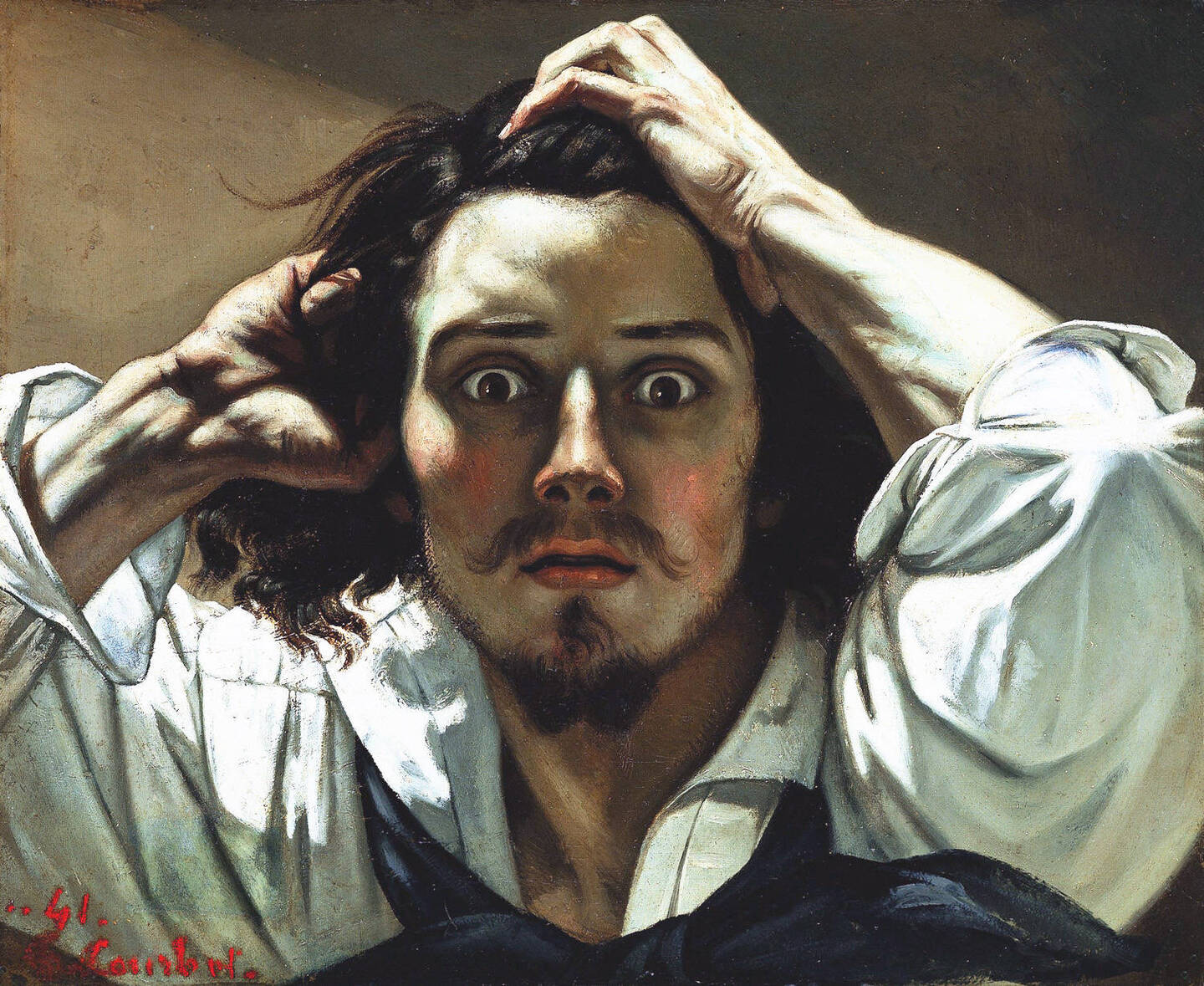
    <summary type="html"><![CDATA[<p><strong><em>Originally built as a train station, the Musée d’Orsay is now home to some of the most famous artwork in the entire world. Among the numerous sculptures and paintings, one can come to examine works by impressionist masters such as Claude Monet, Pierre-Auguste Renoir, and Edgar Degas. This museum receives over three million annual visitors who come to gaze into the eyes of the countless portraits that now rest in this museum as their final home.</em></strong></p><img src="https://paris.cityandciv.com/files/fullsize/348ad2709e84e351a4eceab1421a3b02.jpg" alt="Le Désespéré" /><br/><p>Located in the seventh arrondissement of Paris, the Musée d’Orsay houses the world’s largest collection of impressionist and post-impressionist works. Being both an artist and art lover, this was one of my most anticipated stops during my time in France. However, I was wary that I would find the museum slightly lacking after spending most of my trip walking through a large part of Paris and appreciating the breathtaking aesthetics of the Louvre. Between the stunning architecture and sculpture slipped into the everyday cityscape, it is no surprise that it was once considered an art capital of the world. I expected that by the time I got to the Musée d’Orsay, I would have seen every combination possible. Upon entering the Musée d’Orsay, it appeared I was correct. Nothing quite special stood out to me, and as I walked through each gallery I slowly became less interested in each passing work.</p><p>After a while the identifying marks of each impressionist began to blend together, surrounding me in a blurry swirl of color. At this point, I had made the decision to leave and was making my way towards the exit. However, as I was about to pass the last gallery before the doors, I felt a force beckon me to come inside; as if one last look was needed before saying goodbye to the museum as a whole. Although I was already tired, I made the last minute decision to turn around and enter. I walked into a room painted in rusty maroon. By doing a quick glance around, I took in the last few paintings but something–or shall I say someone–caught my eye. Sitting on its own wall and staring at me in a state of shock and despair was none other than The Desperate Man by Gustave Cobert. Painted with a high contrasting color palette of dark browns and bright whites, Cobert depicts himself with his hands tangled into his hair as he pierces his viewer’s gaze with an expression of pure distress. This romantic style painting was made in 1843 in response to finding out about his partner’s infidelity. I was drawn to it, and felt a deep connection to the work. This painting brought me close to tears, and I felt a strange sense of emotional relief and beauty overcome me. The Desperate Man has been a work of art that I have studied and been a big admirer of for years. So much so, that a few months prior to going on the trip I did a self portrait loosely based off of the painting. I never thought that I would have the opportunity to study the piece as closely as I did at that moment. Safe to say, I was able to find a bench and take everything in–one delicate detail at a time. </p><p>For the rest of the time I was in Paris–and even now that I am back home–I was mindful to absorb everything slowly. As tempting as it can be to rush through artwork, this experience goes to show you just never know what you might find. Perhaps more of the same, perhaps a hidden gem. And who knows? You might just be met face to face with a desperate man who has been waiting for you since you entered the room.</p><p><em><strong><a href="https://paris.cityandciv.com/items/show/98">For more (including 3 images) view the original article</a></strong></em></p>]]></summary>
    <published>2026-05-07T19:29:57+00:00</published>
    <updated>2026-05-11T19:04:31+00:00</updated>
    <link rel="alternate" type="text/html" href="https://paris.cityandciv.com/items/show/98"/>
    <id>https://paris.cityandciv.com/items/show/98</id>
    <author>
      <name>Emilie Bonsignore</name>
    </author>
  </entry>
  <entry>
    <title type="html"><![CDATA[The Trocadéro: More Than a Place to View Paris]]></title>
    <summary type="html"><![CDATA[<p><strong><em>Everyone knows about the Eiffel Tower but far fewer are aware of the intrigue surrounding one of the Tower’s common viewing sites, the Trocadéro. Upon arrival, one may wonder why a Parisian area is designated with a Spanish name. The building named after the site (Palais du Trocadéro) is now missing, its site now occupied by the Palais de Chaillot, the location of several museums.   Le Place du Trocadéro has long been a center of cultural expression and curiosities in the city of Paris and still remains one today</em></strong></p><img src="https://paris.cityandciv.com/files/fullsize/bc645041f81cf3fa8798aeb0e37aefd4.jpg" alt="[Untitled]" /><br/><p>Perhaps what may draw the largest amount of people to the Trocadéro, is the view. The place sits across the Seine from the Eiffel Tower, giving a lovely view with the gardens in the foreground. This is an excellent place to take pictures of the Eiffel Tower or simply relax and enjoy the view. The gardens have a lot of open space that is perfect for socializing on your day off. The garden’s many fountains are relaxing and may help offer an escape from the constant noise of the city. There is also a restaurant in the Place du Trocadéro which offers a similar view of the gardens and Eiffel Tower. If you are so enamored by this iconic landmark of Paris, you can stay in the hotel within walking distance of the Trocadéro called Hotel Etoile Trocadéro. However, there is much more to the Trocadéro than simply being a place to view other landmarks. </p><p>The Trocadéro is named after the Battle of Trocadero, which happened in 1823. France had assisted Spain in suppressing a rebellion against the monarchy. This involved taking a fort on the Isla de Trocadero, near the coast of Southern Spain. France was successful in this endeavor and thus the square was named in honor of their victory. </p><p>The Palais de Trocadéro was constructed in 1878 for the World’s Fair in Paris. Among the many artworks and artifacts from around the world showcased here was the head of the not yet iconic Statue of Liberty, later given to the United States of America as a gift. This building was eventually demolished in 1937 to construct a new Palais. However, it’s form and architecture can still be observed through photographs and postcards from the time period.</p><p>In 1937, the Palais du Trocadéro was replaced with the Palais de Chaillot. Today, this building contains many museums, including Le Musée de l’Homme and Musée national de la Marine. These sites have historically exhibited many artifacts from around the world, including pre-Colombian Native American artifacts, which were of special interest to Europeans in the early 20th century. </p><p>This public space was used throughout its history for many events. As mentioned previously, there were several world fairs or exhibitions showcasing art and artifacts from around the world. In addition to displays of various cultural artifacts, the site has also been a site for French cultural expression. Around the turn of the twentieth century, the were also many concerts performed in this area. Despite France being officially secular at this time, much of the music played was religious (Catholic) in nature. This started to reaffirm Catholicism as an essential part of being French.</p><p>Any visit to Paris should warrant a visit to the Trocadéro. You simply cannot skip the opportunity to take in some of the city’s most iconic views. However, you should recognize the other cultural interests available at the Trocadéro. There are many more in depth cultural experiences to be had, such as visiting the many museums in the Palais du Chaillot. If I lived in Paris, I would certainly spend a lot of free time here, learning about the many different cultures of the world. </p><p><em><strong><a href="https://paris.cityandciv.com/items/show/56">For more (including 3 images) view the original article</a></strong></em></p>]]></summary>
    <published>2022-04-25T10:09:46+00:00</published>
    <updated>2026-03-04T21:28:19+00:00</updated>
    <link rel="alternate" type="text/html" href="https://paris.cityandciv.com/items/show/56"/>
    <id>https://paris.cityandciv.com/items/show/56</id>
    <author>
      <name>Nathan Platek</name>
    </author>
  </entry>
  <entry>
    <title type="html"><![CDATA[Museum of National Archives: The sinister past of the Hôtel  de Soubise. ]]></title>
    <summary type="html"><![CDATA[<p><strong><em>Located in the Marais neighborhood in Paris, France, the Hôtel de Soubise is a  massive hôtel that now houses the Museum of National Archives, but once served a very different purpose. In the late 1500s, the hôtel became the headquarters of the Catholic League during the Wars of Religion.  It  is believed that the infamous St. Bartholomew’s Day Massacre was planned here, an event that changed France’s history. </em></strong></p><img src="https://paris.cityandciv.com/files/fullsize/63550f815e2dd4a8d5dcaec4bc9064de.jpg" alt="National Archives, Paris" /><br/><p>The Hôtel de Soubise was owned by Francois de Lorraine, duke de Guise, who was the leader of the Catholic League, at the time. Under his influence, his mansion would become the setting for the League meetings and the planning of what became known as the St. Bartholomew’s Day Massacre. What happened on that bloody day in Paris? As a result of political and religious rivalries and upheaval, a massacre between French Huguenots and Catholics broke out. The Catholics targeted the Huguenots and started the slaughter. Thousands were killed on the grounds of the Louvre and the Tuileries, and bodies were dumped in the Seine River. Many suspect this heinous event was planned by Catherine de Medici, the ambitious mother of the King of France, King Charles IX.</p><p>Medici feared Huguenot influence was growing over her son, King Charles IX, and because of this, she agreed to have Huguenot Admiral Coligny assassinated by the Roman Catholics. Things snowballed from there. To add fuel to an already tense situation,  Medici’s daughter was to be married to a Huguenot, Henry of Navarre, in just a few days. This meant that there would be a large number of prominent Huguenots in Paris, all gathered in the same place for the same event.  However, the plot to assassinate Coligny failed, and Medici consequently agree to investigate the attempt. Instead, she met in secret to hatch a new assassination plan to have the Huguenot nobles killed who were still in Paris for her daughter’s wedding. </p><p>When Medici’s heinous plan finally came to fruition on the morning of August 24th, 1572, the massacre began. Admiral Coligny and Navarre’s right-hand men were murdered. People were slaughtered on the streets and their corpses thrown in the Seine, Huguenot homes and shops were destroyed by the Catholics. Even after the king issued a degree for the killing to stop on the 25th of August, it continued to the outskirts of Paris. It is estimated that a total of 10,000 Huguenots were killed by Catholics, by the order of Catherine de Medici. This event prolonged the Wars on Religion. The Huguenots in France were not weakened after this event, as expected, but furthered enraged. This day created a need for revenge in them that powered the war to go on. </p><p>Those passing by the Museum of National Archives housed in the stately Hôtel de Soubise today, may not suspect that this site once contributed to the planning of the mass slaughter fueled by religious hatred that is now known as the St. Bartholomew’s Day Massacre. As headquarters of the Catholic League, it served as the planning table for the massacre, an infamous day in French history that resulted in the deaths of 10,000 Huguenots in Paris and throughout France. </p><p><em><strong><a href="https://paris.cityandciv.com/items/show/10">For more (including 3 images) view the original article</a></strong></em></p>]]></summary>
    <published>2019-05-02T03:14:50+00:00</published>
    <updated>2026-03-04T21:28:17+00:00</updated>
    <link rel="alternate" type="text/html" href="https://paris.cityandciv.com/items/show/10"/>
    <id>https://paris.cityandciv.com/items/show/10</id>
    <author>
      <name>Savannah Slusher</name>
    </author>
  </entry>
</feed>
