<?xml version="1.0" encoding="UTF-8"?>
<feed xmlns="http://www.w3.org/2005/Atom">
  <title type="text">Paris City &amp;amp; Civ</title>
  <updated>2026-03-04T21:28:19+00:00</updated>
  <generator uri="http://framework.zend.com" version="1.12.20">Zend_Feed_Writer</generator>
  <link rel="alternate" type="text/html" href="https://paris.cityandciv.com/"/>
  <link rel="self" type="application/atom+xml" href="https://paris.cityandciv.com/items/browse?output=rss2"/>
  <id>https://paris.cityandciv.com/</id>
  <author>
    <name>Paris City &amp;amp; Civ</name>
    <uri>https://paris.cityandciv.com</uri>
  </author>
  <link rel="hub" href="https://pubsubhubbub.appspot.com/"/>
  <entry>
    <title type="html"><![CDATA[Pablo Picasso&#039;s Paris: Pablo Picasso: Spanish Man, Parisian Artist, World-Renown Icon]]></title>
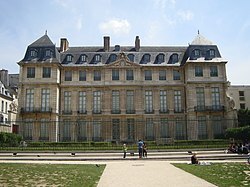
    <summary type="html"><![CDATA[<p><strong><em>Pablo Picasso was a Spanish artist and icon of the 1900s, most notably known for his various paintings and sculptures. However, he has also been known for being involved in the infamous heist of the Mona Lisa, his several activist pieces during wartimes he lived through, and his ragtag posse of notorious creatives that helped him become the man we know today.</em></strong></p><img src="https://paris.cityandciv.com/files/fullsize/270018b9fde36d00ce78754dc177f5a1.jpg" alt="Hotel Sale, home of the Musee Picasso" /><br/><p>Pablo Picasso was born on October 25th, 1881 to a middle-class family in the city of Malaga in southern Spain. He was born to Maria Picasso y Lopez and Jose Ruiz y Blasco. Picasso displayed an early love for art and traveled often in his earlier years. During his first visits to Paris (and despite not knowing a lick of French), he was never lonely and soon found himself a growing gang of artists friends. Some include critic and poet Max Jacob, who helped Picasso learn French, Ramon Casas, who visited the Exposition Universelle of 1900 with Picasso, and Charles Casagemas, who helped him settle into the studio of Isidro Nonell on rue Gabrielle. In 1904, he decides to settle down in Paris, living in the Bateau-Lavoir and frequenting Montmartre, a common-ground for him and many other starving artists. These times marked the end his Blue Period, a time most notable for his many gloomy blue hues and occasional pop of warm colors. One piece most notable during this period is La Vie, created a year before his final move to Paris, and inspired by the suicide of his friend Casagemas.</p><p>The ending of this period was brought upon by him being in Paris and falling for the city’s cheerfulness and numerous lovers. Picasso started to paint in more pink hues, thus bringing in his Rose Period. He also used a lot of circus themes and harlequin symbolism; this imagery was heavily inspired by Picasso frequenting Cirque Medrano, a circus located on the corner of Montmartre. After this period, Picasso was inspired by African art and masks he saw in the Musee d’Ethnographie du Trocadero, located in the Trocadero Palace in Paris’ 16th arrondissement. He fused the inspiration gained from these so-called “primitive” relics and his previous period’s art style to make numerous pieces, including one of his most famous works, Les Demoiselles d'Avignon. Viewing the thousands of pieces made in Picasso’s time in Paris, one would not be wrong in assuming that Picasso had a keen fixation of sex and the female anatomy, potentially inspired by the multitude of prostitutes and models he would find in the city.</p><p>Picasso’s African-inspired Period was soon followed by his Cubism Periods. During this time, Picasso developed a new group of friends in Montmartre in Paris’ 18th arrondissement, who all shared the love of creating and/or consuming art. This group included writers and poets Gertrude Stein and Guillaume Apollinaire, to name a few. In 1907, Picasso met French painter Georges Barque, and two years later created a style of cubism called Analytic Cubism together. Around the end of the Analytic Cubism period, 1911 to be exact, the world-famous painting Mona Lisa was stolen from the Louvre. Apollinaire was the first person in La Bande a’ Picasso to be interrogated for suspicion of stealing the piece, soon being imprisoned in the Montparnasse district’s Prision de La Sante. The French Prison Service soon questioned Picasso for the theft, before soon dismissing the case. </p><p>Soon after, Picasso went into his Synthetic Cubism phase, where collaging was introduced to his art. Some of these pieces withheld messages about the crumbling politics of Europe at the time, and soon after World War I broke out.  During the war, Picasso was left in Paris, unlike some of his French comrades who were drafted to fight for France. Though this broke apart the group of art creators and appreciators, this gave him time to work more, bringing in his somber Neoclassicism and Surrealism Period. During these times, he began to go through an artistic shift, due to the end of WWI and the dawn of the French Surrealist Movement. Around the times of World War II, Picasso remained in Paris as it was under German occupation. There he made another one of his most famous pieces, Guernica, after the German bombing of Guernica in Spain. This piece, and a lot of the pieces that followed, were set in darker, duller tones to exemplify the dark times that he and the world faced.</p><p>Picasso stayed in Paris during WWII, and despite suffering through Gustapo harassment, continued to create. Through his later years, he made pieces that reflected his previous art styles he acquired throughout his journey and life in Paris. He died in 1973 due to heart failure. Musee Picasso, a gallery in the Hotel Sale, continues to carry on his legacy. The museum is located on rue de Thorigny, in Paris’ Marais district in the 3rd arrondissement. Musee Picasso showcases thousands of his pieces he made over the course of his life, including some Self-Portraits and Tête de femme n°5 (Portrait de Dora Maar). Though taking a five-year closure for renovation, the museum is still open to this day, honoring the heritage of a star, icon, and creator.</p><p><em><strong><a href="https://paris.cityandciv.com/items/show/52">For more (including 3 images) view the original article</a></strong></em></p>]]></summary>
    <published>2022-04-24T05:19:34+00:00</published>
    <updated>2026-03-04T21:28:19+00:00</updated>
    <link rel="alternate" type="text/html" href="https://paris.cityandciv.com/items/show/52"/>
    <id>https://paris.cityandciv.com/items/show/52</id>
    <author>
      <name>Jurnee Weeams</name>
    </author>
  </entry>
  <entry>
    <title type="html"><![CDATA[Place Denfert-Rochereau : Place d’Enfer is a historical square that highlights monuments such as the Lion de Belfort, Farmers General Wall Toll houses, and the entrance to the Catacombs of Paris.]]></title>
    <summary type="html"><![CDATA[<p><strong><em>Place Denfert-Rochereau is one of the largest public squares on the left bank. It is located in the 14th arrondissement of Paris and was formally known as Place d’Enfer. The old name comes from the Rue d’Enfer, translated as Gate of Hell, which was changed to Rue Denfert-Rochereau.. Scholars speculate that the name refers to the general uneasiness associated with the area whose lowlife inhabitants included thieves and other unsavory characters.  Others believe the name is associated with the iron door (en fer- iron) part of the Philip Augustus Wall.</em></strong></p><img src="https://paris.cityandciv.com/files/fullsize/783977f460fb99dd1172625e40bdaad1.jpg" alt="Place Denfert-Rochereau avec la réplique du Lion de Belfort en son centre - Paris XIV" /><br/><p>Named after the French commander Pierre Denfert-Rocheeau who organized the defense during the France-Prussian War at the Siege of Belfort, the Place dates back to the 18th century through a series of letters that refers to the site as being part of the old Farmers General Wall. The Wall of the Farmers General wall was authorized in 1782 by Charles Alexander de Calonne, the Finance Minister, and financed by the Farmers General, a syndicate of tax "farmers" or collectors who contracted with the government for the authority to collect taxes on behalf of the king. The wall had 47 gates and 16 toll houses that were built in order to oversee the collection of funds. Only four of the toll houses still stand today; these include, Rotonde de Monceau, Rotonde de la Villette, the Barriere du Trone, and the Barriere d’Enfer. These Toll Houses were stationed as a point of entry in and out of the city to collect import duties on goods entering into Paris.  Opposition to these unpopular taxes in the 18th century helped fuel the French Revolution.  The gate takes the name of Barriere d’Enfer and is comprised of two toll houses on the Avenue du Colonel-Henri-Roi-Tanguy designed by architect Claude Nicolas Ledoux and built in 1787. One of the two toll houses is currently the entrance to the catacombs. The other former toll house houses the Direction de la Voirie et des Deplacements (Directorate of Roads and Transport). </p><p>In the center of the Place Denfert-Rochereau stands a large bronze statue, the Lion de Belfort, by Frédéric Auguste Bartholdi who is best known as the sculptor of the Statue of Liberty. In 1880, the statue was placed in the middle of a traffic circle. to commemorate the resistance against the Prussians during the Siege of Belfort led by Colonel Denfert-Rochereau. The Lion de Belfort symbolizes courage and opposition during the Franco-Prussian War (1870-1871). </p><p>Place Denfert-Rochereau is located at the intersections of Boulevard Raspail, Boulevard Argo, and Boulevard Saint-Jacques. Currently, Place Denfert-Rochreau serves as a Paris metro stop and train station.  Metro lines 4 and 6 lines are accessible here as well as the RER B line. </p><p><em><strong><a href="https://paris.cityandciv.com/items/show/34">For more (including 6 images) view the original article</a></strong></em></p>]]></summary>
    <published>2019-05-13T03:29:12+00:00</published>
    <updated>2026-03-04T21:28:18+00:00</updated>
    <link rel="alternate" type="text/html" href="https://paris.cityandciv.com/items/show/34"/>
    <id>https://paris.cityandciv.com/items/show/34</id>
    <author>
      <name>Gabriella L. Guy</name>
    </author>
  </entry>
</feed>
