<?xml version="1.0" encoding="UTF-8"?>
<feed xmlns="http://www.w3.org/2005/Atom">
  <title type="text">Paris City &amp;amp; Civ</title>
  <updated>2026-03-04T21:28:19+00:00</updated>
  <generator uri="http://framework.zend.com" version="1.12.20">Zend_Feed_Writer</generator>
  <link rel="alternate" type="text/html" href="https://paris.cityandciv.com/"/>
  <link rel="self" type="application/atom+xml" href="https://paris.cityandciv.com/items/browse?output=rss2"/>
  <id>https://paris.cityandciv.com/</id>
  <author>
    <name>Paris City &amp;amp; Civ</name>
    <uri>https://paris.cityandciv.com</uri>
  </author>
  <link rel="hub" href="https://pubsubhubbub.appspot.com/"/>
  <entry>
    <title type="html"><![CDATA[Cimetière de Montmartre: Where bright minds and talent are laid to rest in a beautiful city.]]></title>
    <summary type="html"><![CDATA[<p><strong><em>In the city of Paris lies Montmartre, an area well known for its artistic history and young cultural crowd. In a city full of decades and decades of artists and bright minds, many who have passed have been laid to rest at the Montmarte Cemetery. The creative minds buried inside the cemetery walls have a significant impact on the history of the Cemetery. The cemetery provides visitors with a map marking all entrances and famous gravesites. You’ll find the sites of Degas, Dalida, Zola, Nijinsky, Gonzales, Berlioz, and many others. </em></strong></p><img src="https://paris.cityandciv.com/files/fullsize/60c1059ddbb9e4ea7770803c83907eab.jpg" alt="Cimetière de Montmartre" /><br/><p>The Montmartre Cemetery is known for housing bright and well-known creatives. Edgar Degas, a French artist famous for his drawings, paintings, prints, and sculptures is buried here. The gravesite of Degas, labeled “Famille de Gas” is a larger-than-life-size standing metal box fixed with an engraved sculpture of his face placed in the center facing visitors. Degas began his career in Paris and then studied classical art in Italy. After training in this way to be a traditional painter he switched courses to focus on the contemporary subject matter. After returning to Paris Degas joined the group later known as the Impressionists. Though he despised the term “impressionist” in association with his work, he has been recognized as one of the founders of Impressionist art. Throughout the end of his life, he became isolated, lost his eyesight, and ceased working. He spent the last 5 years of his life nearly blind and he wandered the streets of Paris up until his death in 1917.</p><p>Hector Berlioz, a Romantic composer and one of music’s greatest innovators also lies at Montmartre. He composed pieces including the Symphonie fantastique, Harold in Italy, the Requiem, and L’Efance du Christ, as well as the operas Benvenuto Cellini, Les Troyens, and Béatrice et Bénédict. Throughout his time he held romanticism in his art by emphasizing originality and individuality in the freedom and emotional expression in his work. He was often told by multiple teachers and friends time and time again that he was a genius and not meant to continue on his current path to becoming a doctor, but should instead become a composer. Berlioz's unrequited affection for actress Harriet Smithson was his inspiration for Symphonie fantastique (1830). After his failed pursued romance with Smithson, he was then engaged to Marie Moke. Upon learning she had broken their engagement to go wed another, he escaped to Rome armed with pistols, poison, and a disguise in order to kill the newlyweds and then himself. He returned to Paris realizing his absurd situation and pursued another and continued to write music with a passion. His impact on music was monumental and is still regarded as a genius composer. After his death, the French Government argued that his remains should be buried in the Pantheon among other influencers imperative to their nation’s culture. However, his dying wish was to be buried among his two wives in Montmartre. His wish was granted, as he was buried along with Degas and other creatives.</p><p>Another creative buried in the cemetery was French singer and actress, Dalida. Born in Eygpt as Yolanda Christina Gigliotti, she moved to Paris in 1956 under her stage name “Dalida”. After beginning to perform music she was awarded a Gold Record for a million in sales in 1957 for her song, “Bambino”. She earned over 70 Gold Records throughout her career and was the first woman to receive a Platinum Record in France. She then received a Lifetime Achievement and gained her French citizenship. After grieving her partner’s suicide in 1967, she in turn attempted suicide and lived through many health complications throughout her life. At the end of her career she died due to an overdose after another relationship had failed, she wrote "Life has become unbearable ... forgive me." A corner in Paris, of the rue Girardon and rue de l’Abreuvoie in Montemarte, was named “Place Dalida” and a sculpture was placed at the site. Her gravesite at the Montmartre Cemetery is one of the most beautiful, as it is surrounded by fresh flowers, a beautiful sculpture of herself, and framing structures. The gravesite of Dalida, and others like Degas and Berlioz, do what they can to represent and respect great creative influences in France’s history—as gravesites like these make the cemetery what it is.</p><p>Cemeteries are more than housed bodies, they are representations of the creativeness and bright minds of the city. Just because Degas, Berlioz, and Dalida’s physical presence came to an end in Paris, doesn’t mean their legacy ceases to live on.</p><p><em><strong><a href="https://paris.cityandciv.com/items/show/58">For more (including 6 images) view the original article</a></strong></em></p>]]></summary>
    <published>2022-04-25T18:56:08+00:00</published>
    <updated>2026-03-04T21:28:19+00:00</updated>
    <link rel="alternate" type="text/html" href="https://paris.cityandciv.com/items/show/58"/>
    <id>https://paris.cityandciv.com/items/show/58</id>
    <author>
      <name>Shannon Pipik</name>
    </author>
  </entry>
  <entry>
    <title type="html"><![CDATA[Pablo Picasso&#039;s Paris: Pablo Picasso: Spanish Man, Parisian Artist, World-Renown Icon]]></title>
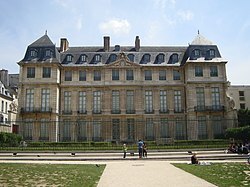
    <summary type="html"><![CDATA[<p><strong><em>Pablo Picasso was a Spanish artist and icon of the 1900s, most notably known for his various paintings and sculptures. However, he has also been known for being involved in the infamous heist of the Mona Lisa, his several activist pieces during wartimes he lived through, and his ragtag posse of notorious creatives that helped him become the man we know today.</em></strong></p><img src="https://paris.cityandciv.com/files/fullsize/270018b9fde36d00ce78754dc177f5a1.jpg" alt="Hotel Sale, home of the Musee Picasso" /><br/><p>Pablo Picasso was born on October 25th, 1881 to a middle-class family in the city of Malaga in southern Spain. He was born to Maria Picasso y Lopez and Jose Ruiz y Blasco. Picasso displayed an early love for art and traveled often in his earlier years. During his first visits to Paris (and despite not knowing a lick of French), he was never lonely and soon found himself a growing gang of artists friends. Some include critic and poet Max Jacob, who helped Picasso learn French, Ramon Casas, who visited the Exposition Universelle of 1900 with Picasso, and Charles Casagemas, who helped him settle into the studio of Isidro Nonell on rue Gabrielle. In 1904, he decides to settle down in Paris, living in the Bateau-Lavoir and frequenting Montmartre, a common-ground for him and many other starving artists. These times marked the end his Blue Period, a time most notable for his many gloomy blue hues and occasional pop of warm colors. One piece most notable during this period is La Vie, created a year before his final move to Paris, and inspired by the suicide of his friend Casagemas.</p><p>The ending of this period was brought upon by him being in Paris and falling for the city’s cheerfulness and numerous lovers. Picasso started to paint in more pink hues, thus bringing in his Rose Period. He also used a lot of circus themes and harlequin symbolism; this imagery was heavily inspired by Picasso frequenting Cirque Medrano, a circus located on the corner of Montmartre. After this period, Picasso was inspired by African art and masks he saw in the Musee d’Ethnographie du Trocadero, located in the Trocadero Palace in Paris’ 16th arrondissement. He fused the inspiration gained from these so-called “primitive” relics and his previous period’s art style to make numerous pieces, including one of his most famous works, Les Demoiselles d'Avignon. Viewing the thousands of pieces made in Picasso’s time in Paris, one would not be wrong in assuming that Picasso had a keen fixation of sex and the female anatomy, potentially inspired by the multitude of prostitutes and models he would find in the city.</p><p>Picasso’s African-inspired Period was soon followed by his Cubism Periods. During this time, Picasso developed a new group of friends in Montmartre in Paris’ 18th arrondissement, who all shared the love of creating and/or consuming art. This group included writers and poets Gertrude Stein and Guillaume Apollinaire, to name a few. In 1907, Picasso met French painter Georges Barque, and two years later created a style of cubism called Analytic Cubism together. Around the end of the Analytic Cubism period, 1911 to be exact, the world-famous painting Mona Lisa was stolen from the Louvre. Apollinaire was the first person in La Bande a’ Picasso to be interrogated for suspicion of stealing the piece, soon being imprisoned in the Montparnasse district’s Prision de La Sante. The French Prison Service soon questioned Picasso for the theft, before soon dismissing the case. </p><p>Soon after, Picasso went into his Synthetic Cubism phase, where collaging was introduced to his art. Some of these pieces withheld messages about the crumbling politics of Europe at the time, and soon after World War I broke out.  During the war, Picasso was left in Paris, unlike some of his French comrades who were drafted to fight for France. Though this broke apart the group of art creators and appreciators, this gave him time to work more, bringing in his somber Neoclassicism and Surrealism Period. During these times, he began to go through an artistic shift, due to the end of WWI and the dawn of the French Surrealist Movement. Around the times of World War II, Picasso remained in Paris as it was under German occupation. There he made another one of his most famous pieces, Guernica, after the German bombing of Guernica in Spain. This piece, and a lot of the pieces that followed, were set in darker, duller tones to exemplify the dark times that he and the world faced.</p><p>Picasso stayed in Paris during WWII, and despite suffering through Gustapo harassment, continued to create. Through his later years, he made pieces that reflected his previous art styles he acquired throughout his journey and life in Paris. He died in 1973 due to heart failure. Musee Picasso, a gallery in the Hotel Sale, continues to carry on his legacy. The museum is located on rue de Thorigny, in Paris’ Marais district in the 3rd arrondissement. Musee Picasso showcases thousands of his pieces he made over the course of his life, including some Self-Portraits and Tête de femme n°5 (Portrait de Dora Maar). Though taking a five-year closure for renovation, the museum is still open to this day, honoring the heritage of a star, icon, and creator.</p><p><em><strong><a href="https://paris.cityandciv.com/items/show/52">For more (including 3 images) view the original article</a></strong></em></p>]]></summary>
    <published>2022-04-24T05:19:34+00:00</published>
    <updated>2026-03-04T21:28:19+00:00</updated>
    <link rel="alternate" type="text/html" href="https://paris.cityandciv.com/items/show/52"/>
    <id>https://paris.cityandciv.com/items/show/52</id>
    <author>
      <name>Jurnee Weeams</name>
    </author>
  </entry>
</feed>