<?xml version="1.0" encoding="UTF-8"?>
<feed xmlns="http://www.w3.org/2005/Atom">
  <title type="text">Paris City &amp;amp; Civ</title>
  <updated>2026-05-11T19:04:31+00:00</updated>
  <generator uri="http://framework.zend.com" version="1.12.20">Zend_Feed_Writer</generator>
  <link rel="alternate" type="text/html" href="https://paris.cityandciv.com/"/>
  <link rel="self" type="application/atom+xml" href="https://paris.cityandciv.com/items/browse?output=rss2"/>
  <id>https://paris.cityandciv.com/</id>
  <author>
    <name>Paris City &amp;amp; Civ</name>
    <uri>https://paris.cityandciv.com</uri>
  </author>
  <link rel="hub" href="https://pubsubhubbub.appspot.com/"/>
  <entry>
    <title type="html"><![CDATA[The Musée d&#039;Orsay: Where a casual visit can turn into the encounter of a lifetime.]]></title>
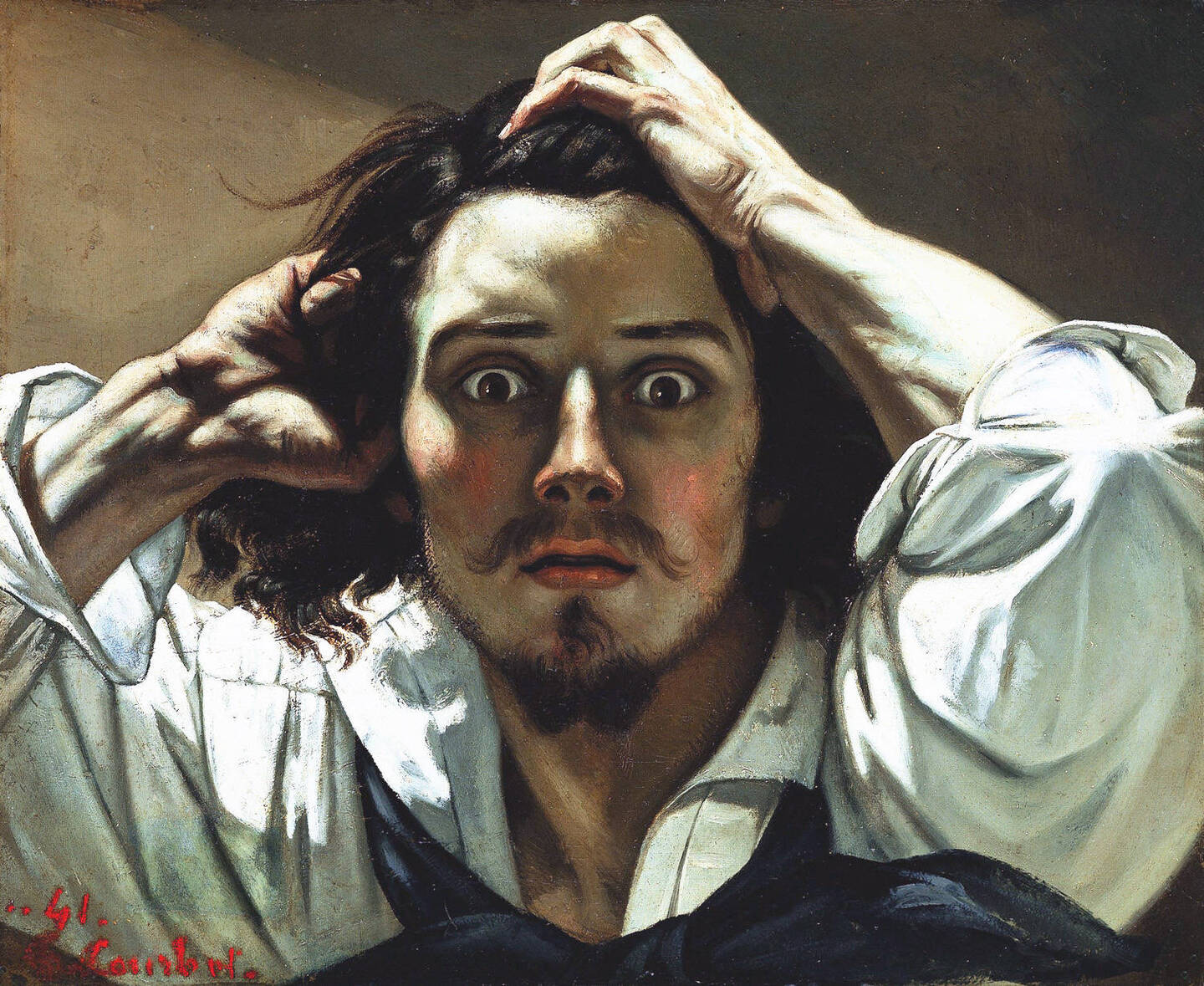
    <summary type="html"><![CDATA[<p><strong><em>Originally built as a train station, the Musée d’Orsay is now home to some of the most famous artwork in the entire world. Among the numerous sculptures and paintings, one can come to examine works by impressionist masters such as Claude Monet, Pierre-Auguste Renoir, and Edgar Degas. This museum receives over three million annual visitors who come to gaze into the eyes of the countless portraits that now rest in this museum as their final home.</em></strong></p><img src="https://paris.cityandciv.com/files/fullsize/348ad2709e84e351a4eceab1421a3b02.jpg" alt="Le Désespéré" /><br/><p>Located in the seventh arrondissement of Paris, the Musée d’Orsay houses the world’s largest collection of impressionist and post-impressionist works. Being both an artist and art lover, this was one of my most anticipated stops during my time in France. However, I was wary that I would find the museum slightly lacking after spending most of my trip walking through a large part of Paris and appreciating the breathtaking aesthetics of the Louvre. Between the stunning architecture and sculpture slipped into the everyday cityscape, it is no surprise that it was once considered an art capital of the world. I expected that by the time I got to the Musée d’Orsay, I would have seen every combination possible. Upon entering the Musée d’Orsay, it appeared I was correct. Nothing quite special stood out to me, and as I walked through each gallery I slowly became less interested in each passing work.</p><p>After a while the identifying marks of each impressionist began to blend together, surrounding me in a blurry swirl of color. At this point, I had made the decision to leave and was making my way towards the exit. However, as I was about to pass the last gallery before the doors, I felt a force beckon me to come inside; as if one last look was needed before saying goodbye to the museum as a whole. Although I was already tired, I made the last minute decision to turn around and enter. I walked into a room painted in rusty maroon. By doing a quick glance around, I took in the last few paintings but something–or shall I say someone–caught my eye. Sitting on its own wall and staring at me in a state of shock and despair was none other than The Desperate Man by Gustave Cobert. Painted with a high contrasting color palette of dark browns and bright whites, Cobert depicts himself with his hands tangled into his hair as he pierces his viewer’s gaze with an expression of pure distress. This romantic style painting was made in 1843 in response to finding out about his partner’s infidelity. I was drawn to it, and felt a deep connection to the work. This painting brought me close to tears, and I felt a strange sense of emotional relief and beauty overcome me. The Desperate Man has been a work of art that I have studied and been a big admirer of for years. So much so, that a few months prior to going on the trip I did a self portrait loosely based off of the painting. I never thought that I would have the opportunity to study the piece as closely as I did at that moment. Safe to say, I was able to find a bench and take everything in–one delicate detail at a time. </p><p>For the rest of the time I was in Paris–and even now that I am back home–I was mindful to absorb everything slowly. As tempting as it can be to rush through artwork, this experience goes to show you just never know what you might find. Perhaps more of the same, perhaps a hidden gem. And who knows? You might just be met face to face with a desperate man who has been waiting for you since you entered the room.</p><p><em><strong><a href="https://paris.cityandciv.com/items/show/98">For more (including 3 images) view the original article</a></strong></em></p>]]></summary>
    <published>2026-05-07T19:29:57+00:00</published>
    <updated>2026-05-11T19:04:31+00:00</updated>
    <link rel="alternate" type="text/html" href="https://paris.cityandciv.com/items/show/98"/>
    <id>https://paris.cityandciv.com/items/show/98</id>
    <author>
      <name>Emilie Bonsignore</name>
    </author>
  </entry>
  <entry>
    <title type="html"><![CDATA[Musée Du Quai Branly - Jacques Chirac: Explore the Musée du Quai Branly in Paris and journey through time with its captivating exhibits and artifacts from around the world.]]></title>
    <summary type="html"><![CDATA[<p><strong><em>The Musée du Quai Branly in Paris is a treasure trove of history and culture, inviting each visitor to embark on a journey of exploration and discovery. With its vast collection of artifacts, exhibits, and gardens, the Museum offers a glimpse into the art of diverse civilizations of the past and present. Whether you are drawn to the educational facilities or simply looking to enjoy a leisurely lunch, the Musée du Quai Branly is a must-visit destination that promises to transport you across time and space.</em></strong></p><img src="https://paris.cityandciv.com/files/fullsize/91d54403b395ba929a37d4084406f8d2.jpg" alt="Musee du quai Branly exterieur" /><br/><p>The Musée du Quai Branly opened on June 23, 2006. It features non-Western art and artifacts from Africa, Asia, Oceania, and the Americas, ranging from the Neolithic period to the twentieth-century. Like many other educational institutions, the Museum was founded to enhance the understanding of cultural arts and civilizations. It’s known for rehousing artifacts from other museums such as the Musée de l’Homme and Musée National des Arts d’Afrique et d’Océanie. The late President of France, Jacques Chirac, was a strong advocate for promoting and preserving non-Western arts. Chirac’s inauguration speech, just before the opening day, is why his name will forever remain associated with the Museum.</p><p>The Musée du Quai Branly is considered a World Culture Museum as its design deviates from traditional ethnographic museum styles. The goal is to create a space that celebrates the places and cultures where the objects on display come from. The Museum's exhibits take visitors on a journey through different cultures, giving them a chance to learn about and appreciate the art and traditions of various parts of the world. Unlike traditional Western-style museums, the Musée du Quai Branly has a unique design that creates an immersive experience for visitors. The dimly lit winding paths and dramatic displays both inside and outside the Museum make visitors feel as if they are traveling to a distant land. </p><p>The Museum, designed by French architect Jean Nouvel, is a remarkable complex. The 220-meter permanent gallery, temporary exhibition halls, auditorium, lecture theaters, library, cinema, conservation laboratories, and interactive research facilities cover a distance of over 29,450 square meters. The building is elevated on stilts, allowing a beautiful garden to grow both around and underneath it. This garden, created by Gilles Clément, is home to plenty of green plants, different kinds of trees, and beautiful botanicals. The garden features various trails, hills, paths, and fountains perfect for hiking, walking, and meditation. With over 150 trees and 30 different plant species, the garden offers a diverse range of flora and fauna.</p><p>There can be consequences when showcasing cultural works and identities in public spaces. The Musée du quai Branly is no stranger to controversy, given concerns about the ownership of some of the artworks, the preservation of the collections, and the purpose of the space. Some believe the Museum’s aesthetic display of cultural property may promote Western hierarchies by creating an imperial gaze toward the "other." Artifacts looted from conquered civilizations often end up in museums if they possess monetary value, show symbols of power, or captivate viewers' interests by depicting them as primitive, exotic, tropical, or oriental objects. Calls for the repatriation of art have recently gained traction, particularly in European countries with a history of colonial conquest.</p><p>The late President Jacques Chirac's vision of creating new World Culture Museums aimed to transform the outdated and problematic missions of ethnographic museums. The goal was to establish a new institution dedicated to promoting and teaching visitors about diverse cultural identities while upholding values of respect. The Musée du Quai Branly was established with this mission in mind, dedicated to preserving and showcasing art, diversity, and cultural identity. Whether or not they have achieved this goal, the Museum remains committed to its mission.</p><p>From its magnificent gardens to its many educational facilities, the Musée du Quai Branly is a spectacular museum that offers a delightful journey into the past and present. It has an impressive collection of exhibits that let visitors explore different parts of the world, taking them on a fascinating journey across the seas and through the history of diverse civilizations, all without ever leaving the beautiful city of Paris. Whether you are there to learn, explore, or simply relax, the Musée du Quai Branly never fails to amaze its visitors, beckoning them to cross a bridge into a world of wonder, diversity, and endless possibilities.</p><p><em><strong><a href="https://paris.cityandciv.com/items/show/88">For more (including 7 images) view the original article</a></strong></em></p>]]></summary>
    <published>2024-05-06T21:33:44+00:00</published>
    <updated>2026-03-04T21:28:20+00:00</updated>
    <link rel="alternate" type="text/html" href="https://paris.cityandciv.com/items/show/88"/>
    <id>https://paris.cityandciv.com/items/show/88</id>
    <author>
      <name>Makialani Kanewa-Mariano</name>
    </author>
  </entry>
  <entry>
    <title type="html"><![CDATA[Invader: An Invasion Is Imminent!: The Art and Life of Invader]]></title>
    <summary type="html"><![CDATA[<p><strong><em>In the vast corners of the world, on unsuspecting rues and street corners, some peculiar creatures can be found! These aren’t just your everyday, run-of-the-mill street art pieces, nay, these are the effects of a world-wide (or rather solar-system-wide) Invasion; and Paris, where this Invasion began, is the perfect place where unsuspecting tourists and locals can encounter these creatures. This Invasion was created by the renowned artist and visionary Invader. But some may ask, who is Invader, what is an Invasion, and why is the world being taken over by this initiative? The world may never truly know, but there are hints scattered across the internet and very few texts…</em></strong></p><img src="https://paris.cityandciv.com/files/fullsize/61a44fcd1bc03af2890e1ca1b7b01b4c.jpg" alt="“Spring Break in Paris student group walking past pipe-smoking Space Invader Mosaic (PA-1311),” Invader. Photograph. March 2024." /><br/><p>Invader is, as he defines himself, “a UFA, an Unidentified Free Artist.” He is a French artist, born in 1969, whose identity is  unknown (besides a brief name reveal in the early 2010’s), working under the pseudonym Invader. His name, initiative, and motives for his first and main art project lie in the 1978 videogame that has the same name, “Space Invaders.” The game consists of pixelated shoot ‘em up style gameplay, where the player controls a small spaceship and blasts at little space aliens overhead. The artist recalls the time when arcades became obsolete, and these little invaders were trapped for an eternity inside these arcade machines. This is where the idea of an invasion was born, as Invader decided to release these Space Invaders into the real world! More so than for nostalgia’s sake, the Invasion was sparked as a rebellion and liberation move to challenge the traditional means and functions of displaying art in museums or institutions.</p><p>Invader started his journey with the Invasion initiative in the mid-90’s in Paris, and the number of invaders within his arsenal continued to grow from there. The main material he utilizes in these works are tiles, as this material creates a pixelization effect that mimics the original subject matter. The artist must do this operation discreetly, as he would install these mosaics on buildings and infrastructure that he didn’t own. He states that he adorns the multitude of cities he works in with about 20 to 50 pieces overall, yet this is FAR from the case when it comes to Paris. Back in 2011, he celebrated his 1,000th Invader in a gallery, the Galerie le Feuvre, by installing works and photographs of every Invader he had up in Paris!</p><p>The artist known as Invader currently has 1,500 Space Invaders in Paris, but this number pales in comparison to the 4,169 he has across 83 territories of the world! This, combined with his other notable artistic achievements, proves the magnitude and grandiosity of his artistry. Another one of his Invasion-related feats include the send-off of one of his Space Invaders back into space! His initiative Space2ISS consisted of a mosaic, called Space2, attached to the International Space Station. This initiative was actualized after the ISS noticed that Invader had previously released a Space Invader into space (utilizing a weather balloon and sheer ingenuity)! Space2 currently occupies a space on the outside of the ISS, and this journey has led to the installation of several of his Invader projects at NASA and the European Space Agency HQs around the world. </p><p>Some of Invader’s other larger feats include the creation of the Rubikcubism movement. Started in 2005, he used the Rubik’s Cube toy as the material while utilizing the colors on the blocks in strategic ways to create a larger, cohesive picture. These images portray a myriad of subject matter, such as his “Rubik’s Masterpieces,” “Rubik Bad Men,” and “Rubik’s Low Fidelity” series. He even created a fine arts school in the early 21st century dedicated to teaching his unique art style in Paris. Numerous galleries around the world have reached out to Invader to showcase his unique art style to the masses.</p><p>Invader has changed the street art game in many places around the world; his influence is especially evident in Paris. He continues to inspire many other mosaic artists, like the Smurf-portraying artist IPDO, and other artists who utilize mosaics or pixelization, or that even attempt to imitate Invader’s art style! Nevertheless, all of this and more shows the cultural and world-wide significance of this artist and his impact. In his 55 years of life, Invader has racked up an impressive number of accomplishments, but as Invader has acknowledged himself, the “game is not over!”</p><p><em><strong><a href="https://paris.cityandciv.com/items/show/81">For more (including 5 images) view the original article</a></strong></em></p>]]></summary>
    <published>2024-05-04T06:36:05+00:00</published>
    <updated>2026-03-04T21:28:19+00:00</updated>
    <link rel="alternate" type="text/html" href="https://paris.cityandciv.com/items/show/81"/>
    <id>https://paris.cityandciv.com/items/show/81</id>
    <author>
      <name>Jurnee Weeams</name>
    </author>
  </entry>
  <entry>
    <title type="html"><![CDATA[The Western Tympanums of Notre Dame: Welcome to Heaven]]></title>
    <summary type="html"><![CDATA[<p><strong><em>During many of my Zoom induced daydreams, I find my mind wandering off to 2015 and the first time I visited Paris. The city was my last stop in a 6 week solo backpacking trip. The drain of travel and sharing room after room with no less than a dozen people at a time (three quarters of whom always snored) had me feeling like Quasimodo on the day I visited Notre Dame. As I neared the cathedral, I felt a number of eyes on me. However, it wasn’t the hundreds of tourists flowing past me, but the eyes of every single statute that surrounds each of the three portals on Notre Dame’s western facade. The eyes of angels, kings, and assorted biblical figures and saints all seemed fixed on me, giving me a brief flashback to that scene in The Haunting when wooden cherubs turn their head and stare at Lili Taylor. After reliving a slightly traumatic childhood moment courtesy of Ms. Taylor, I was left wondering what it must have been like for the millions that have walked through these same doors since the 13th century.</em></strong></p><img src="https://paris.cityandciv.com/files/fullsize/c1feffa54d01f21600d25a46cef25fe2.jpg" alt="Tympanum of central portal of Notre-Dame de Paris" /><br/><p>The Notre Dame cathedral is what some would call a “poor man's bible.” That is, a church which relies on artwork it to teach biblical parables to the uneducated and illiterate. For example, the two friezes (horizontal rows of sculptures) and the sculptures within the tympanum (the triangular space that forms the center of a pediment) above the central portal on the Western Facade features scenes of the Last Judgement. In the scene, the archangel Michael weighs the souls of those that have been resurrected. While the sinners are led off to hell by a demon, the “good” Christians are led off to heaven. Essentially, it was made to be overwhelming and a little scary to make sure you learned what would happen to you if you sinned (hint: it’s hell). Together, all the scenes depicted in each of the three portals combine to create an allegory for entering heaven. </p><p>Finished sometime in the 1220’s, and the last of the three portals to be constructed, the Portal of the Last Judgement has a stunning amount of detail to it. The face of each soul is just different enough to separate them individually. However, the souls of the damned are full of genuine fear and horror. You really get the sense that they are not looking forward to hell. Below them, a frieze of the new resurrected souls stare up at them, awaiting their own fate. Above them all, within the tympanum, Jesus sits on a throne showing the wounds in his hands, and feet. To his right and left stand angels and Mary and John praying. Although he sits, Christ is larger than everyone, serving as a reminder of his suffering for the sake of mankind. Encompassing all of this are five arches full of a heavenly choir made up of various angels, saints, kings and various other religious people watching the scene unfold. Hell is present here. At the bottom right of each arch are multiple souls being tortured by demons. The placement of these little vignettes appears to be purposeful. Beyond them technically being below heaven, these lie on Christ’s left side. This is also the direction to which the dammed are led. While it’s hard to get a definitive answer on it, in Christian symbolism, the left hand appears to be considered the “bad side” of god. The devil’s side. And this the part where I apologize to any left-handed Catholics who may now be experiencing flashbacks of nuns smacking them with rulers for using their left hand. Between the two individual doors is a large statue of a Christ teaching, bringing back the idea that these were used to teach lessons rather than act simply as decoration. </p><p>The two slightly smaller portals that flank the central portal on the western facade are slightly less… preachy (pardon the pun). To the right of the central portal lies the North Portal. (not to be confused with the North Transept Portal on the north side of the building). This portal is also known as the Coronation Portal or the Portal of the Virgin. It’s also a slightly less menacing door when you compare it to the previous one. Separating the two doors here is a large statue of the Virgin with the child Christ. Within the tympanum, instead of the devils and judged souls are two different scenes. One features three prophets on the left and three Old Testament kings on the right. Above them lies Mary on her deathbed, surrounded by Jesus and the 12 apostles. The surrounding arches are again filled with a heavenly choir of anonymous angels and saints watching the scenes unfold. </p><p>To the right of the central is the South Portal of the West Façade (also not to be confused with the South Transept Portal). Known as the Saint Anne Portal, this particular portal is the oldest of the three main portals. The statues within its tympanum were actually part of the church of Saint Mary, which was dismantled with the expansion of Notre Dame’s choir. If you look closely, you’ll notice the inclusion of something we haven’t seen in the other two portals: foliage. During construction of the cathedral, it was realized that the tympanum was actually too small to fill the space, so two strips of foliage were added as well as the two angels seen at the top. Who hasn’t realized too late that something was too small to fill a gap and filled it with leaves and grace? With all of its individual figures and ornate flourishes, the Saint Anne Portal is as if not more detailed as the Central Portal. The main focus is, surprisingly, not Saint Anne but rather the Virgin Mary with the infant Christ on her knee. She is flanked by an angel and the bishop of Paris to one side and a French king and another angel to the other side. The frieze directly below tells the stories of the Annunciations, the Nativity, and the Epiphany while the lowest frieze depicts the marriage of Joachim and Anne (Mary’s parents) as well as the marriage of Mary and Joseph. </p><p>Using the word portal rather than simply “entry” or “door” can seem a little pretentious. The word usually conjures the mental image of a massive, beautiful, but also slightly terrifying swirling ball of lights that serves as an entryway to another world. The portals of Notre Dame aren’t that different from this sci-fi idea. They are overwhelmingly beautiful and a little scary. But they also serve as an entrance to another world. They’re the entrance to heaven on Earth.</p><p><em><strong><a href="https://paris.cityandciv.com/items/show/71">For more (including 3 images) view the original article</a></strong></em></p>]]></summary>
    <published>2024-04-29T21:54:33+00:00</published>
    <updated>2026-03-04T21:28:19+00:00</updated>
    <link rel="alternate" type="text/html" href="https://paris.cityandciv.com/items/show/71"/>
    <id>https://paris.cityandciv.com/items/show/71</id>
    <author>
      <name>Cory Williams </name>
    </author>
  </entry>
  <entry>
    <title type="html"><![CDATA[Palais de Tokyo: An Insight into Parisian Artistic Innovation]]></title>
    <summary type="html"><![CDATA[<p><strong><em>Burrowed in the heart of Paris, the Palais de Tokyo stands as a bastion of contemporary art, calling out to those pushing the boundaries of creativity. From its historical past as a visual symbol of 20th-century architecture to its modern counterpart as a vibrant and illustrious hub of imagination, this institution has continuously redefined the artistic landscape. Let’s explore the dynamic world of the Palais de Tokyo, where artistic experimentation and cultural innovation converge.</em></strong></p><img src="https://paris.cityandciv.com/files/fullsize/e9c8b78c08c1fc74b0054935fd5d3334.jpg" alt="Palais de Tokyo" /><br/><p>The Palais de Tokyo, originally constructed in 1937 for the International Exposition dedicated to modern art and technology, has evolved into one of the most prestigious and important contemporary art venues in Europe. The architecture of the building is quite special and differs from other museums with the inside being gutted completely leaving it to its basic foundations exposed, giving it a visually altered contrast to the backdrop of amazing art installations. Renowned for its ever-expansive exhibition spaces and unconventional approach to curating, the Palais de Tokyo offers a platform for rising artists to showcase their work alongside established self-starters and professionals.</p><p>Embarking upon the Palais de Tokyo is akin to stepping into another world where traditional artistic norms are upended and experimenting reigns supreme. The museum’s commitment to adopting a culture of creativity is evident in its ever-transforming exhibitions, which offers a challenge to visitors to expand their perceptions of what art and culture truly are. A lot of these art performances and exhibits touch upon societal issues that have not only plagued Paris, but the rest of the world. One such exhibit reaches into the obscure practice of psychotherapy, exploring different ways to turn places of isolation into places of refuge from a hurtful society. From immersive installations to performances pushing high-soaring limits, each visit to the Palais de Tokyo is a unique and thought-provoking experience.</p><p>The most intriguing aspect about the Palais de Tokyo is its embrace of the unexpected. Unlike more traditional museums, which often adhere to very rigid exhibition schedules, the Palais de Tokyo thrives on spontaneity. Some exhibits last around for 24 hours to a couple of days or they could span for months at a time. This allows artists to respond to current events and societal issues in real-time, giving it a more flexible edge compared to other museums. This uncertain fluidity curates the museum so that each visit offers a fresh and diverse perspective on the world around us and to keep people up to date on current modern complexities. </p><p>Beyond its role as a showcase for contemporary art, the Palais de Tokyo serves as a cultural laboratory of sorts, fostering dialogue and collaboration amongst artists, curators, and audience members. Through its distinct programming, offering workshops, lectures, and performances, the museum actively strives for public engagement. Inviting the general public to become active participants helps with the creative progression that museum is so rightfully known for.</p><p>The Palais de Tokyo stands as a testament to the power of art to provoke, inspire, and challenge the status quo of contemporary art. From world renowned artists showcasing their new visions of creativity to touching art performances that call upon society’s insecurities, this museum breathes new life to art forum. By embracing innovation and pushing the envelope of modern art, this architecturally iconic institution continues to help shape the cultural landscape of Paris and the rest of Europe. </p><p><em><strong><a href="https://paris.cityandciv.com/items/show/69">For more (including 3 images) view the original article</a></strong></em></p>]]></summary>
    <published>2024-04-29T18:55:33+00:00</published>
    <updated>2026-03-04T21:28:19+00:00</updated>
    <link rel="alternate" type="text/html" href="https://paris.cityandciv.com/items/show/69"/>
    <id>https://paris.cityandciv.com/items/show/69</id>
    <author>
      <name>Aaron Glowacki</name>
    </author>
  </entry>
</feed>
