<?xml version="1.0" encoding="UTF-8"?>
<feed xmlns="http://www.w3.org/2005/Atom">
  <title type="text">Paris City &amp;amp; Civ</title>
  <updated>2026-03-04T21:28:20+00:00</updated>
  <generator uri="http://framework.zend.com" version="1.12.20">Zend_Feed_Writer</generator>
  <link rel="alternate" type="text/html" href="https://paris.cityandciv.com/"/>
  <link rel="self" type="application/atom+xml" href="https://paris.cityandciv.com/items/browse?output=rss2"/>
  <id>https://paris.cityandciv.com/</id>
  <author>
    <name>Paris City &amp;amp; Civ</name>
    <uri>https://paris.cityandciv.com</uri>
  </author>
  <link rel="hub" href="https://pubsubhubbub.appspot.com/"/>
  <entry>
    <title type="html"><![CDATA[Musée Du Quai Branly - Jacques Chirac: Explore the Musée du Quai Branly in Paris and journey through time with its captivating exhibits and artifacts from around the world.]]></title>
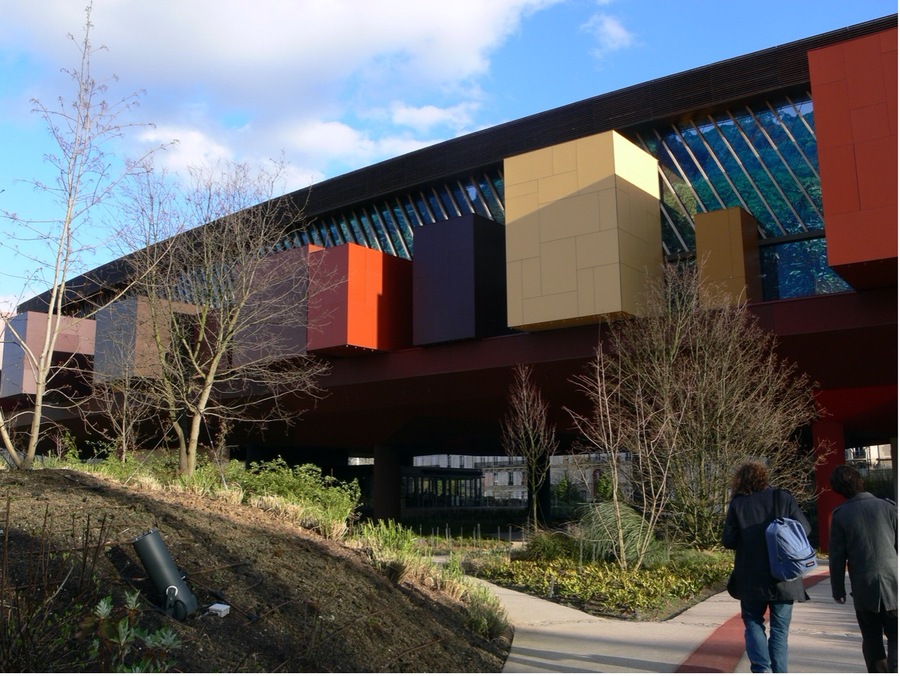
    <summary type="html"><![CDATA[<p><strong><em>The Musée du Quai Branly in Paris is a treasure trove of history and culture, inviting each visitor to embark on a journey of exploration and discovery. With its vast collection of artifacts, exhibits, and gardens, the Museum offers a glimpse into the art of diverse civilizations of the past and present. Whether you are drawn to the educational facilities or simply looking to enjoy a leisurely lunch, the Musée du Quai Branly is a must-visit destination that promises to transport you across time and space.</em></strong></p><img src="https://paris.cityandciv.com/files/fullsize/91d54403b395ba929a37d4084406f8d2.jpg" alt="Musee du quai Branly exterieur" /><br/><p>The Musée du Quai Branly opened on June 23, 2006. It features non-Western art and artifacts from Africa, Asia, Oceania, and the Americas, ranging from the Neolithic period to the twentieth-century. Like many other educational institutions, the Museum was founded to enhance the understanding of cultural arts and civilizations. It’s known for rehousing artifacts from other museums such as the Musée de l’Homme and Musée National des Arts d’Afrique et d’Océanie. The late President of France, Jacques Chirac, was a strong advocate for promoting and preserving non-Western arts. Chirac’s inauguration speech, just before the opening day, is why his name will forever remain associated with the Museum.</p><p>The Musée du Quai Branly is considered a World Culture Museum as its design deviates from traditional ethnographic museum styles. The goal is to create a space that celebrates the places and cultures where the objects on display come from. The Museum's exhibits take visitors on a journey through different cultures, giving them a chance to learn about and appreciate the art and traditions of various parts of the world. Unlike traditional Western-style museums, the Musée du Quai Branly has a unique design that creates an immersive experience for visitors. The dimly lit winding paths and dramatic displays both inside and outside the Museum make visitors feel as if they are traveling to a distant land. </p><p>The Museum, designed by French architect Jean Nouvel, is a remarkable complex. The 220-meter permanent gallery, temporary exhibition halls, auditorium, lecture theaters, library, cinema, conservation laboratories, and interactive research facilities cover a distance of over 29,450 square meters. The building is elevated on stilts, allowing a beautiful garden to grow both around and underneath it. This garden, created by Gilles Clément, is home to plenty of green plants, different kinds of trees, and beautiful botanicals. The garden features various trails, hills, paths, and fountains perfect for hiking, walking, and meditation. With over 150 trees and 30 different plant species, the garden offers a diverse range of flora and fauna.</p><p>There can be consequences when showcasing cultural works and identities in public spaces. The Musée du quai Branly is no stranger to controversy, given concerns about the ownership of some of the artworks, the preservation of the collections, and the purpose of the space. Some believe the Museum’s aesthetic display of cultural property may promote Western hierarchies by creating an imperial gaze toward the "other." Artifacts looted from conquered civilizations often end up in museums if they possess monetary value, show symbols of power, or captivate viewers' interests by depicting them as primitive, exotic, tropical, or oriental objects. Calls for the repatriation of art have recently gained traction, particularly in European countries with a history of colonial conquest.</p><p>The late President Jacques Chirac's vision of creating new World Culture Museums aimed to transform the outdated and problematic missions of ethnographic museums. The goal was to establish a new institution dedicated to promoting and teaching visitors about diverse cultural identities while upholding values of respect. The Musée du Quai Branly was established with this mission in mind, dedicated to preserving and showcasing art, diversity, and cultural identity. Whether or not they have achieved this goal, the Museum remains committed to its mission.</p><p>From its magnificent gardens to its many educational facilities, the Musée du Quai Branly is a spectacular museum that offers a delightful journey into the past and present. It has an impressive collection of exhibits that let visitors explore different parts of the world, taking them on a fascinating journey across the seas and through the history of diverse civilizations, all without ever leaving the beautiful city of Paris. Whether you are there to learn, explore, or simply relax, the Musée du Quai Branly never fails to amaze its visitors, beckoning them to cross a bridge into a world of wonder, diversity, and endless possibilities.</p><p><em><strong><a href="https://paris.cityandciv.com/items/show/88">For more (including 7 images) view the original article</a></strong></em></p>]]></summary>
    <published>2024-05-06T21:33:44+00:00</published>
    <updated>2026-03-04T21:28:20+00:00</updated>
    <link rel="alternate" type="text/html" href="https://paris.cityandciv.com/items/show/88"/>
    <id>https://paris.cityandciv.com/items/show/88</id>
    <author>
      <name>Makialani Kanewa-Mariano</name>
    </author>
  </entry>
  <entry>
    <title type="html"><![CDATA[Parc Monceau: Chaos in a Parisian Park]]></title>
    <summary type="html"><![CDATA[<p><strong><em><i>Unlike typical Parisian Parks such as Champ de Mars, Parc Monceau has a chaotic aesthetic to it. The park changed throughout its history, especially in appearance. It was then stifled by the death of the original owner due to the French Revolution and the proceeding abandonment of the grounds. Later, the chaotic aesthetic was reformed under Haussman’s modernization of Paris.</i></em></strong></p><img src="https://paris.cityandciv.com/files/fullsize/00a202f167b474294f55cb3d982e05c6.jpg" alt="Parc Monceau" /><br/><p>This unique park began as a private party grounds for Phillippe d’Orléans also known under his title of Duc d’Orléans, the cousin of Louis XVI. He hired Louis Carrogis Carmontelle to design a folly-filled garden based off the English garden style. The chaos of the park originated with Carmontelle’s desire for a certain haphazard aesthetic. This was combined with the involvement of the Duc d’Orléans in freemasonry, being in charge of a stonemasons fraternity. It was Carmontelle’s belief that a garden does not need to please those strolling through, but rather bring the visitors back through the use of nature and follies. The follies, decorative and unpractical as they are, were inspired by the great empires throughout history. He worried that without this aesthetic, visitors would go to the countryside to find the visualization of freedom, which he saw as representative of a garden. </p><p>Carmontelle filled Monceau with various sculptures, flowers, follies and more, to entertain the easily bored upper class. There was a Dutch styled windmill, a Chinese bridge, along with other follies based off Ancient Greece, Egypt and Rome, and Eastern cultures. Roman follies included temples to Roman gods and a colonnade while Egyptian ones were an obelisk and a pyramid. Few of these follies survive, but those that do bring an older feel to the park. </p><p>Originally a part of the Farmers-General Wall, the Rotunda was built as a neoclassical toll gate. Different from the tax wall, the Rotunda has an upper floor apartment used by the Duc d’Orléans as a residence when at the park. The Farmers-General Wall ran along the northern edge of the grounds surrounding the Claude-Nicolas Ledoux designed pavilion. After the wall was destroyed, only the Rotunda was left in the park. Phillippe d’Orléans became involved in the French Revolution, but he was guillotined along with his cousin and Monceau became the property of the new government. </p><p>A supposed attempt was made to impose order to Monceau after the completed uprising with the aid of Thomas Blaikie, a landscape artist. Blaikie removed some sculptures of famous Frenchmen and destroyed follies to give a more French style aesthetic to the garden. However, another story is that he was hired by Phillippe d’Orléans himself shortly before his death to tone down the chaos of Carmontelle’s design of the gardens. Blaikie, regardless of who his employer was, simplified Monceau’s pathways, gardens and other sections to become a French styled park. </p><p>After the defeat of Napoleon Bonaparte, the land was returned to the d’Orléans family and the City of Paris bought Monceau from them. This part of the original park was renovated under Napoleon III and Baron Haussman. Roadways were put in to intersect in the center of the park, going both North to South and East to West. Haussman added exotic trees and flowers to the park as well as replacements for destroyed follies and sculptures such as a waterfall and a bridge. The remainder of the grounds was reused to form mansions that surround the park. </p><p>By the time that Haussman began renovating the park, it had been abandoned since the French Revolution for about sixty years. There is a good chance that he may have to replant the gardens in addition to adding follies and sculptures. Gilded gates of iron designed by Gabriel Davioud, who also designed the dome of the Rotunda, stand at each of the four entrances to the park. Park benches and public restrooms in the Rotunda were added to the park. There are sculptures of famous Parisians throughout the park, such as Chopin and various artists.</p><p><em><strong><a href="https://paris.cityandciv.com/items/show/21">For more (including 10 images) view the original article</a></strong></em></p>]]></summary>
    <published>2019-05-09T03:41:51+00:00</published>
    <updated>2026-03-04T21:28:18+00:00</updated>
    <link rel="alternate" type="text/html" href="https://paris.cityandciv.com/items/show/21"/>
    <id>https://paris.cityandciv.com/items/show/21</id>
    <author>
      <name>Helen Mersek</name>
    </author>
  </entry>
</feed>
