<?xml version="1.0" encoding="UTF-8"?>
<feed xmlns="http://www.w3.org/2005/Atom">
  <title type="text">Paris City &amp;amp; Civ</title>
  <updated>2026-03-04T21:28:20+00:00</updated>
  <generator uri="http://framework.zend.com" version="1.12.20">Zend_Feed_Writer</generator>
  <link rel="alternate" type="text/html" href="https://paris.cityandciv.com/"/>
  <link rel="self" type="application/atom+xml" href="https://paris.cityandciv.com/items/browse?output=rss2"/>
  <id>https://paris.cityandciv.com/</id>
  <author>
    <name>Paris City &amp;amp; Civ</name>
    <uri>https://paris.cityandciv.com</uri>
  </author>
  <link rel="hub" href="https://pubsubhubbub.appspot.com/"/>
  <entry>
    <title type="html"><![CDATA[Musée Du Quai Branly - Jacques Chirac: Explore the Musée du Quai Branly in Paris and journey through time with its captivating exhibits and artifacts from around the world.]]></title>
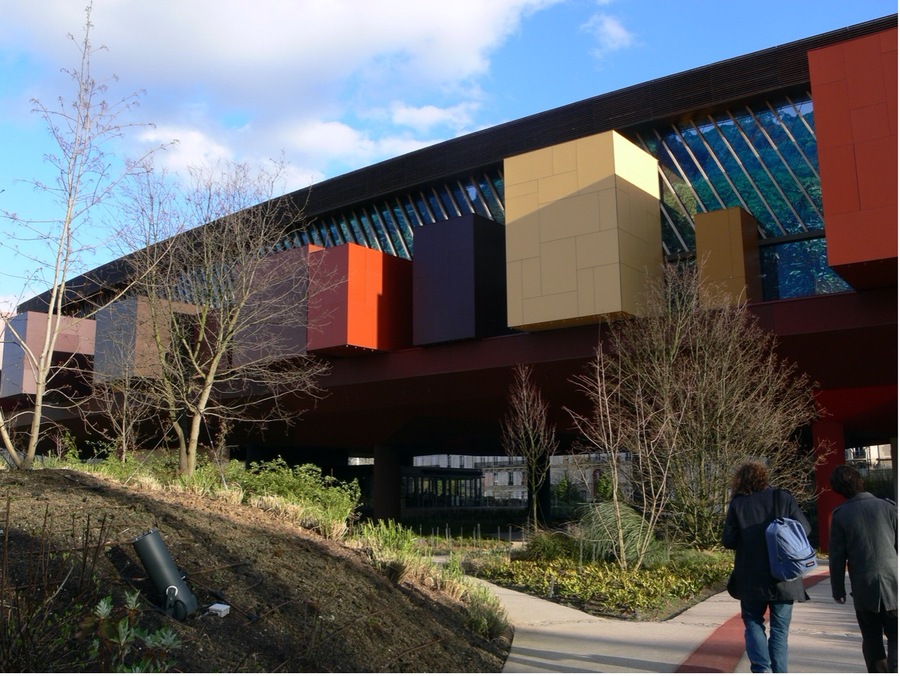
    <summary type="html"><![CDATA[<p><strong><em>The Musée du Quai Branly in Paris is a treasure trove of history and culture, inviting each visitor to embark on a journey of exploration and discovery. With its vast collection of artifacts, exhibits, and gardens, the Museum offers a glimpse into the art of diverse civilizations of the past and present. Whether you are drawn to the educational facilities or simply looking to enjoy a leisurely lunch, the Musée du Quai Branly is a must-visit destination that promises to transport you across time and space.</em></strong></p><img src="https://paris.cityandciv.com/files/fullsize/91d54403b395ba929a37d4084406f8d2.jpg" alt="Musee du quai Branly exterieur" /><br/><p>The Musée du Quai Branly opened on June 23, 2006. It features non-Western art and artifacts from Africa, Asia, Oceania, and the Americas, ranging from the Neolithic period to the twentieth-century. Like many other educational institutions, the Museum was founded to enhance the understanding of cultural arts and civilizations. It’s known for rehousing artifacts from other museums such as the Musée de l’Homme and Musée National des Arts d’Afrique et d’Océanie. The late President of France, Jacques Chirac, was a strong advocate for promoting and preserving non-Western arts. Chirac’s inauguration speech, just before the opening day, is why his name will forever remain associated with the Museum.</p><p>The Musée du Quai Branly is considered a World Culture Museum as its design deviates from traditional ethnographic museum styles. The goal is to create a space that celebrates the places and cultures where the objects on display come from. The Museum's exhibits take visitors on a journey through different cultures, giving them a chance to learn about and appreciate the art and traditions of various parts of the world. Unlike traditional Western-style museums, the Musée du Quai Branly has a unique design that creates an immersive experience for visitors. The dimly lit winding paths and dramatic displays both inside and outside the Museum make visitors feel as if they are traveling to a distant land. </p><p>The Museum, designed by French architect Jean Nouvel, is a remarkable complex. The 220-meter permanent gallery, temporary exhibition halls, auditorium, lecture theaters, library, cinema, conservation laboratories, and interactive research facilities cover a distance of over 29,450 square meters. The building is elevated on stilts, allowing a beautiful garden to grow both around and underneath it. This garden, created by Gilles Clément, is home to plenty of green plants, different kinds of trees, and beautiful botanicals. The garden features various trails, hills, paths, and fountains perfect for hiking, walking, and meditation. With over 150 trees and 30 different plant species, the garden offers a diverse range of flora and fauna.</p><p>There can be consequences when showcasing cultural works and identities in public spaces. The Musée du quai Branly is no stranger to controversy, given concerns about the ownership of some of the artworks, the preservation of the collections, and the purpose of the space. Some believe the Museum’s aesthetic display of cultural property may promote Western hierarchies by creating an imperial gaze toward the "other." Artifacts looted from conquered civilizations often end up in museums if they possess monetary value, show symbols of power, or captivate viewers' interests by depicting them as primitive, exotic, tropical, or oriental objects. Calls for the repatriation of art have recently gained traction, particularly in European countries with a history of colonial conquest.</p><p>The late President Jacques Chirac's vision of creating new World Culture Museums aimed to transform the outdated and problematic missions of ethnographic museums. The goal was to establish a new institution dedicated to promoting and teaching visitors about diverse cultural identities while upholding values of respect. The Musée du Quai Branly was established with this mission in mind, dedicated to preserving and showcasing art, diversity, and cultural identity. Whether or not they have achieved this goal, the Museum remains committed to its mission.</p><p>From its magnificent gardens to its many educational facilities, the Musée du Quai Branly is a spectacular museum that offers a delightful journey into the past and present. It has an impressive collection of exhibits that let visitors explore different parts of the world, taking them on a fascinating journey across the seas and through the history of diverse civilizations, all without ever leaving the beautiful city of Paris. Whether you are there to learn, explore, or simply relax, the Musée du Quai Branly never fails to amaze its visitors, beckoning them to cross a bridge into a world of wonder, diversity, and endless possibilities.</p><p><em><strong><a href="https://paris.cityandciv.com/items/show/88">For more (including 7 images) view the original article</a></strong></em></p>]]></summary>
    <published>2024-05-06T21:33:44+00:00</published>
    <updated>2026-03-04T21:28:20+00:00</updated>
    <link rel="alternate" type="text/html" href="https://paris.cityandciv.com/items/show/88"/>
    <id>https://paris.cityandciv.com/items/show/88</id>
    <author>
      <name>Makialani Kanewa-Mariano</name>
    </author>
  </entry>
  <entry>
    <title type="html"><![CDATA[Les Colonnes de Buren: L’art comme aire de jeux]]></title>
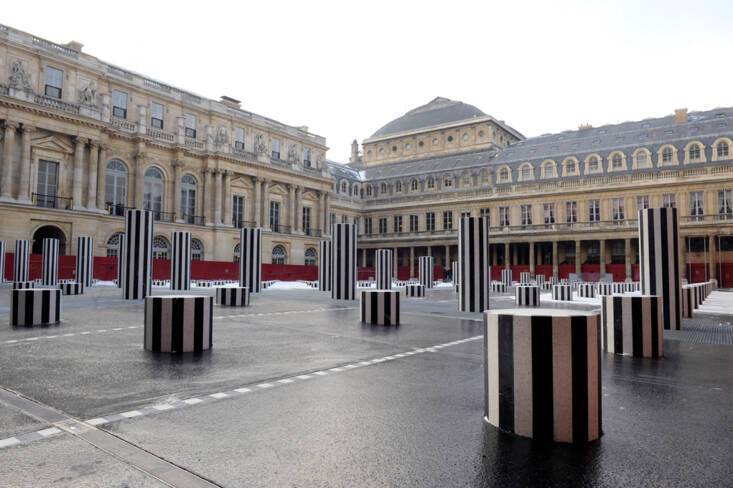
    <summary type="html"><![CDATA[<p><strong><em>Les Colonnes de Buren sont une installation d'art dans la Cour D'honneur du Palais Royal dans le cœur de Paris. Elles ont une histoire très compliquée en raison de la réception publique et des dysfonctionnements dans l'art publique.</em></strong></p><img src="https://paris.cityandciv.com/files/fullsize/a279d29a0d36ffeac07f77fbeef19b0a.jpg" alt="Les Colonnes de Buren" /><br/><p><span style="font-weight:400;"><span style="font-weight:400;">     Les Colonnes de Buren sont une installation artistique moderne dans la cour d'honneur du Palais Royal dans le premier Arrondissement de Paris. Le Palais Royal est une zone de Paris avec une histoire très riche. C'était originellement un palais construit en 1633 pour Cardinal Richelieu, et des membres de la famille royale y ont veçu après la mort de Richelieu. Maintenant cette structure architecturale historique abrite des magasins, des restaurants, des théâtres, et des institutions gouvernementales comme le conseil constitutionnel et le ministre de la culture.</p></span>
<span style="font-weight:400;">     Les Colonnes ont été conçues en 1985 par Daniel Buren. Il y a 260 colonnes octogonales noir et blanc rayées qui ont été disposées en carré.  Elles existent grâce à Jack Lang, un politicien de la ministre de la culture française qui ne voulait pas que la cour d’honneur devienne un parking pour les institutions gouvernementales. Il a détesté le spectacle des voitures dans Paris et il ne voulait pas qu'une cour historique devienne un espace pour les voitures. Il a décidé qu’une installation artistique est la meilleure solution, et il a organisé une compétition pour une œuvre d’art public pour cet espace. Daniel Buren a soumis les Colonnes qu’il a nommées “Les Deux Plateaux.” Finalement, c’est le maire de Paris, Jacques Chirac qui a choisi l'œuvre de Buren comme le gagnant du concours.</p><p> Les Colonnes sont construites au sous sol de la cours, et elles ont montré les fonctions électriques et de l’eau sous la cours d’honneur. Cependant, en 2001, l’eau s’est écoulée du sous sol et le gouvernement n'a pas fait de réparations parce que les chambres de répétition pour la Comédie Française sont très proches et on ne voulait pas les endommager.  Buren s’est mis en colère à cause de cette situation, mais puisqu'il s'agit d'une œuvre publique, on croit que l'artiste ne contrôle plus l'installation.</p>
<span style="font-weight:400;">     La réception des colonnes par le public était très mélangée. Certaines personnes l'aiment. Ils aiment la fonction et les idées de Buren. D'autres détestent leur look, et leur place dans une cour très historique. Certains questionnent la validité des colonnes comme une œuvre d’art. Ils croient que la simplicité et le look de l’installation ne correspondent pas à leurs idées de l’art français.</p>
<span style="font-weight:400;">     Buren a utilisé les colonnes parce qu’il voulait que les colonnes imitent les colonnes du Palais Royal; par contre, les couleurs (des rayures blanc et noir) ne donnent pas une impression artistique parce qu’ils imitent les toiles des stores comme celles des magasins du Palais Royal. Sa première intention c'était de faire agir le public comme les enfants en face des bâtiments du gouvernement. Aujourd'hui, c’est un aspect du projet qui a réussi. Les gens grimpent, s'asseyent, et jouent sur les colonnes tous les jours et soirs. Buren voulait juxtaposer l'aspect ludique et espiègle de son oeuvre avec le travail bureaucratique qui a lieu dans les bâtiments gouvernementaux du Palais Royal. </p>
<span style="font-weight:400;">     Pour moi, les Colonnes sont une pièce d’art très intéressante en raison de l’histoire et la place actuelle qu’elle a dans Paris. Les gens en servent comme une cour de récréation, c'est amusant et intéressant de voir les gens qui s’amusent en face des bâtiments gouvernementaux. Aussi l’installation originale a une intention pas typique avec Buren qui voulait montrer les fonctions des systèmes électroniques et les systèmes d’eau, un aspect de son projet qui n’est pas complètement réalisé. </p><p>Les Colonnes attirent pas mal de visiteurs qui adorent jouer au “Statue vivante” sur ces colonnes rayées, elles représentent des objets d’arts importants dans le Paris moderne ou la juxtaposition entre la tradition et la modernité se voit partout.</span></p><p><em><strong><a href="https://paris.cityandciv.com/items/show/77">For more (including 3 images) view the original article</a></strong></em></p>]]></summary>
    <published>2024-05-03T05:39:00+00:00</published>
    <updated>2026-03-04T21:28:19+00:00</updated>
    <link rel="alternate" type="text/html" href="https://paris.cityandciv.com/items/show/77"/>
    <id>https://paris.cityandciv.com/items/show/77</id>
    <author>
      <name>Andrew Delly</name>
    </author>
  </entry>
</feed>