<?xml version="1.0" encoding="UTF-8"?>
<feed xmlns="http://www.w3.org/2005/Atom">
  <title type="text">Paris City &amp;amp; Civ</title>
  <updated>2026-03-04T21:28:20+00:00</updated>
  <generator uri="http://framework.zend.com" version="1.12.20">Zend_Feed_Writer</generator>
  <link rel="alternate" type="text/html" href="https://paris.cityandciv.com/"/>
  <link rel="self" type="application/atom+xml" href="https://paris.cityandciv.com/items/browse?output=rss2"/>
  <id>https://paris.cityandciv.com/</id>
  <author>
    <name>Paris City &amp;amp; Civ</name>
    <uri>https://paris.cityandciv.com</uri>
  </author>
  <link rel="hub" href="https://pubsubhubbub.appspot.com/"/>
  <entry>
    <title type="html"><![CDATA[Musée Du Quai Branly - Jacques Chirac: Explore the Musée du Quai Branly in Paris and journey through time with its captivating exhibits and artifacts from around the world.]]></title>
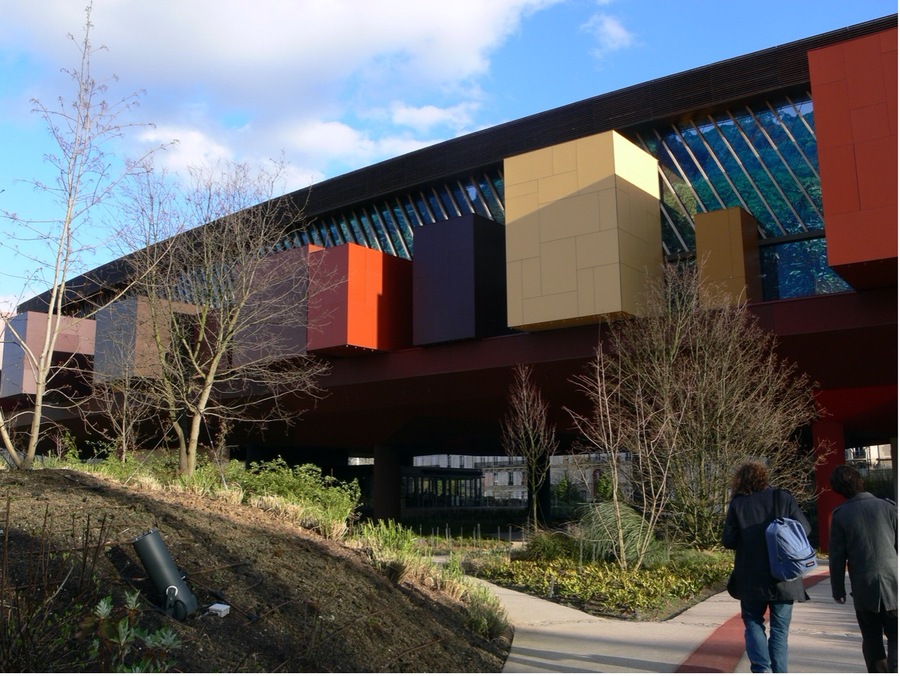
    <summary type="html"><![CDATA[<p><strong><em>The Musée du Quai Branly in Paris is a treasure trove of history and culture, inviting each visitor to embark on a journey of exploration and discovery. With its vast collection of artifacts, exhibits, and gardens, the Museum offers a glimpse into the art of diverse civilizations of the past and present. Whether you are drawn to the educational facilities or simply looking to enjoy a leisurely lunch, the Musée du Quai Branly is a must-visit destination that promises to transport you across time and space.</em></strong></p><img src="https://paris.cityandciv.com/files/fullsize/91d54403b395ba929a37d4084406f8d2.jpg" alt="Musee du quai Branly exterieur" /><br/><p>The Musée du Quai Branly opened on June 23, 2006. It features non-Western art and artifacts from Africa, Asia, Oceania, and the Americas, ranging from the Neolithic period to the twentieth-century. Like many other educational institutions, the Museum was founded to enhance the understanding of cultural arts and civilizations. It’s known for rehousing artifacts from other museums such as the Musée de l’Homme and Musée National des Arts d’Afrique et d’Océanie. The late President of France, Jacques Chirac, was a strong advocate for promoting and preserving non-Western arts. Chirac’s inauguration speech, just before the opening day, is why his name will forever remain associated with the Museum.</p><p>The Musée du Quai Branly is considered a World Culture Museum as its design deviates from traditional ethnographic museum styles. The goal is to create a space that celebrates the places and cultures where the objects on display come from. The Museum's exhibits take visitors on a journey through different cultures, giving them a chance to learn about and appreciate the art and traditions of various parts of the world. Unlike traditional Western-style museums, the Musée du Quai Branly has a unique design that creates an immersive experience for visitors. The dimly lit winding paths and dramatic displays both inside and outside the Museum make visitors feel as if they are traveling to a distant land. </p><p>The Museum, designed by French architect Jean Nouvel, is a remarkable complex. The 220-meter permanent gallery, temporary exhibition halls, auditorium, lecture theaters, library, cinema, conservation laboratories, and interactive research facilities cover a distance of over 29,450 square meters. The building is elevated on stilts, allowing a beautiful garden to grow both around and underneath it. This garden, created by Gilles Clément, is home to plenty of green plants, different kinds of trees, and beautiful botanicals. The garden features various trails, hills, paths, and fountains perfect for hiking, walking, and meditation. With over 150 trees and 30 different plant species, the garden offers a diverse range of flora and fauna.</p><p>There can be consequences when showcasing cultural works and identities in public spaces. The Musée du quai Branly is no stranger to controversy, given concerns about the ownership of some of the artworks, the preservation of the collections, and the purpose of the space. Some believe the Museum’s aesthetic display of cultural property may promote Western hierarchies by creating an imperial gaze toward the "other." Artifacts looted from conquered civilizations often end up in museums if they possess monetary value, show symbols of power, or captivate viewers' interests by depicting them as primitive, exotic, tropical, or oriental objects. Calls for the repatriation of art have recently gained traction, particularly in European countries with a history of colonial conquest.</p><p>The late President Jacques Chirac's vision of creating new World Culture Museums aimed to transform the outdated and problematic missions of ethnographic museums. The goal was to establish a new institution dedicated to promoting and teaching visitors about diverse cultural identities while upholding values of respect. The Musée du Quai Branly was established with this mission in mind, dedicated to preserving and showcasing art, diversity, and cultural identity. Whether or not they have achieved this goal, the Museum remains committed to its mission.</p><p>From its magnificent gardens to its many educational facilities, the Musée du Quai Branly is a spectacular museum that offers a delightful journey into the past and present. It has an impressive collection of exhibits that let visitors explore different parts of the world, taking them on a fascinating journey across the seas and through the history of diverse civilizations, all without ever leaving the beautiful city of Paris. Whether you are there to learn, explore, or simply relax, the Musée du Quai Branly never fails to amaze its visitors, beckoning them to cross a bridge into a world of wonder, diversity, and endless possibilities.</p><p><em><strong><a href="https://paris.cityandciv.com/items/show/88">For more (including 7 images) view the original article</a></strong></em></p>]]></summary>
    <published>2024-05-06T21:33:44+00:00</published>
    <updated>2026-03-04T21:28:20+00:00</updated>
    <link rel="alternate" type="text/html" href="https://paris.cityandciv.com/items/show/88"/>
    <id>https://paris.cityandciv.com/items/show/88</id>
    <author>
      <name>Makialani Kanewa-Mariano</name>
    </author>
  </entry>
  <entry>
    <title type="html"><![CDATA[Parc André Citroën: Modern Garden of Versailles or Design Misstep?]]></title>
    <summary type="html"><![CDATA[<p><strong><em><i>Parc André Citroën, sitting between City Centre and the residential zone of Paris, was built to act as an intermediary to the rural and urban lifestyles that reside on either side. At first, the park drew crowds who were looking for an escape from the congested city. It’s modern take on the historical gardens like Versailles sparked interest in those looking for a place to get away. This didn’t last long as controversy against the park grew when people started to question whether the park’s design lacked practical commodities that could have made the garden an escape from busy, city life.</i></em></strong></p><img src="https://paris.cityandciv.com/files/fullsize/ab2d44d6254ed2aeb932d0de58959360.jpg" alt="Park Seen from Balloon" /><br/><p>Parc André Citroën was built in 1992 in the 15th Arrondissement on the South bank of the Seine river. The park was built on a former Citroen automobile factory, and named after the company’s founder, Andre Citroën. The park was designed with the intention of intertwining nature with the architectural side of central Paris. The entrance of the park reflects an urban environment designed with orderly, geometric lines. The Great Lawn in the middle has diagonal pathways cutting through geometric blocks of foliage which surround the large open space. In 1999, the park started offering hot air balloon rides in this space where people could pay to overlook the city. At the end of the lawn are two giant, modern greenhouses. These greenhouses contain six themed gardens that related to each of the six senses: sight, smell, touch, taste, hearing, and intuition. </p><p>This mediator between urban and rural life dwindled in fame when people started to question whether the park was designed without focusing on practicality and looking more towards the minimalism, and uniformity that often goes hand-in-hand with modern architecture. First, criticism arose when attendees complained about lack of seating and resting points within the park. The Great Lawn is a place where a variety of people can run and play. Yet, for parents who want to sit and watch their children or for those resting to people watch seating is limited. The park has even been described as anti-social. Although not enforced strictly, running through the fountains impeded in the ground is frowned upon. The general lack of activity is off-putting to park-goers. Even the famous hot air balloon rides have come to an end. Present-day attendees have reported that the balloon has remained in the park unused for years. The themed gardens have also faced criticism. Although the modern, almost spiritual environments were designed so keenly, the gardens have been described as detached, impersonal zones. According to a recent critic of Parc Andre Citroen, Victor Grennan (2016): Sometimes you feel at one with nature in these small private gardens, but on the other hand you feel like a visitor at a zoo viewing plants trapped between geometric conformity.</p><p>The designers of Parc André Citroën had great intentions for how well the park would fit into the bustling city aesthetically, yet they lacked practicality and ecological thought to pull it off. The natural side of the park is entirely made up of man-made environments. Instead of focusing on the management of nature, creators were more interested in the overall design of the environment. I can’t be the first one to say that this park needs a reboot. Not even two miles away from the Eiffel Tower, Parc André Citroën could be a beautiful spot for those visiting the city to relax and take in a modernized version of the large, historical gardens Paris is known for. It could even become what it was intended for, an escape for residents of the city looking to get away from tight, crowded Parisian streets. </p><p><em><strong><a href="https://paris.cityandciv.com/items/show/33">For more (including 3 images) view the original article</a></strong></em></p>]]></summary>
    <published>2019-05-13T03:06:09+00:00</published>
    <updated>2026-03-04T21:28:18+00:00</updated>
    <link rel="alternate" type="text/html" href="https://paris.cityandciv.com/items/show/33"/>
    <id>https://paris.cityandciv.com/items/show/33</id>
    <author>
      <name>Anne Crotty</name>
    </author>
  </entry>
</feed>
