<?xml version="1.0" encoding="UTF-8"?>
<feed xmlns="http://www.w3.org/2005/Atom">
  <title type="text">Paris City &amp;amp; Civ</title>
  <updated>2026-05-11T19:04:31+00:00</updated>
  <generator uri="http://framework.zend.com" version="1.12.20">Zend_Feed_Writer</generator>
  <link rel="alternate" type="text/html" href="https://paris.cityandciv.com/"/>
  <link rel="self" type="application/atom+xml" href="https://paris.cityandciv.com/items/browse?output=rss2"/>
  <id>https://paris.cityandciv.com/</id>
  <author>
    <name>Paris City &amp;amp; Civ</name>
    <uri>https://paris.cityandciv.com</uri>
  </author>
  <link rel="hub" href="https://pubsubhubbub.appspot.com/"/>
  <entry>
    <title type="html"><![CDATA[The Musée d&#039;Orsay: Where a casual visit can turn into the encounter of a lifetime.]]></title>
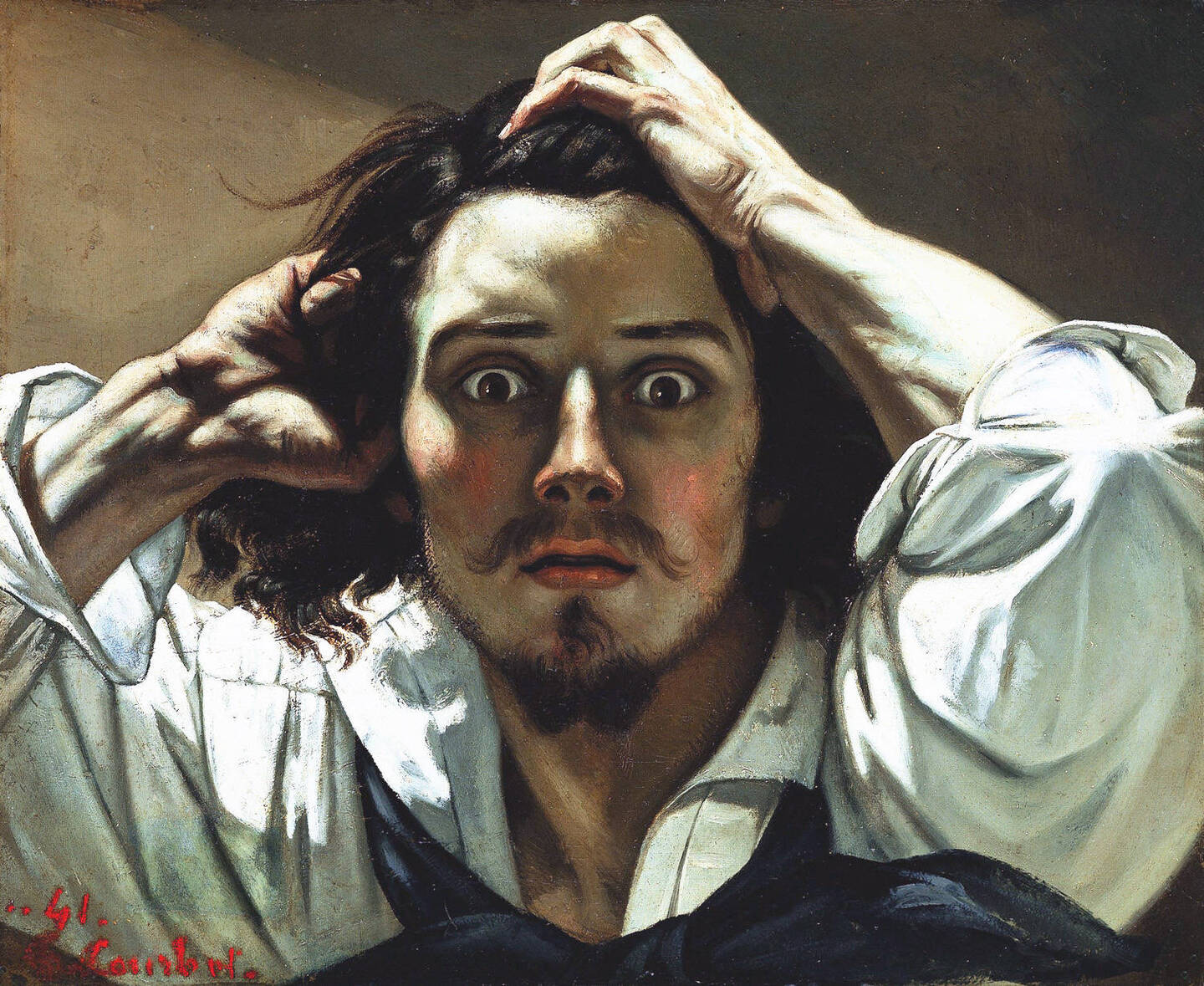
    <summary type="html"><![CDATA[<p><strong><em>Originally built as a train station, the Musée d’Orsay is now home to some of the most famous artwork in the entire world. Among the numerous sculptures and paintings, one can come to examine works by impressionist masters such as Claude Monet, Pierre-Auguste Renoir, and Edgar Degas. This museum receives over three million annual visitors who come to gaze into the eyes of the countless portraits that now rest in this museum as their final home.</em></strong></p><img src="https://paris.cityandciv.com/files/fullsize/348ad2709e84e351a4eceab1421a3b02.jpg" alt="Le Désespéré" /><br/><p>Located in the seventh arrondissement of Paris, the Musée d’Orsay houses the world’s largest collection of impressionist and post-impressionist works. Being both an artist and art lover, this was one of my most anticipated stops during my time in France. However, I was wary that I would find the museum slightly lacking after spending most of my trip walking through a large part of Paris and appreciating the breathtaking aesthetics of the Louvre. Between the stunning architecture and sculpture slipped into the everyday cityscape, it is no surprise that it was once considered an art capital of the world. I expected that by the time I got to the Musée d’Orsay, I would have seen every combination possible. Upon entering the Musée d’Orsay, it appeared I was correct. Nothing quite special stood out to me, and as I walked through each gallery I slowly became less interested in each passing work.</p><p>After a while the identifying marks of each impressionist began to blend together, surrounding me in a blurry swirl of color. At this point, I had made the decision to leave and was making my way towards the exit. However, as I was about to pass the last gallery before the doors, I felt a force beckon me to come inside; as if one last look was needed before saying goodbye to the museum as a whole. Although I was already tired, I made the last minute decision to turn around and enter. I walked into a room painted in rusty maroon. By doing a quick glance around, I took in the last few paintings but something–or shall I say someone–caught my eye. Sitting on its own wall and staring at me in a state of shock and despair was none other than The Desperate Man by Gustave Cobert. Painted with a high contrasting color palette of dark browns and bright whites, Cobert depicts himself with his hands tangled into his hair as he pierces his viewer’s gaze with an expression of pure distress. This romantic style painting was made in 1843 in response to finding out about his partner’s infidelity. I was drawn to it, and felt a deep connection to the work. This painting brought me close to tears, and I felt a strange sense of emotional relief and beauty overcome me. The Desperate Man has been a work of art that I have studied and been a big admirer of for years. So much so, that a few months prior to going on the trip I did a self portrait loosely based off of the painting. I never thought that I would have the opportunity to study the piece as closely as I did at that moment. Safe to say, I was able to find a bench and take everything in–one delicate detail at a time. </p><p>For the rest of the time I was in Paris–and even now that I am back home–I was mindful to absorb everything slowly. As tempting as it can be to rush through artwork, this experience goes to show you just never know what you might find. Perhaps more of the same, perhaps a hidden gem. And who knows? You might just be met face to face with a desperate man who has been waiting for you since you entered the room.</p><p><em><strong><a href="https://paris.cityandciv.com/items/show/98">For more (including 3 images) view the original article</a></strong></em></p>]]></summary>
    <published>2026-05-07T19:29:57+00:00</published>
    <updated>2026-05-11T19:04:31+00:00</updated>
    <link rel="alternate" type="text/html" href="https://paris.cityandciv.com/items/show/98"/>
    <id>https://paris.cityandciv.com/items/show/98</id>
    <author>
      <name>Emilie Bonsignore</name>
    </author>
  </entry>
  <entry>
    <title type="html"><![CDATA[Charles Garnier &amp; the Palais Garnier: A competition to create one of Paris&#039; most iconic opera houses with obstacles including war, a ravaging fire, and a designer&#039;s dream to fulfill the extravagant wishes of the rich while doing so in an extremely short period of time. This is Charles Garnier&#039;s life and his ultimate masterpiece — The Palais Garnier.]]></title>
    <summary type="html"><![CDATA[<p><strong><em>Paris in the 1800s was a time of grand historical figures, disputes of religion, the call of revolution, and, of course, extravagant architecture. As many Parisians believed during this time, “there is no hesitation to be had between the arts. One must be God, or else an architect.” These exact words were spoken by one of the most famous Parisian architects in the 19th century, Charles Garnier.</em></strong></p><img src="https://paris.cityandciv.com/files/fullsize/f565124a3b4bbd8d359b17b5596a4d86.jpg" alt="Paris Opéra House (Palais Garnier)" /><br/><p>Garnier was born into a working-class family that lived in one of Paris’ most exciting neighborhoods, Rue Mouffetard. He was always fascinated by architecture, even as a young child, and remained a student of the works of Greek and Ancient Roman architects from his teenage years and beyond. </p><p>He won the title of multiple prestigious honors during his earlier years, including a fellowship in Rome at the Villa Medici, but it was not until the coveted Opéra competition that Garnier would come to be known as the Charles Garnier. </p><p>Garnier was a very competitive man. The first design he submitted for the Palais ranked last out of the five finalists. After receiving this news, he proposed a companionship with Léon Ginain to create a combined design but was rebuffed by Ginain. In response to this, he worked day and night to create a new outline that would immediately enamor the judges, all by himself. And just a few months after his first initial submission, he did. </p><p>Construction on the Palais began almost immediately after Garnier’s design was picked. The team of architects and draftsmen that created the Palais included only ten men, including Garnier, himself. He was always considered a kind, giving man, but was always recognized as a hard worker, as well. He suffered bouts of depression throughout his life but always managed to help his workers through their more difficult times during the construction of the Palais. Garnier was also an acclaimed playwright and songwriter who love to dabble in the world of writing (when he wasn’t busy with creating one of Paris’ most famous sites, of course). </p><p>During a time when oil paintings were the only way of capturing a portrait, Garnier had a distinct look about him that made him extremely recognizable. So famous was his look, with messy, curled hair, a distinctively large nose, and a fashionable mustache that he was often spotted by people on the streets of Paris. The fact that he was also considered the most famous architect in France at this time also helped promote his credibility as an architect to an unknown level. </p><p>Construction on the Palais faced major setbacks. Events including the Franco-Prussian war, the fall of the Second French Empire, and the Paris Commune didn't help the builders' mission to complete the Palais in a timely manner. Other disasters in other parts of Paris also created major issues for Garnier.</p><p>After Salle le Peletier, the temporary home of the Paris Opéra, was destroyed by a ravaging fire in 1873, Garnier was <i>then</i> commissioned to create the new home of the Opéra house, which would be located inside the Palais Garnier. Faced with many technical setbacks and a numerous amount of difficulties in creating a glamorous, yet sensibly safe Opéra house for the people of Paris, Garnier went straight to work to design such an incredible feature, focusing on one area of the Palais in particular - the ceiling of the grand staircase. </p><p>Garnier turned to Isidore Pils to create the main attraction of his Opéra house. A grand ceiling with the scenes of mythological figures such as Apollo and Orpheus painted onto it became quite the challenge for Pils, who fell ill during the creation of his masterpiece. Pils’ two younger students took over the job and worked until the day before the Palais’ grand opening. </p><p>As night fell upon the Opéra house, Garnier, Pils, and the rest of the painters and architects came together to admire their tremendous feat of work. On the evening of January 5, 1875, people from all over France crowded around the Palais Garnier to get even just a glimpse of the new Opéra House. During the intermission of the first performance officially held at the new Opéra House, Garnier stood center stage, receiving a booming sound of applause and cheers from those in attendance. Completely taken aback with emotion, Garnier had finally received the recognition he had always deserved, standing in the center of the greatest achievement in his life, as an architecture, and a proud Parisian.</p><p><em><strong><a href="https://paris.cityandciv.com/items/show/8">For more (including 6 images) view the original article</a></strong></em></p>]]></summary>
    <published>2019-04-24T19:03:15+00:00</published>
    <updated>2026-03-04T21:28:17+00:00</updated>
    <link rel="alternate" type="text/html" href="https://paris.cityandciv.com/items/show/8"/>
    <id>https://paris.cityandciv.com/items/show/8</id>
    <author>
      <name>Amanda Chambers</name>
    </author>
  </entry>
</feed>
