<?xml version="1.0" encoding="UTF-8"?>
<feed xmlns="http://www.w3.org/2005/Atom">
  <title type="text">Paris City &amp;amp; Civ</title>
  <updated>2026-05-11T19:04:31+00:00</updated>
  <generator uri="http://framework.zend.com" version="1.12.20">Zend_Feed_Writer</generator>
  <link rel="alternate" type="text/html" href="https://paris.cityandciv.com/"/>
  <link rel="self" type="application/atom+xml" href="https://paris.cityandciv.com/items/browse?output=rss2"/>
  <id>https://paris.cityandciv.com/</id>
  <author>
    <name>Paris City &amp;amp; Civ</name>
    <uri>https://paris.cityandciv.com</uri>
  </author>
  <link rel="hub" href="https://pubsubhubbub.appspot.com/"/>
  <entry>
    <title type="html"><![CDATA[Square Montholon: A sanctuary for birds and for me]]></title>
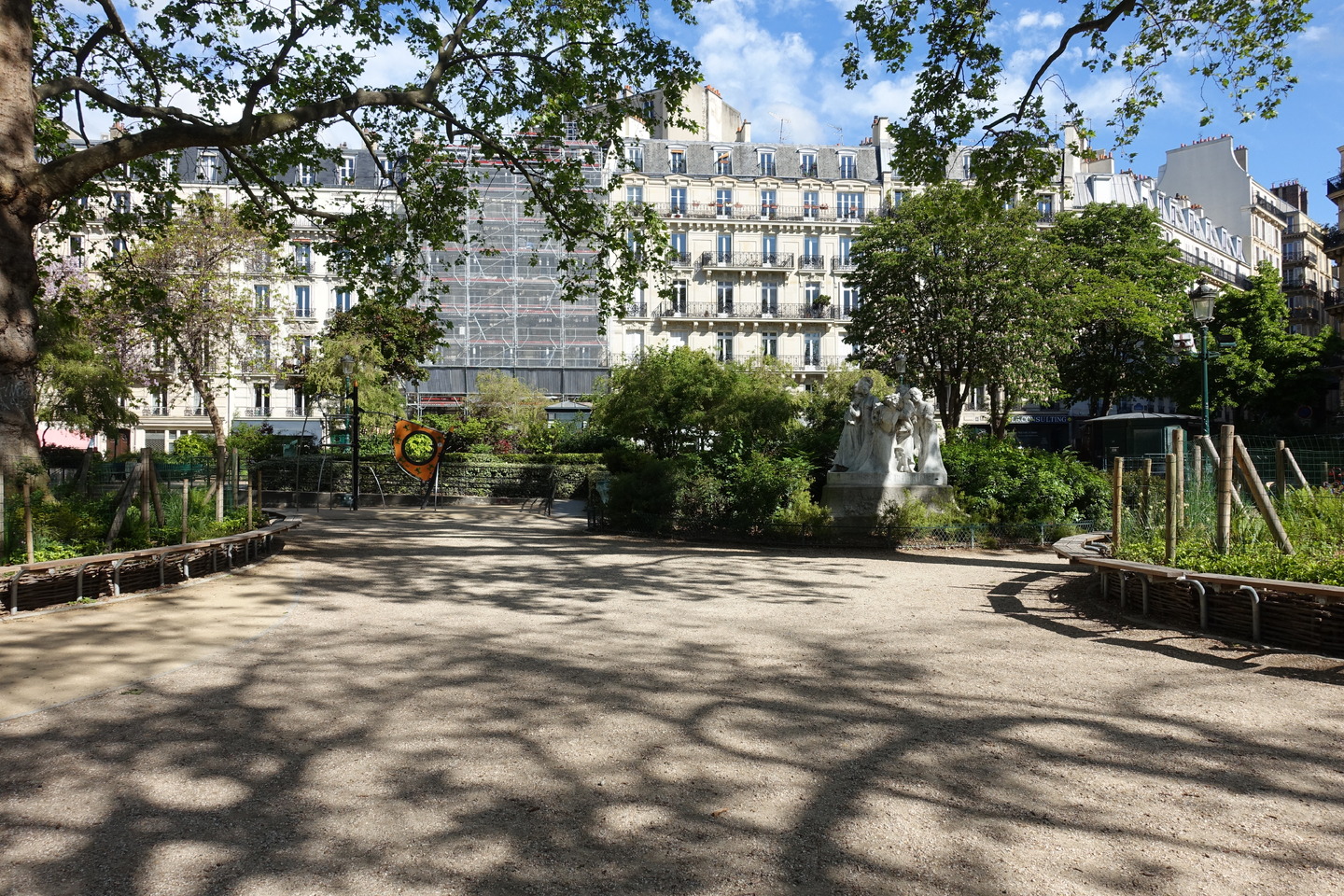
    <summary type="html"><![CDATA[<p><strong><em>Once the garden of an executioner, this square is now a beautiful green space. An ideal spot for gathering, the park houses four young girls, carved from stone yet filled with life.</em></strong></p><img src="https://paris.cityandciv.com/files/fullsize/fedbadd7bbafdc2481efe874a228a043.jpg" alt="Square Montholon @ Paris" /><br/><p>Square Montholon is the largest green space in the 9th arrondissement, measuring 4571 square meters. The space was originally the garden of the estate of Charles-Henri Sanson, an executioner of France, who came from a famous family of executioners operating in Paris from 1688 to 1847. It was transformed into Square Montholon in 1863 and now hosts different bird species and native plants, and emphasizes the importance of wildlife protection. There are two oriental plane trees that are each over a century old and are now over 30 meters tall. The area itself is bordered with entrances near each corner, and Louis-Philippe-style fencing, a Victorian-style of picket fencing used frequently in Parisian gardens.</p><p>While I had done research on Square Montholon before arriving in Paris, it was nothing like I expected it to be. The square was small and intimate but had so much packed into every nook and cranny. As I turned and took in my surroundings, I saw something I didn’t read about or see in the research I did. Towards the center of Square Montholon is a statue, Les Catherinettes by Julien Lovieux, created in 1908, depicting four young women celebrating Saint Catherine’s Day. The holiday, occurring on November 25th, is a day for unmarried women of the age of 25 and above (otherwise known as ‘Catherinettes’) to pray to Saint Catherine to find a husband. While the holiday started in the 10th century, French milliners popularized it in the early 1900s as a way to display extravagant hats, customarily using green and yellow to symbolize wisdom, faith, and success. The tradition has developed and changed over time, but is still celebrated today with over the top, work of art, hats. </p><p>As I looked at the young women before me, I couldn’t help but think about all of the working girls who may have walked through the spot I was standing in. The women in the statue looked so joyful, linking arms and practically falling over each other while walking. Coming to Paris with my own group of girls, I couldn’t help but feel like I knew the ones made of stone. I love that in a city with so much history and so many lives lived, I can find common ground with people who walked the grounds 100 years before me. It felt ironic that what was previously the garden of an executioner had become a beautiful community space—an incredibly bright future for a place with such an interesting and complicated past.</p><p>The square is a peaceful escape from the rest of the city, and even with its small size it is not cramped, or infected with the noise right outside its gates. The sounds from the streets surrounding the park were drowned out by rustling trees and birds chirping, in order to create the quiet space I sat within. The number of colorful birds that I saw above, flying from branch to branch, felt disproportionate to the amount of land available to them. Despite the fact that there was nothing keeping them there, they all seemed settled within the square. I found so much peace within the square, and couldn’t help but be taken by the community I felt sitting in such a beautiful public space. I wondered how many girls sat in that square thinking the same, and listening to the birds.</p><p><em><strong><a href="https://paris.cityandciv.com/items/show/111">For more (including 5 images) view the original article</a></strong></em></p>]]></summary>
    <published>2026-05-09T16:41:26+00:00</published>
    <updated>2026-05-11T18:15:12+00:00</updated>
    <link rel="alternate" type="text/html" href="https://paris.cityandciv.com/items/show/111"/>
    <id>https://paris.cityandciv.com/items/show/111</id>
    <author>
      <name>Elliot Glorioso Rendall</name>
    </author>
  </entry>
  <entry>
    <title type="html"><![CDATA[The Musée d&#039;Orsay: Where a casual visit can turn into the encounter of a lifetime.]]></title>
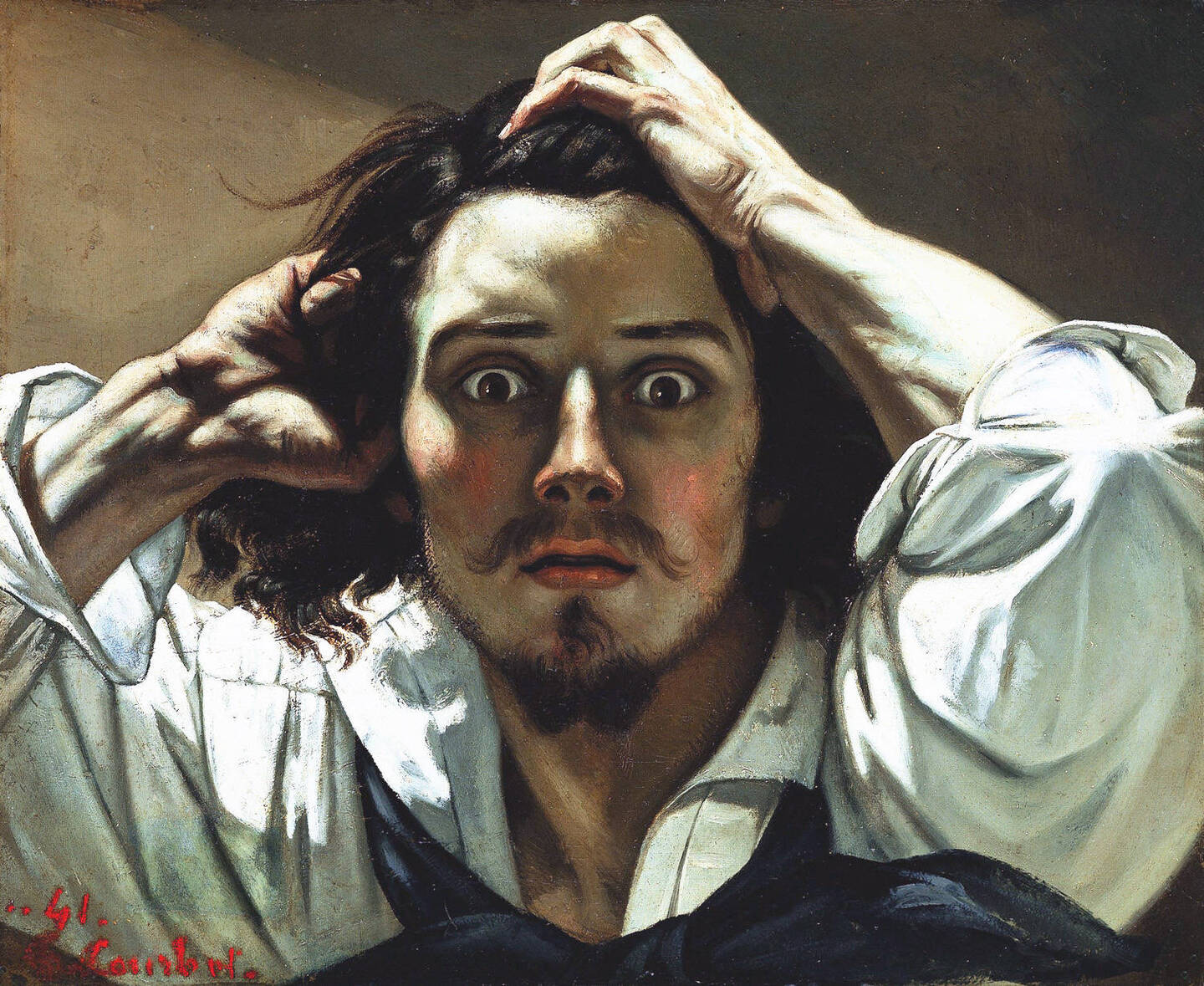
    <summary type="html"><![CDATA[<p><strong><em>Originally built as a train station, the Musée d’Orsay is now home to some of the most famous artwork in the entire world. Among the numerous sculptures and paintings, one can come to examine works by impressionist masters such as Claude Monet, Pierre-Auguste Renoir, and Edgar Degas. This museum receives over three million annual visitors who come to gaze into the eyes of the countless portraits that now rest in this museum as their final home.</em></strong></p><img src="https://paris.cityandciv.com/files/fullsize/348ad2709e84e351a4eceab1421a3b02.jpg" alt="Le Désespéré" /><br/><p>Located in the seventh arrondissement of Paris, the Musée d’Orsay houses the world’s largest collection of impressionist and post-impressionist works. Being both an artist and art lover, this was one of my most anticipated stops during my time in France. However, I was wary that I would find the museum slightly lacking after spending most of my trip walking through a large part of Paris and appreciating the breathtaking aesthetics of the Louvre. Between the stunning architecture and sculpture slipped into the everyday cityscape, it is no surprise that it was once considered an art capital of the world. I expected that by the time I got to the Musée d’Orsay, I would have seen every combination possible. Upon entering the Musée d’Orsay, it appeared I was correct. Nothing quite special stood out to me, and as I walked through each gallery I slowly became less interested in each passing work.</p><p>After a while the identifying marks of each impressionist began to blend together, surrounding me in a blurry swirl of color. At this point, I had made the decision to leave and was making my way towards the exit. However, as I was about to pass the last gallery before the doors, I felt a force beckon me to come inside; as if one last look was needed before saying goodbye to the museum as a whole. Although I was already tired, I made the last minute decision to turn around and enter. I walked into a room painted in rusty maroon. By doing a quick glance around, I took in the last few paintings but something–or shall I say someone–caught my eye. Sitting on its own wall and staring at me in a state of shock and despair was none other than The Desperate Man by Gustave Cobert. Painted with a high contrasting color palette of dark browns and bright whites, Cobert depicts himself with his hands tangled into his hair as he pierces his viewer’s gaze with an expression of pure distress. This romantic style painting was made in 1843 in response to finding out about his partner’s infidelity. I was drawn to it, and felt a deep connection to the work. This painting brought me close to tears, and I felt a strange sense of emotional relief and beauty overcome me. The Desperate Man has been a work of art that I have studied and been a big admirer of for years. So much so, that a few months prior to going on the trip I did a self portrait loosely based off of the painting. I never thought that I would have the opportunity to study the piece as closely as I did at that moment. Safe to say, I was able to find a bench and take everything in–one delicate detail at a time. </p><p>For the rest of the time I was in Paris–and even now that I am back home–I was mindful to absorb everything slowly. As tempting as it can be to rush through artwork, this experience goes to show you just never know what you might find. Perhaps more of the same, perhaps a hidden gem. And who knows? You might just be met face to face with a desperate man who has been waiting for you since you entered the room.</p><p><em><strong><a href="https://paris.cityandciv.com/items/show/98">For more (including 3 images) view the original article</a></strong></em></p>]]></summary>
    <published>2026-05-07T19:29:57+00:00</published>
    <updated>2026-05-11T19:04:31+00:00</updated>
    <link rel="alternate" type="text/html" href="https://paris.cityandciv.com/items/show/98"/>
    <id>https://paris.cityandciv.com/items/show/98</id>
    <author>
      <name>Emilie Bonsignore</name>
    </author>
  </entry>
  <entry>
    <title type="html"><![CDATA[The Abbey of St. Denis: Royalty Abounds!]]></title>
    <summary type="html"><![CDATA[<p><strong><em>Paris is a must-see destination for those interested in French royalty. But Paris is a very large city , one that has a long and distinguished history of kings and queens dating back 1,500 years. How can you absorb all of this in one visit? A trip to the Saint-Denis Basilica in northern Paris is the answer.</em></strong></p><img src="https://paris.cityandciv.com/files/fullsize/395f3f17601510e5011b227754e23644.jpg" alt="Looking down the nave of St. Denis" /><br/><p>Located in the 20th arrondissement on the outskirts of Paris, the suburb of Saint Denis is not part of the list of places that tourists usually visit. The Saint Denis Basilica, however, is a historic gem that is well worth a long metro ride. The basilica stands on the spot where Saint Denis, the first bishop of Paris, was buried, martyred around 250 AD. Various churches were built there over time and the Benedictine abbey became very influential, so much so that King Pepin ( the short) was buried at the abbey in 754. From then until the French Revolution of 1789, almost all kings and queens (except three) were buried at Saint-Denis. That's over a thousand years of royalty in one place!</p><p>The turning point for Saint-Denis occurred in the 12th century with Abbot Suger. Suger was very close politically with King Louis VI, with whom he attended the school of Saint-Denis in his youth. With this political support, Suger had plenty of money and set about transforming the church into a masterpiece of Gothic architecture. In fact, Saint-Denis is considered the first Gothic church ever built.</p><p>Sparing no expense, Suger developed to perfection the pointed arch vault system, the addition of clerestory windows, flying buttresses to counteract the thrust of a much taller structure and the famous stained glass  rose window. The effect was to let an incredible amount of light into the basilica, where previously the gloomy darkness of Roman architecture had reigned. Abbot Suger was a priest, and he maintained that this light was a symbol of the light of Christ. Walking under the Last Judgment (darkness) engraved on the tympanum above the front door, you enter the glorious light of the nave, fabulously colored by all the stained glass windows reflecting throughout. Suger's brilliant design highlighted the lighting that was so much a part of the Gothic style.</p><p>Everything inside the church is artistic. The choir stalls where the monks prayed were finely carved in wood by master carpenters. The pipe organ was the very first of its kind, built at a time in French history when there was no great French music composed or great organists to play the music. It was designed by Cavaille-Coll and is still played every Sunday. It is interesting to note that the second organ he designed is at Notre-Dame de l'Île de Cité.</p><p>But the most amazing part of the church interior are the tombs. Around the sanctuary or transept of the church are dozens of recumbent figures of kings and queens from the last 1000 years of French history. These include a life-size Marie Antoinette side by side with King Louis XVI, resplendent in white marble. and many other famous royals. Other treasures of the church include historical relics of saints of the past, a copy of the royal battle standard called the Oriflamme, and a huge underground crypt where the bones of kings and queens are buried in an ossuary royal. The crypt alone is worth a visit.</p><p>So, if you only have one day in Paris to soak up 15 centuries of royal tradition in the most historic church in Paris, hop on metro number 13, go to the penultimate stop and contemplate the dignity, sovereignty and eternal light of the Saint-Denis Basilica</p><p><em><strong><a href="https://paris.cityandciv.com/items/show/93">For more (including 6 images) view the original article</a></strong></em></p>]]></summary>
    <published>2024-05-09T17:45:59+00:00</published>
    <updated>2026-03-04T21:28:20+00:00</updated>
    <link rel="alternate" type="text/html" href="https://paris.cityandciv.com/items/show/93"/>
    <id>https://paris.cityandciv.com/items/show/93</id>
    <author>
      <name>Thomas More Scott</name>
    </author>
  </entry>
  <entry>
    <title type="html"><![CDATA[Église Saint-Paul-Saint-Louis: Understanding the Drama of the Church, Royalty, and Power in France]]></title>
    <summary type="html"><![CDATA[<p><strong><em><span>The church of Saint-Paul-Saint-Louis is marked by drama. Its bold Baroque facade stands in stark contrast to the modest appearance of the many houses and apartments lining the busy avenue of Rue Saint-Antoine. A door painted in deep red abruptly interrupts the building’s gleaming white exterior, inviting the viewer to approach and enter. Inside, imposing stone walls are ornamented with extensive and elaborate classical relief sculpture, illuminated by gilded chandeliers that hang delicately from the ceiling. Following the line of these light fixtures upward, there is revealed an architectural feature that, from the outside, is almost entirely hidden from view: namely, a large, round, solid dome sitting elegantly upon the structure’s barrel vault ceiling. Returning again to eye level, one’s gaze is then led down the nave to rest finally on a small gold crucifix affixed to the center of the historic main altar, where the figure of Christ on the cross, though somewhat small, seems, somehow, to be grounding and supporting the building’s very foundations. </span></em></strong></p><img src="https://paris.cityandciv.com/files/fullsize/c1b0c6bb91976f7a9737e4f42f019d9a.jpg" alt="Exterior facade of Saint-Paul-Saint-Louis" /><br/><p>Like its design, Saint-Paul-Saint-Louis history is also somewhat sensational and bold. The present church building was consecrated in 1641, and at that time was known only as “Église Saint Louis”. The structure was one of the first churches in Paris built in the Baroque style, signaling, in its construction, a dramatic and rather sharp break from the Gothic aesthetic approach which previously dominated French ecclesiastical architecture. Its founding was supported and monitored closely by the kings of the early Bourbon monarchy. In a dramatic show of piety, both Louis XIII and Louis XIV would even choose to have their hearts removed and interred there following their respective deaths. Thus, from its beginning, Saint-Paul-Saint-Louis represented the emergence of a new and closer alignment of the French monarchy and the Catholic Church.</p><p>This new dynamic can be seen in the church’s first inhabitants and its primary pastors, the Jesuits, who were one of the period’s most influential religious actors and who came to have close ties with the Bourbon kings. A Catholic mendicant religious society, the Jesuit Order was a critical part of the Counter-Reformation, a major cultural movement initiated by the Catholic Church aimed, principally, at reasserting Catholic doctrinal orthodoxy and enacting strident evangelical action within Europe after the fallout of the Protestant Reformation. For the Jesuits during the Counter-Reformation, the Baroque’s highly ornate nature and its allusions to Roman classicism made it useful as a simple, powerful aesthetic tool for communicating the truth and luminosity of the Catholic faith and the primacy of the See of Rome. Saint-Paul-Saint-Louis’ highly decorative Baroque plan - designed by two of the Order’s architects, Étienne Martellange and François Derand - exemplified precisely this novel, more evangelically-oriented approach to building, one in which the Jesuits frequently engaged.</p><p>The construction of such a church as Saint-Paul-Saint-Louis would have been impossible without the backing of the French monarchs. Partially expelled from France in 1594 during the French Wars of Religion, it was King Henry IV who worked to actively restore the Jesuit Order to full legal status and facilitate its expansion across France. Although this decision was likely motivated, more than anything, by political pragmatism on Henry’s part, it resulted, ultimately, in the cementing of a continued, persistent relationship between the Jesuit Order and the French kings that would last throughout the course of the Bourbon monarchy. Hence, for much of the period of the Ancien Regime, Saint-Paul-Saint-Louis was a lively hub of Jesuit activity in Paris, with some of the Order’s priests serving at the parish as direct confessors to the French kings.</p><p>By the end of the French Revolution, however, Saint-Paul-Saint-Louis’ fortunes drastically changed. The church’s monarchical associations - so crucial to its original inception - had made it a target for revolutionaries fueled by anti-clerical and anti-royalist vigor, who seized control of its operations and turned the building into a storehouse for items looted from other nearby religious and civic sites. This marked the end of the parish’s founding Baroque period: following the events of the Revolution, nearly all of the church’s original patrons and pastors had been either executed, scattered, or exiled, and the parish, with Paris and with France, was entering a new age. After Napoleon’s accession to the French imperial throne, the church would be rehabilitated, returned to the Diocese of Paris, and renamed as Église Saint-Paul-Saint-Louis, in recognition of another nearby church, Église Saint Paul, which was destroyed entirely during the Revolution. </p><p>In many respects, then, Église Saint-Paul-Saint-Louis testifies clearly to the profound story of the Baroque period in France, and the new relationships between temporal and spiritual powers that emerged from the Catholic Counter-Reformation. Consequently, not only is the convergence of the supernatural and the natural realms present symbolically in the church’s architecture, but so, too, can it be seen in its very history. This interplay of the natural and supernatural, indeed, has been critical in shaping also the broader history of France and its people. Église Saint-Paul-Saint-Louis, located in Paris’ central Marais district, stands, in many ways, at the heart of this drama as it has unfolded.</p><p><em><strong><a href="https://paris.cityandciv.com/items/show/91">For more (including 5 images) view the original article</a></strong></em></p>]]></summary>
    <published>2024-05-07T07:01:40+00:00</published>
    <updated>2026-03-04T21:28:20+00:00</updated>
    <link rel="alternate" type="text/html" href="https://paris.cityandciv.com/items/show/91"/>
    <id>https://paris.cityandciv.com/items/show/91</id>
    <author>
      <name>David Martinez</name>
    </author>
  </entry>
  <entry>
    <title type="html"><![CDATA[Musée Du Quai Branly - Jacques Chirac: Explore the Musée du Quai Branly in Paris and journey through time with its captivating exhibits and artifacts from around the world.]]></title>
    <summary type="html"><![CDATA[<p><strong><em>The Musée du Quai Branly in Paris is a treasure trove of history and culture, inviting each visitor to embark on a journey of exploration and discovery. With its vast collection of artifacts, exhibits, and gardens, the Museum offers a glimpse into the art of diverse civilizations of the past and present. Whether you are drawn to the educational facilities or simply looking to enjoy a leisurely lunch, the Musée du Quai Branly is a must-visit destination that promises to transport you across time and space.</em></strong></p><img src="https://paris.cityandciv.com/files/fullsize/91d54403b395ba929a37d4084406f8d2.jpg" alt="Musee du quai Branly exterieur" /><br/><p>The Musée du Quai Branly opened on June 23, 2006. It features non-Western art and artifacts from Africa, Asia, Oceania, and the Americas, ranging from the Neolithic period to the twentieth-century. Like many other educational institutions, the Museum was founded to enhance the understanding of cultural arts and civilizations. It’s known for rehousing artifacts from other museums such as the Musée de l’Homme and Musée National des Arts d’Afrique et d’Océanie. The late President of France, Jacques Chirac, was a strong advocate for promoting and preserving non-Western arts. Chirac’s inauguration speech, just before the opening day, is why his name will forever remain associated with the Museum.</p><p>The Musée du Quai Branly is considered a World Culture Museum as its design deviates from traditional ethnographic museum styles. The goal is to create a space that celebrates the places and cultures where the objects on display come from. The Museum's exhibits take visitors on a journey through different cultures, giving them a chance to learn about and appreciate the art and traditions of various parts of the world. Unlike traditional Western-style museums, the Musée du Quai Branly has a unique design that creates an immersive experience for visitors. The dimly lit winding paths and dramatic displays both inside and outside the Museum make visitors feel as if they are traveling to a distant land. </p><p>The Museum, designed by French architect Jean Nouvel, is a remarkable complex. The 220-meter permanent gallery, temporary exhibition halls, auditorium, lecture theaters, library, cinema, conservation laboratories, and interactive research facilities cover a distance of over 29,450 square meters. The building is elevated on stilts, allowing a beautiful garden to grow both around and underneath it. This garden, created by Gilles Clément, is home to plenty of green plants, different kinds of trees, and beautiful botanicals. The garden features various trails, hills, paths, and fountains perfect for hiking, walking, and meditation. With over 150 trees and 30 different plant species, the garden offers a diverse range of flora and fauna.</p><p>There can be consequences when showcasing cultural works and identities in public spaces. The Musée du quai Branly is no stranger to controversy, given concerns about the ownership of some of the artworks, the preservation of the collections, and the purpose of the space. Some believe the Museum’s aesthetic display of cultural property may promote Western hierarchies by creating an imperial gaze toward the "other." Artifacts looted from conquered civilizations often end up in museums if they possess monetary value, show symbols of power, or captivate viewers' interests by depicting them as primitive, exotic, tropical, or oriental objects. Calls for the repatriation of art have recently gained traction, particularly in European countries with a history of colonial conquest.</p><p>The late President Jacques Chirac's vision of creating new World Culture Museums aimed to transform the outdated and problematic missions of ethnographic museums. The goal was to establish a new institution dedicated to promoting and teaching visitors about diverse cultural identities while upholding values of respect. The Musée du Quai Branly was established with this mission in mind, dedicated to preserving and showcasing art, diversity, and cultural identity. Whether or not they have achieved this goal, the Museum remains committed to its mission.</p><p>From its magnificent gardens to its many educational facilities, the Musée du Quai Branly is a spectacular museum that offers a delightful journey into the past and present. It has an impressive collection of exhibits that let visitors explore different parts of the world, taking them on a fascinating journey across the seas and through the history of diverse civilizations, all without ever leaving the beautiful city of Paris. Whether you are there to learn, explore, or simply relax, the Musée du Quai Branly never fails to amaze its visitors, beckoning them to cross a bridge into a world of wonder, diversity, and endless possibilities.</p><p><em><strong><a href="https://paris.cityandciv.com/items/show/88">For more (including 7 images) view the original article</a></strong></em></p>]]></summary>
    <published>2024-05-06T21:33:44+00:00</published>
    <updated>2026-03-04T21:28:20+00:00</updated>
    <link rel="alternate" type="text/html" href="https://paris.cityandciv.com/items/show/88"/>
    <id>https://paris.cityandciv.com/items/show/88</id>
    <author>
      <name>Makialani Kanewa-Mariano</name>
    </author>
  </entry>
  <entry>
    <title type="html"><![CDATA[La Maison d&#039;Éducation de la Légion d&#039;Honneur (Version française) : Un Pont Entre Le Passé Et Le Présent]]></title>
    <summary type="html"><![CDATA[<p><strong><em>Le cœur de la métropole de Paris est entourée de pleins de monuments historiques qui captivent notre sens et imagination, mais à sa périphérie nord se trouve une ville appelée Saint-Denis où on  trouve l'une des institutions les plus estimées de France : une école réservée aux filles uniquement, qui s’appelle La Maison d'Éducation de la Légion d'Honneur. Êtes-vous intéressé à en apprendre davantage sur cette institution ?  Je vous invite de monter dans le métro et découvrir ce que cette école a à offrir !</em></strong></p><img src="https://paris.cityandciv.com/files/fullsize/7718a0d4e72c5814d40e96fc0143e660.jpg" alt="L&#039;entrée de l&#039;école internat" /><br/><p>Situé dans une ancienne abbaye, près de la célèbre Basilique de Saint-Denis, où reposent de nombreux monarques français, se trouve cette école. Ce qui la rend unique, c'est qu'il s'agit d'une école exclusivement pour filles. Pour éviter les conclusions hâtives à propos de son caractère religieux pour ceux qui ne s'intéressent pas à la religion, il convient de préciser qu'il s'agit en réalité d'une école laïque, conforme aux principes fondamentaux du système éducatif français.  Cette école fondée en 1805 par Napoléon Bonaparte, connu sous le nom de Napoléon Ier,  a été initialement créée pour les filles et petites-filles de ceux qui ont reçu la Légion d'Honneur, en particulier les soldats morts au combat, puis elle s'est étendue également aux civils. </p><p>Napoléon a établi la Légion d'honneur pour célébrer les individus ayant démontré un mérite exceptionnel à travers leurs actions, indépendamment de tout privilège hérité. Ce principe incarne l'esprit révolutionnaire de la Révolution française, qui a mis fin à l'aristocratie et a mis l'accent sur la reconnaissance des réalisations personnelles plutôt que des droits de naissance. En honorant le mérite au-dessus du statut social ou professionnel, la Légion d'honneur crée une communauté inclusive où hommes et femmes sont traités sur un pied d'égalité, unis par leurs contributions exceptionnelles.</p><p>La Légion d'honneur a évolué pour reconnaître les individus ayant contribué à la France dans divers domaines autres que le service militaire, y compris la culture, la science, les arts et le travail humanitaire. L'ordre est divisé en cinq classes : Chevalier, Officier, Commandeur, Grand Officier et Grand-Croix. Le président de la République française confère l'appartenance sur recommandation du gouvernement. Parmi les personnes célèbres qui ont reçu la Légion d'honneur, on trouve Simone Veil, Charlie Chaplin et J.K Rowling, l'auteure de Harry Potter.</p><p>Cette tradition reste jusqu’à nos jours, formant un pilier des critères d'admission de l'institution. Cependant, au-delà de sa fonction commémorative, l'école a soutenu l'impératif de faire progresser la situation des femmes par l'éducation, un héritage qui remonte au XVIIe siècle avec les salons littéraires influents de l'Hôtel de Rambouillet animés par Catherine de Vivonne. En établissant cette école exclusivement féminine, Napoléon Bonaparte a reconnu le rôle critique de l'éducation des femmes et de leurs impacts sociétaux dans la formation de l'avenir de la France.</p><p>En dehors de la descendance d'un individu ayant reçu la Légion d'Honneur, il existe d'autres critères précis pour entrer dans cette école ; ils prennent en compte la motivation des élèves, leur parcours académique et, surtout, ils offrent une chance équitable aux élèves issues de familles à faible revenu. Un autre aspect crucial de leurs critères est que même les filles de récipiendaires étrangers de la Légion d'Honneur peuvent avoir la possibilité de s'inscrire dans cette école, ce qui reflète l'inclusion et la diversité de cette institution.</p><p>Le but de cette école n'est pas seulement d’honorer les descendants des récipiendaires de la Légion d'Honneur, mais aussi d'investir dans leur éducation en leur offrant des opportunités d'amélioration. Cette progression ne se fait par simple d’héritage, mais à travers un programme éducatif strict et discipliné. Les élèves portent un uniforme, elles ont des heures de coucher et de réveil définies, ainsi qu'un emploi du temps précis pour les repas. Être pensionnaire implique que les étudiantes et leurs parents doivent accepter d'être séparés toute la semaine, ce qui nécessite des sacrifices. L'école est dirigée par des femmes professionnelles, démontrant ainsi son engagement à investir dans ces jeunes femmes en tant que forces incontournables de l'avenir.</p><p>L’objectif ultime de cette école est de préparer les élèves à obtenir leur diplôme d'études secondaires, et pour obtenir ce diplôme en France, il faut réussir le baccalauréat, qui est un examen national, historiquement mis en place par... devinez encore une fois, qui ? Napoléon Bonaparte ! Cet examen est obligatoire lors de la dernière année de lycée ; il est complet et rigoureux. Le pourcentage de réussite national à cet examen en France est de 75 %. Je vous invite à nouveau à spéculer sur le succès de cette pension. Vous avez peut-être deviné juste ; il est 100 % de 2019 à 2023 ; ainsi, toutes les 500 élèves que cette école accueille peuvent réussir cet examen, ce qui leur permet de s'inscrire dans des universités très renommées du pays. L'une des diplômées modernes et bien connues de MELH est Sophie Adenot, qui a progressé dans le domaine de l'aérospatiale pour devenir lieutenant-colonel ; c'est une réussite très significative vue que les hommes dominent ce domaine. Elle a récemment été choisie pour rejoindre le corps européen des astronautes en 2022.</p><p>Alors que notre voyage touche à sa fin dans cette merveilleuse institution, nous nous rendons compte que nous sommes témoins des échos de son histoire, et les succès remarquables de ses diplômées. Dans un contexte où les possibilités pour les femmes ne cessent de croître, La Maison d'Éducation de la Légion d'Honneur se positionne comme un symbole de l'émancipation féminine, du patrimoine et de l'excellence académique dans la banlieue nord de Paris et la France tout entière.</p><p><em><strong><a href="https://paris.cityandciv.com/items/show/83">For more (including 5 images) view the original article</a></strong></em></p>]]></summary>
    <published>2024-05-06T00:15:20+00:00</published>
    <updated>2026-03-04T21:28:19+00:00</updated>
    <link rel="alternate" type="text/html" href="https://paris.cityandciv.com/items/show/83"/>
    <id>https://paris.cityandciv.com/items/show/83</id>
    <author>
      <name>Oussama Labiad</name>
    </author>
  </entry>
  <entry>
    <title type="html"><![CDATA[Invader: An Invasion Is Imminent!: The Art and Life of Invader]]></title>
    <summary type="html"><![CDATA[<p><strong><em>In the vast corners of the world, on unsuspecting rues and street corners, some peculiar creatures can be found! These aren’t just your everyday, run-of-the-mill street art pieces, nay, these are the effects of a world-wide (or rather solar-system-wide) Invasion; and Paris, where this Invasion began, is the perfect place where unsuspecting tourists and locals can encounter these creatures. This Invasion was created by the renowned artist and visionary Invader. But some may ask, who is Invader, what is an Invasion, and why is the world being taken over by this initiative? The world may never truly know, but there are hints scattered across the internet and very few texts…</em></strong></p><img src="https://paris.cityandciv.com/files/fullsize/61a44fcd1bc03af2890e1ca1b7b01b4c.jpg" alt="“Spring Break in Paris student group walking past pipe-smoking Space Invader Mosaic (PA-1311),” Invader. Photograph. March 2024." /><br/><p>Invader is, as he defines himself, “a UFA, an Unidentified Free Artist.” He is a French artist, born in 1969, whose identity is  unknown (besides a brief name reveal in the early 2010’s), working under the pseudonym Invader. His name, initiative, and motives for his first and main art project lie in the 1978 videogame that has the same name, “Space Invaders.” The game consists of pixelated shoot ‘em up style gameplay, where the player controls a small spaceship and blasts at little space aliens overhead. The artist recalls the time when arcades became obsolete, and these little invaders were trapped for an eternity inside these arcade machines. This is where the idea of an invasion was born, as Invader decided to release these Space Invaders into the real world! More so than for nostalgia’s sake, the Invasion was sparked as a rebellion and liberation move to challenge the traditional means and functions of displaying art in museums or institutions.</p><p>Invader started his journey with the Invasion initiative in the mid-90’s in Paris, and the number of invaders within his arsenal continued to grow from there. The main material he utilizes in these works are tiles, as this material creates a pixelization effect that mimics the original subject matter. The artist must do this operation discreetly, as he would install these mosaics on buildings and infrastructure that he didn’t own. He states that he adorns the multitude of cities he works in with about 20 to 50 pieces overall, yet this is FAR from the case when it comes to Paris. Back in 2011, he celebrated his 1,000th Invader in a gallery, the Galerie le Feuvre, by installing works and photographs of every Invader he had up in Paris!</p><p>The artist known as Invader currently has 1,500 Space Invaders in Paris, but this number pales in comparison to the 4,169 he has across 83 territories of the world! This, combined with his other notable artistic achievements, proves the magnitude and grandiosity of his artistry. Another one of his Invasion-related feats include the send-off of one of his Space Invaders back into space! His initiative Space2ISS consisted of a mosaic, called Space2, attached to the International Space Station. This initiative was actualized after the ISS noticed that Invader had previously released a Space Invader into space (utilizing a weather balloon and sheer ingenuity)! Space2 currently occupies a space on the outside of the ISS, and this journey has led to the installation of several of his Invader projects at NASA and the European Space Agency HQs around the world. </p><p>Some of Invader’s other larger feats include the creation of the Rubikcubism movement. Started in 2005, he used the Rubik’s Cube toy as the material while utilizing the colors on the blocks in strategic ways to create a larger, cohesive picture. These images portray a myriad of subject matter, such as his “Rubik’s Masterpieces,” “Rubik Bad Men,” and “Rubik’s Low Fidelity” series. He even created a fine arts school in the early 21st century dedicated to teaching his unique art style in Paris. Numerous galleries around the world have reached out to Invader to showcase his unique art style to the masses.</p><p>Invader has changed the street art game in many places around the world; his influence is especially evident in Paris. He continues to inspire many other mosaic artists, like the Smurf-portraying artist IPDO, and other artists who utilize mosaics or pixelization, or that even attempt to imitate Invader’s art style! Nevertheless, all of this and more shows the cultural and world-wide significance of this artist and his impact. In his 55 years of life, Invader has racked up an impressive number of accomplishments, but as Invader has acknowledged himself, the “game is not over!”</p><p><em><strong><a href="https://paris.cityandciv.com/items/show/81">For more (including 5 images) view the original article</a></strong></em></p>]]></summary>
    <published>2024-05-04T06:36:05+00:00</published>
    <updated>2026-03-04T21:28:19+00:00</updated>
    <link rel="alternate" type="text/html" href="https://paris.cityandciv.com/items/show/81"/>
    <id>https://paris.cityandciv.com/items/show/81</id>
    <author>
      <name>Jurnee Weeams</name>
    </author>
  </entry>
  <entry>
    <title type="html"><![CDATA[Montmartre: Bohemian Haven]]></title>
    <summary type="html"><![CDATA[<p><strong><em>What is one of the most famous tourist attractions in Paris? When you ascend up the hills of Paris, it will lead you straight to a village known as Montmartre.  Known for its artistic heritage, Montmartre stands as one of the go-to tourist destinations of Paris.</em></strong></p><img src="https://paris.cityandciv.com/files/fullsize/33f77299abc10447b1bcbf623d142d72.jpg" alt="Place du Tertre" /><br/><p>The bohemian lifestyle enjoyed by creative people makes the neighborhood feel very unique compared to other places around Paris. Montmartre has a very lively vibe where creative types congregate, including artists who set up easels on Place du Tertre–one of them can draw your portrait! Mimes and living statues entertain crowds of tourists who gather on the steps of Sacré Coeur to enjoy the fabulous view of Paris. Just like all of Paris, there are plenty of cafes and restaurants at every corner. </p><p>The history of this village goes back to when St. Denis, the first bishop of Paris, was beheaded on top of the mountain in 250 AD, which was then given its name “martyr’s hill” because it was believed that St. Denis had been executed because of his faith. On top of the hill lies Sacré Coeur Basilica, a church constructed as a result of the Paris Commune of 1871. Amidst the bloodshed of the Paris Commune, Sacré Coeur was created as a way to appease Parisians. </p><p>Since it's on top of a hill, one way to get to Sacré Coeur is to take the Rue Foyatier steps. These steps are best known for being very expansive. There are 222 steps, the stairway is about 100 meters long. The steps were created in 1867 and were named after French sculptor Denis Foyatier.  Another unusual feature of Montmartre is the windmills. Windmills have been prevalent in Montmartre for centuries where they were used to grind wheat and press the grapes grown in the local vineyard. They gave the village a rustic feel and  a sense of otherness on the boundary between city, country, land and the sky.  Of the thirty windmills that once turned in Montmartre, only a few remain. The most iconic  of them all is that of the Moulin Rouge, located at the nightclub district in Montmartre, which had its sails recently blown off by a harsh windstorm !</p><p>The Rue Foyatier steps are so famous that they are featured in Hollywood films such as John Wick: Chapter 4. One of the infamous scenes in the film is when John Wick is kicked down the stairs by one of the bad guys. The scene goes on for a long time, almost satirizing just how long the Rue Foyatier steps are. Another famous movie that was shot in Montmartre was Amélie (2001). If you’re a fan of the movie, you would want to visit two sites featured in the film– Café des Deux Moulins, where the title character works at, and Au Marché de la Butte, a grocery store. The movie is meant to be a whimsical depiction of Parisian life, so shooting in Montmartre, especially the café which has the nostalgic feel of Paris in the 1960s, adds to the charm of the movie. You will see posters of the movie Amélie hung on the walls and inside the building to let tourists know that this is where the film was shot. </p><p>The streets of Montmartre are fascinating because of how winding they are. It is one of the more historical places in Paris because historic preservation is central to the aesthetic of the city. The village maintains a medieval footprint with its cobble stone streets because it escaped the  "Haussmannisation” of the city which opened up much of central Paris in the 19th century. Parisians in general do not appreciate when historical artifacts or places are modernized because they feel that it takes away from their beauty and authenticity.  Historic preservation has helped Montmartre retain its original bohemian vibe.  In Montmartre, visitors can experience its unique qualities since the whole place is artistically driven thanks in part to the city planners who strive to maintain Montmartre's unique features. </p><p>Montmartre has become one of the most famous attractions in all of Paris. There’s a lot to do and admire here. Its history, medieval feel and bohemian lifestyle is what makes this place special. So much so that it is featured in big movies like John Wick: Chapter 4 and Amélie. Its easy to understand why filmmakers, artist and tourist alike would be drawn to this unique part of Paris. </p><p><em><strong><a href="https://paris.cityandciv.com/items/show/79">For more (including 15 images) view the original article</a></strong></em></p>]]></summary>
    <published>2024-05-04T05:52:08+00:00</published>
    <updated>2026-03-04T21:28:19+00:00</updated>
    <link rel="alternate" type="text/html" href="https://paris.cityandciv.com/items/show/79"/>
    <id>https://paris.cityandciv.com/items/show/79</id>
    <author>
      <name>Rufus Harvey</name>
    </author>
  </entry>
  <entry>
    <title type="html"><![CDATA[La Maison d&#039;Éducation de la Légion d&#039;Honneur <br />
<br />
: A Bridge Between The Past and The Present]]></title>
    <summary type="html"><![CDATA[<p><strong><em>On the outskirts of the metropolis of Paris, far from the historical landmarks well known to tourists, lies a city called Saint-Denis. In the heart of this city stands one of France's most esteemed institutions: a boarding school for girls only, La Maison d'Éducation de la Légion d'Honneur. Are you interested in learning more about this institution? Let's hop on the metro and discover what it is all about!</p></strong></p><img src="https://paris.cityandciv.com/files/fullsize/0dca298cf5c4b0e1d6939c888b098155.jpg" alt="The entry to the boarding school" /><br/><p> The boarding school is situated within the confines of an old abbey near the renowned Basilique de Saint-Denis where many French monarchs find their eternal rest. What makes it unique is that it is a girls-only school. For those not interested in religion, let's avoid jumping to conclusions and assuming it is a religious school. On the contrary, it is a school that adheres to the principles of laicity, a cornerstone of the education system in France. Established in 1805 by Napoleon Bonaparte, known as Napoleon I, the school was initially established for the daughters and granddaughters of those who received the Legion of Honor, particularly the soldiers who died on the battlefield; it was subsequently extended to include civilians as well. </p><p>Bonapart established the Legion of Honor to celebrate individuals who demonstrated exceptional merit through their actions, independent of any inherited privilege. This principle embodies the French Revolution's revolutionary spirit, which ended the aristocracy's rule and emphasized the recognition of personal achievement over birthright. By honoring merit above social or professional status, the Legion of Honor creates an inclusive community where men and women are treated equally and united by their outstanding contributions.</p><p>The Legion of Honor has evolved as it recognizes individuals who have contributed to France in various fields other than military service, including culture, science, arts, and humanitarian work. The order is divided into five classes: Knight, Officer, Commander, Grand Officer, and Grand Cross. The President of the French Republic confers membership upon recommendation by the government. Some well-known people who received the Legion of Honor are Simone Veil, Charlie Chaplin, and J.K Rowling, the author of Harry Potter.</p><p>This tradition continues, forming a cornerstone of the institution's admission criteria. Yet, beyond its commemorative function, the school has steadfastly upheld the imperative of advancing female empowerment through education, a legacy that traces back to the 17th century with the influential literary salons of the Hôtel de Rambouillet hosted by Catherine de Vivonne. By establishing this only female school, Napoleon Bonapart recognized the critical role of educating women and their societal impacts in shaping the future of France.</p><p>Other than being the descendent of an individual who received the Legion of Honor, there are other precise criteria to enter this school; they take into consideration the motivation of the students, their academic history, and most importantly, they provide a fair chance for those students who come from lower socio-economic families. Another critical aspect of their criteria is that even the daughters of foreign recipients of Legion of Honor can have the chance to enroll in this school, which reflects the inclusion and diversity of this institution.</p><p>The goal of this school is not just to honor the daughters and the granddaughters of the recipients of a Legion of Honor but also to invest in these young girls and create opportunities for them to improve their education. This improvement does not occur by chance or luck of heredity but through a rigorous and disciplined education program. These students have a uniform, a scheduled bedtime, a scheduled wake-up time, and a specific time for breakfast, lunch, and dinner. Being part of this boarding school means the students and the parents must be ready to stay apart throughout the week. It implies that sacrifices happen. Female professionals are the heads of the school, and thus, its core is to invest in these young females as the power of the future. </p><p>The final goal for this boarding school is to prepare the students to graduate high school. To graduate high school in France, you must pass the baccalaureate, a national exam historically implemented by.... guess again, who? Napolean Bonapart! This exam is mandatory in the last year of high school; it is comprehensive and rigorous. The percentage of national success in this exam in France is 75%. I invite you again to speculate on the success of this boarding school. You might have guessed it right; it is 100% from 2019 through 2023; thus, all 500 of the students that this school hosts pass this exam, which then allows them to register in very prestigious universities in the country. One of the modern, well-known graduates of MELH is Sophie Adenot, who advanced in the air space field to become lieutenant colonel; this is an achievement, given that males dominate this domain. She was recently chosen to join the European Astronaut Corps.</p><p>As we journey through the corridors of this esteemed boarding school, we witness the echoes of history and the resounding promise of a brighter future shaped by its graduates' remarkable achievements. In a world where opportunities for women continue to expand, La Maison d'Éducation de la Légion d'Honneur stands as a beacon of female empowerment, heritage, and academic excellence in the northern suburb of Paris. </p><p><em><strong><a href="https://paris.cityandciv.com/items/show/78">For more (including 5 images) view the original article</a></strong></em></p>]]></summary>
    <published>2024-05-04T05:35:26+00:00</published>
    <updated>2026-03-04T21:28:19+00:00</updated>
    <link rel="alternate" type="text/html" href="https://paris.cityandciv.com/items/show/78"/>
    <id>https://paris.cityandciv.com/items/show/78</id>
    <author>
      <name>Oussama Labiad</name>
    </author>
  </entry>
  <entry>
    <title type="html"><![CDATA[Les Colonnes de Buren: L’art comme aire de jeux]]></title>
    <summary type="html"><![CDATA[<p><strong><em>Les Colonnes de Buren sont une installation d'art dans la Cour D'honneur du Palais Royal dans le cœur de Paris. Elles ont une histoire très compliquée en raison de la réception publique et des dysfonctionnements dans l'art publique.</em></strong></p><img src="https://paris.cityandciv.com/files/fullsize/a279d29a0d36ffeac07f77fbeef19b0a.jpg" alt="Les Colonnes de Buren" /><br/><p><span style="font-weight:400;"><span style="font-weight:400;">     Les Colonnes de Buren sont une installation artistique moderne dans la cour d'honneur du Palais Royal dans le premier Arrondissement de Paris. Le Palais Royal est une zone de Paris avec une histoire très riche. C'était originellement un palais construit en 1633 pour Cardinal Richelieu, et des membres de la famille royale y ont veçu après la mort de Richelieu. Maintenant cette structure architecturale historique abrite des magasins, des restaurants, des théâtres, et des institutions gouvernementales comme le conseil constitutionnel et le ministre de la culture.</p></span>
<span style="font-weight:400;">     Les Colonnes ont été conçues en 1985 par Daniel Buren. Il y a 260 colonnes octogonales noir et blanc rayées qui ont été disposées en carré.  Elles existent grâce à Jack Lang, un politicien de la ministre de la culture française qui ne voulait pas que la cour d’honneur devienne un parking pour les institutions gouvernementales. Il a détesté le spectacle des voitures dans Paris et il ne voulait pas qu'une cour historique devienne un espace pour les voitures. Il a décidé qu’une installation artistique est la meilleure solution, et il a organisé une compétition pour une œuvre d’art public pour cet espace. Daniel Buren a soumis les Colonnes qu’il a nommées “Les Deux Plateaux.” Finalement, c’est le maire de Paris, Jacques Chirac qui a choisi l'œuvre de Buren comme le gagnant du concours.</p><p> Les Colonnes sont construites au sous sol de la cours, et elles ont montré les fonctions électriques et de l’eau sous la cours d’honneur. Cependant, en 2001, l’eau s’est écoulée du sous sol et le gouvernement n'a pas fait de réparations parce que les chambres de répétition pour la Comédie Française sont très proches et on ne voulait pas les endommager.  Buren s’est mis en colère à cause de cette situation, mais puisqu'il s'agit d'une œuvre publique, on croit que l'artiste ne contrôle plus l'installation.</p>
<span style="font-weight:400;">     La réception des colonnes par le public était très mélangée. Certaines personnes l'aiment. Ils aiment la fonction et les idées de Buren. D'autres détestent leur look, et leur place dans une cour très historique. Certains questionnent la validité des colonnes comme une œuvre d’art. Ils croient que la simplicité et le look de l’installation ne correspondent pas à leurs idées de l’art français.</p>
<span style="font-weight:400;">     Buren a utilisé les colonnes parce qu’il voulait que les colonnes imitent les colonnes du Palais Royal; par contre, les couleurs (des rayures blanc et noir) ne donnent pas une impression artistique parce qu’ils imitent les toiles des stores comme celles des magasins du Palais Royal. Sa première intention c'était de faire agir le public comme les enfants en face des bâtiments du gouvernement. Aujourd'hui, c’est un aspect du projet qui a réussi. Les gens grimpent, s'asseyent, et jouent sur les colonnes tous les jours et soirs. Buren voulait juxtaposer l'aspect ludique et espiègle de son oeuvre avec le travail bureaucratique qui a lieu dans les bâtiments gouvernementaux du Palais Royal. </p>
<span style="font-weight:400;">     Pour moi, les Colonnes sont une pièce d’art très intéressante en raison de l’histoire et la place actuelle qu’elle a dans Paris. Les gens en servent comme une cour de récréation, c'est amusant et intéressant de voir les gens qui s’amusent en face des bâtiments gouvernementaux. Aussi l’installation originale a une intention pas typique avec Buren qui voulait montrer les fonctions des systèmes électroniques et les systèmes d’eau, un aspect de son projet qui n’est pas complètement réalisé. </p><p>Les Colonnes attirent pas mal de visiteurs qui adorent jouer au “Statue vivante” sur ces colonnes rayées, elles représentent des objets d’arts importants dans le Paris moderne ou la juxtaposition entre la tradition et la modernité se voit partout.</span></p><p><em><strong><a href="https://paris.cityandciv.com/items/show/77">For more (including 3 images) view the original article</a></strong></em></p>]]></summary>
    <published>2024-05-03T05:39:00+00:00</published>
    <updated>2026-03-04T21:28:19+00:00</updated>
    <link rel="alternate" type="text/html" href="https://paris.cityandciv.com/items/show/77"/>
    <id>https://paris.cityandciv.com/items/show/77</id>
    <author>
      <name>Andrew Delly</name>
    </author>
  </entry>
</feed>